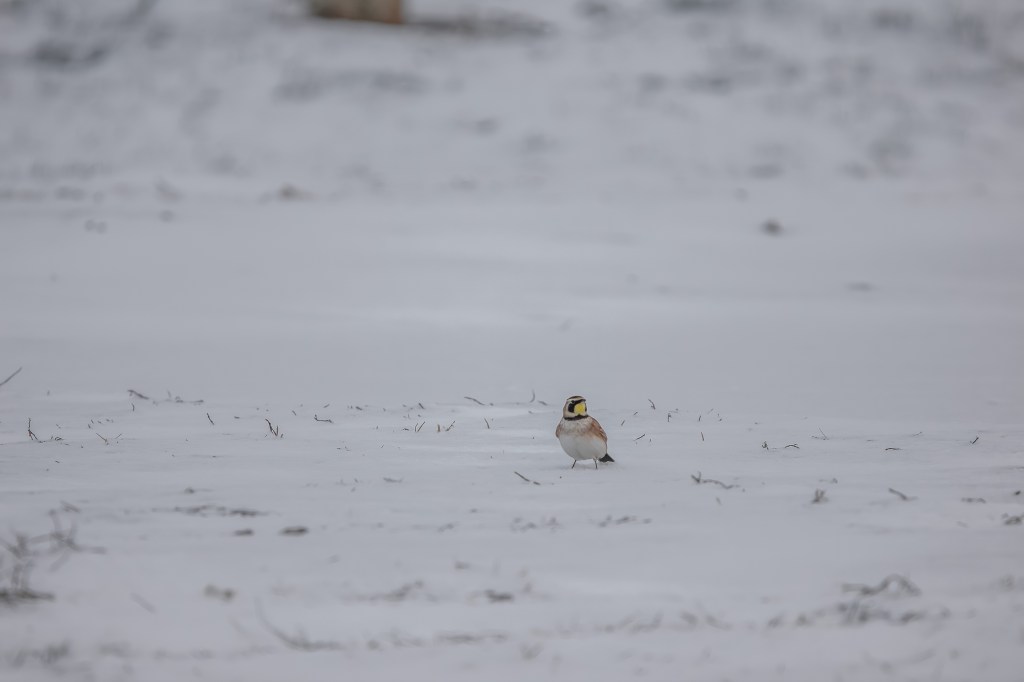
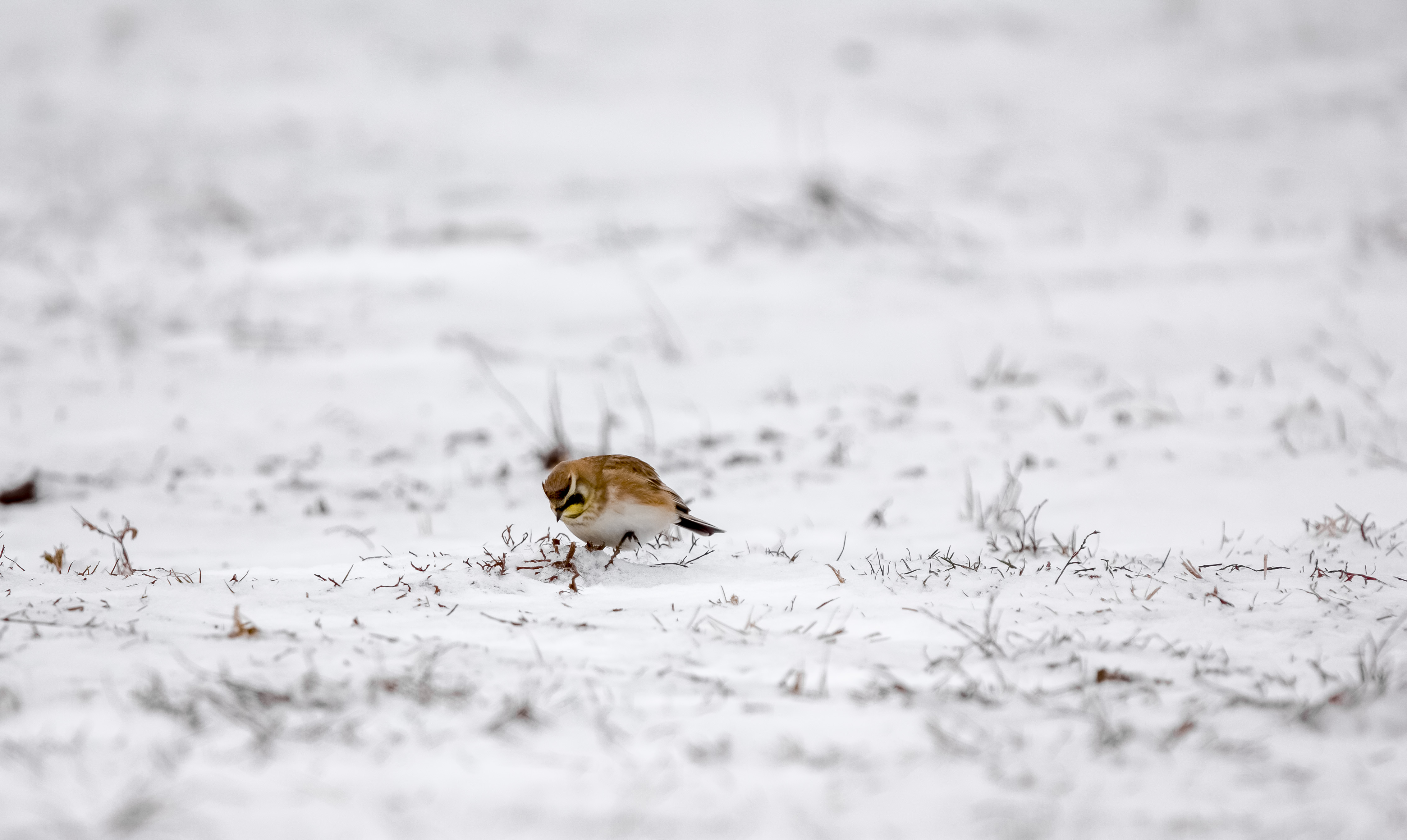

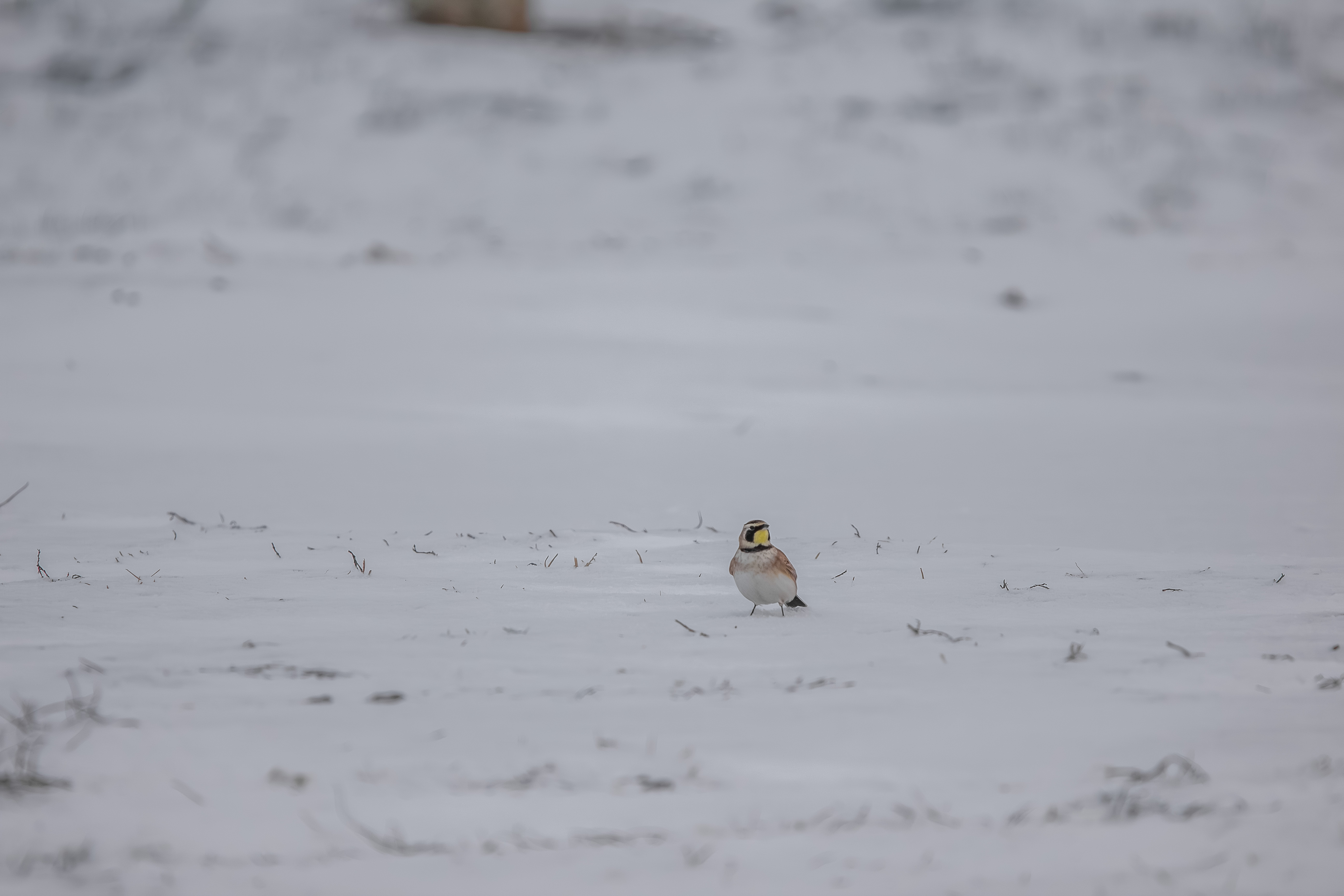
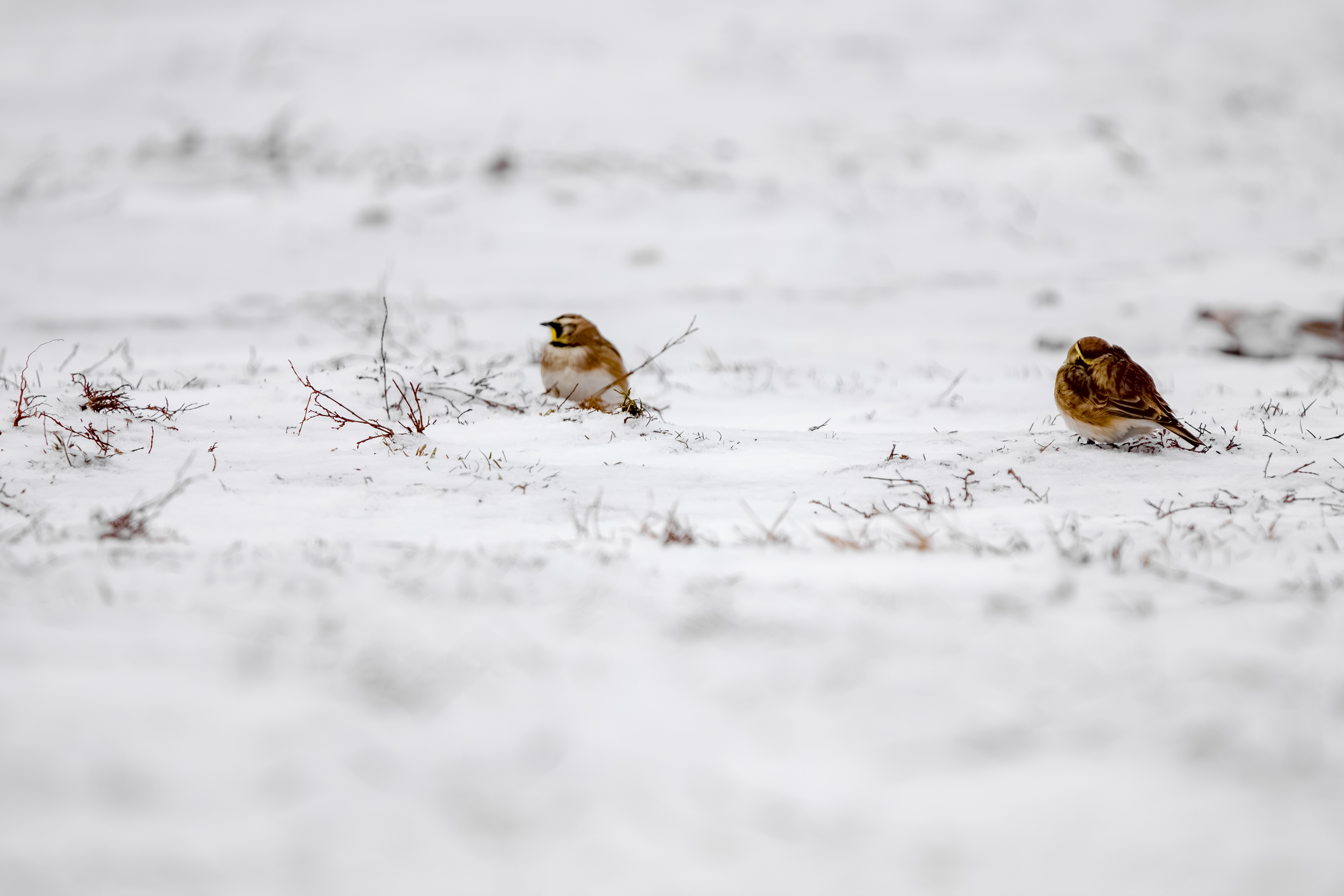

The Horned Lark is one of the most distinctive and resilient songbirds in North America. Often seen walking rather than hopping, this ground-dwelling bird thrives in open, windswept landscapes where few others can survive. From arctic tundra to frozen farm fields, the Horned Lark has adapted to extremes that define its reputation as a true bird of open country.
Identification and Appearance
Horned Larks are small, slender songbirds with a flat head and long wings. Adults measure about 6 to 7 inches long with a wingspan near 13 inches. Their most recognizable feature is the pair of black feather tufts, or “horns,” on the male’s head, which can be raised during displays or aggression.
Plumage varies widely across regions, but most Horned Larks share these traits: Pale brown to sandy upperparts that blend into soil and grasses, white or pale yellow throat, often bordered by a black band, black mask across the face and chest in males, females are similar but duller, with reduced contrast
This color variation helps them camouflage perfectly against bare ground, snow-dusted fields, and dry grasslands.
Habitat and Range
Horned Larks occupy one of the broadest ranges of any North American songbird. They breed across:
Arctic tundra in Alaska and Canada, Open prairies and grasslands, Alpine meadows above treeline, Agricultural fields and airfields
In winter, many northern populations migrate south, but they still seek out landscapes with minimal vegetation. Snow-covered farmland, plowed fields, frozen lakeshores, and barren plains are prime winter habitat.
Behavior and Feeding
Horned Larks spend most of their time on the ground, where they forage by walking steadily and pecking at food. Their diet changes seasonally:
Spring and Summer
Insects such as beetles, grasshoppers, caterpillars, spiders, and other invertebrates are crucial for feeding nestlings.
Fall and Winter
Seeds of grasses and weeds, Waste grain from agricultural fields, occasionally grit and small stones to aid digestion.
Unlike many songbirds, Horned Larks rarely visit feeders. Instead, they rely on natural ground resources, even in harsh winter conditions.
Song and Displays
The Horned Lark’s song is high-pitched, thin, and musical, often delivered during flight. Males perform elaborate aerial displays, spiraling upward before floating back down while singing continuously. These displays can occur even in cold, early spring weather when snow still blankets the ground.
Breeding and Nesting
Horned Larks are among the earliest nesting songbirds in North America. In some regions, nesting begins while winter conditions still persist.
Nests are built directly on the ground, often tucked beside clumps of grass, rocks, or frozen soil ridges, lined with fine grasses, feathers, or fur, females may build a small “doorstep” of pebbles or debris near the nest, possibly to reduce mud or blowing snow
Clutches usually contain 3 to 5 eggs, and many pairs raise two broods per season if conditions allow.
Special Wintertime Facts About Horned Larks
Horned Larks regularly overwinter in regions where temperatures drop well below zero. Their dense plumage and ability to minimize heat loss allow them to survive conditions that force other birds to migrate far south.
Rather than avoiding snow entirely, Horned Larks exploit it. They forage along wind-scoured ridges, plowed roadsides, and exposed soil patches. Their pale coloration blends seamlessly into snowy fields, offering protection from predators.
During winter, Horned Larks form loose flocks that may number from a few individuals to several dozen birds. These flocks often mix with Snow Buntings or Lapland Longspurs, increasing vigilance and foraging efficiency.
On mild winter days, especially during late winter, males may begin singing again. This early vocal activity helps establish territory long before breeding season officially begins.
Horned Larks reduce energy use by limiting unnecessary flight and relying on walking. They also orient their bodies into the wind while resting, reducing feather disruption and heat loss.
Predators and Threats
Natural predators include hawks, falcons, foxes, and coyotes. Ground nesting makes eggs and chicks vulnerable to trampling, agricultural machinery, and habitat disturbance.
Modern threats include: Loss of open habitat due to development, changes in agricultural practices, pesticide use reducing insect prey.
Despite these challenges, Horned Larks remain widespread, though some regional populations are declining.
Conservation Status
Horned Larks are currently listed as a species of low conservation concern overall, but long-term surveys show gradual population declines in parts of their range. Conservation efforts focused on preserving open landscapes and reducing pesticide use are essential for maintaining healthy populations.
Why the Horned Lark Matters
The Horned Lark is a symbol of resilience. It thrives where few birds can, enduring wind, cold, and exposure with remarkable efficiency. In winter, when most landscapes feel empty and silent, the Horned Lark remains present, walking patiently across frozen ground and reminding us that life persists even in the harshest conditions.
For birders, spotting a Horned Lark in midwinter is often a quiet reward, a sign that you are paying attention to the subtle life still moving across the land.
Learn more:
Cornell Lab of Ornithology species profile: https://www.allaboutbirds.org/guide/Horned_Lark
 Wild Bird Journal
Leave a comment