

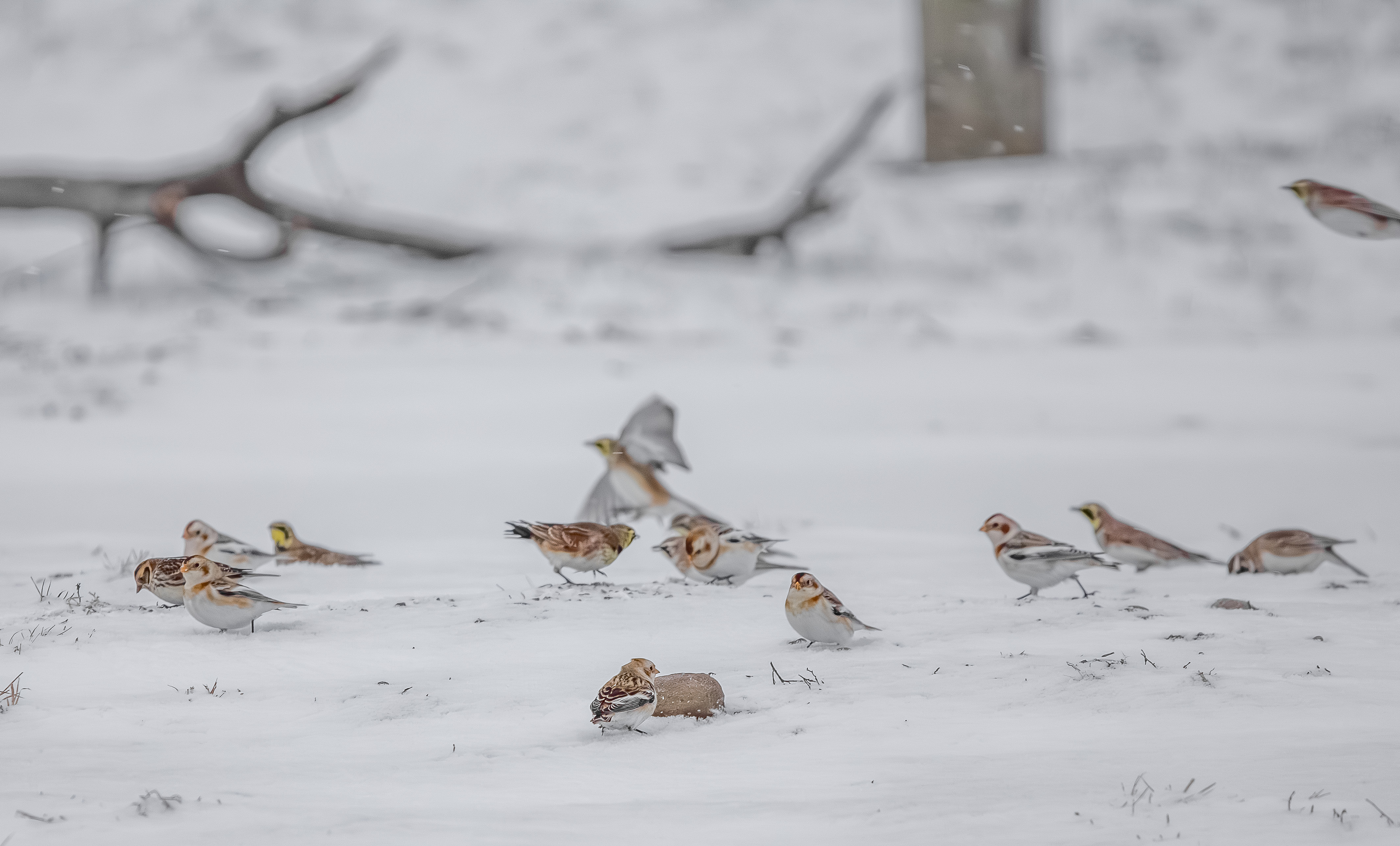
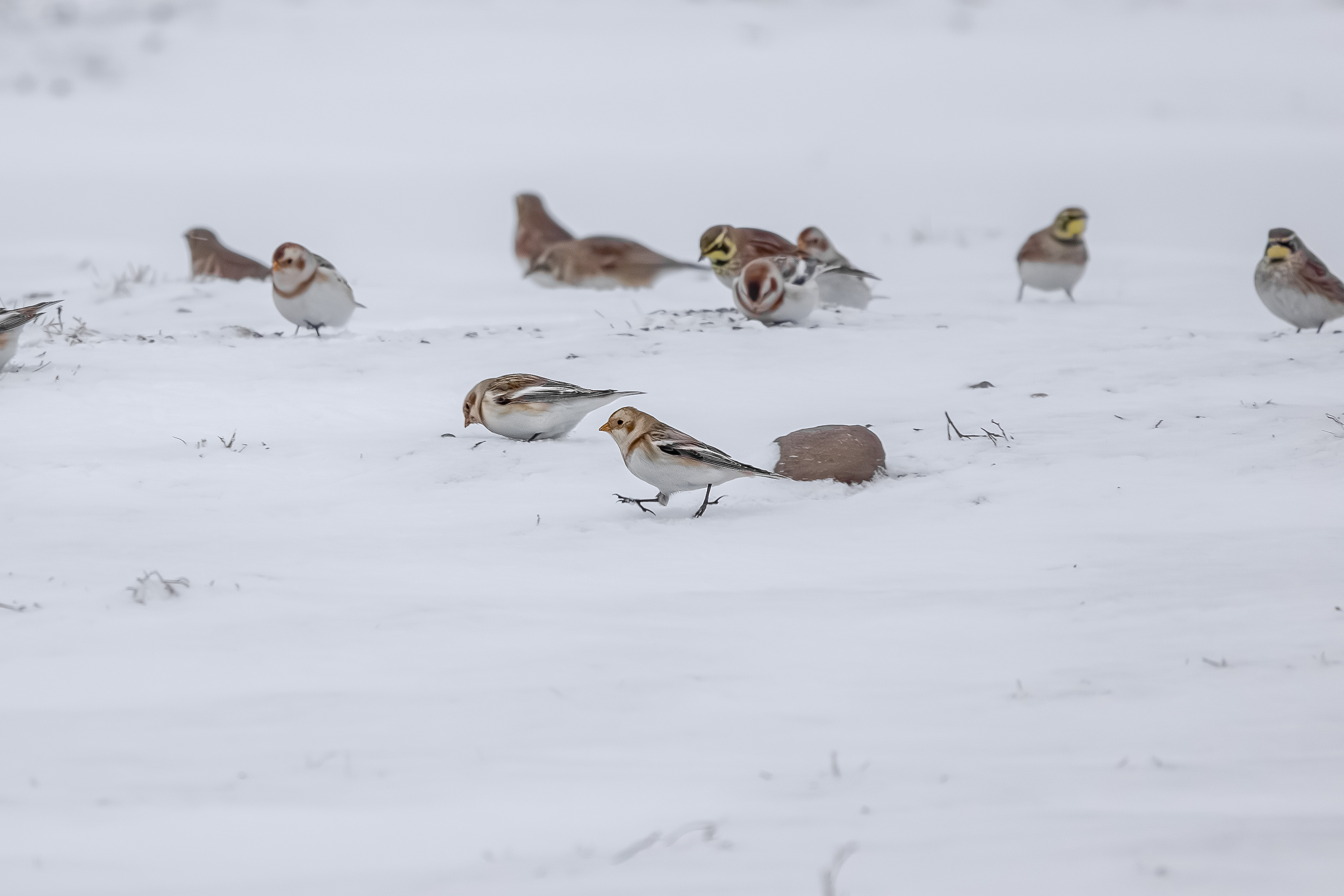
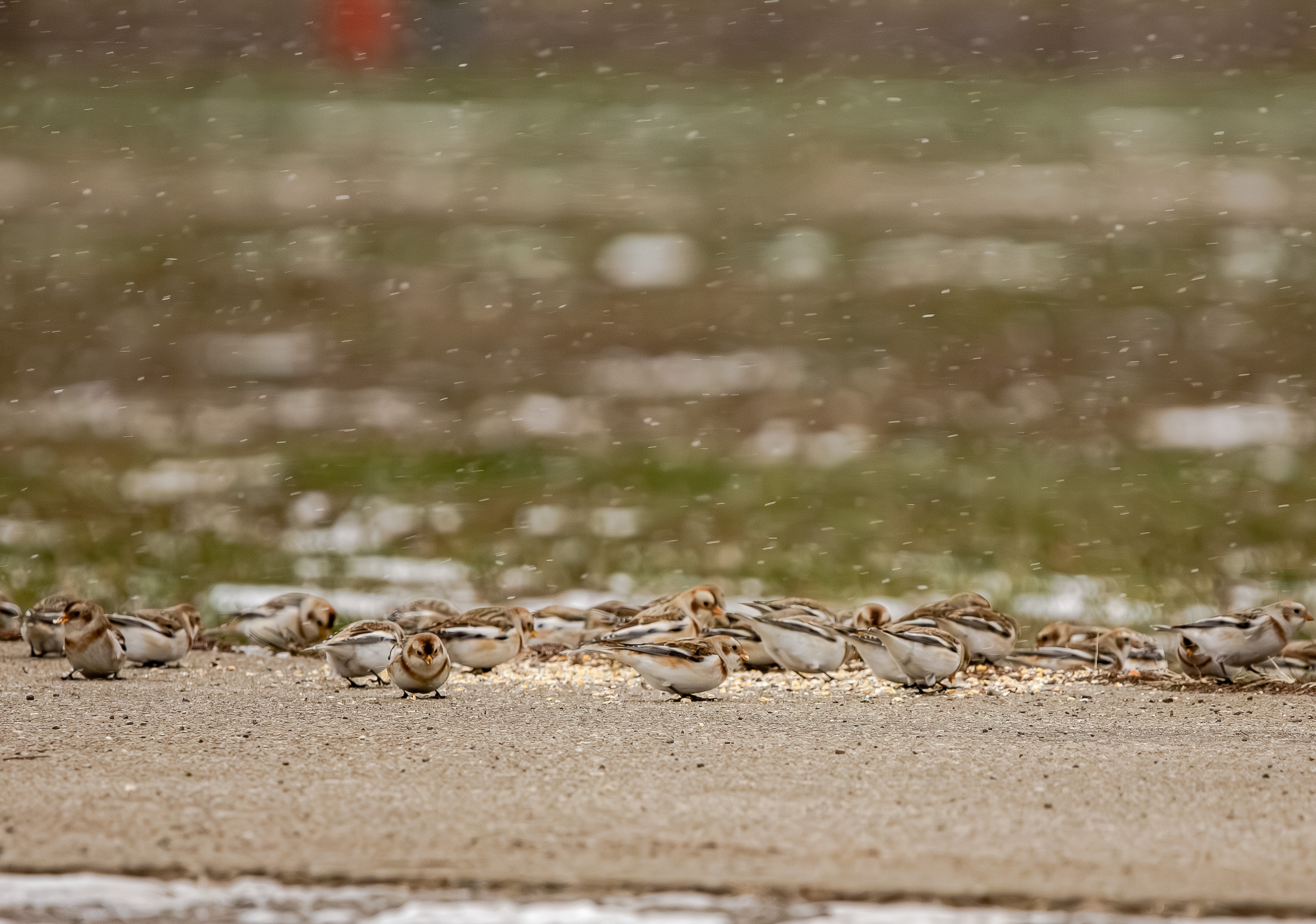
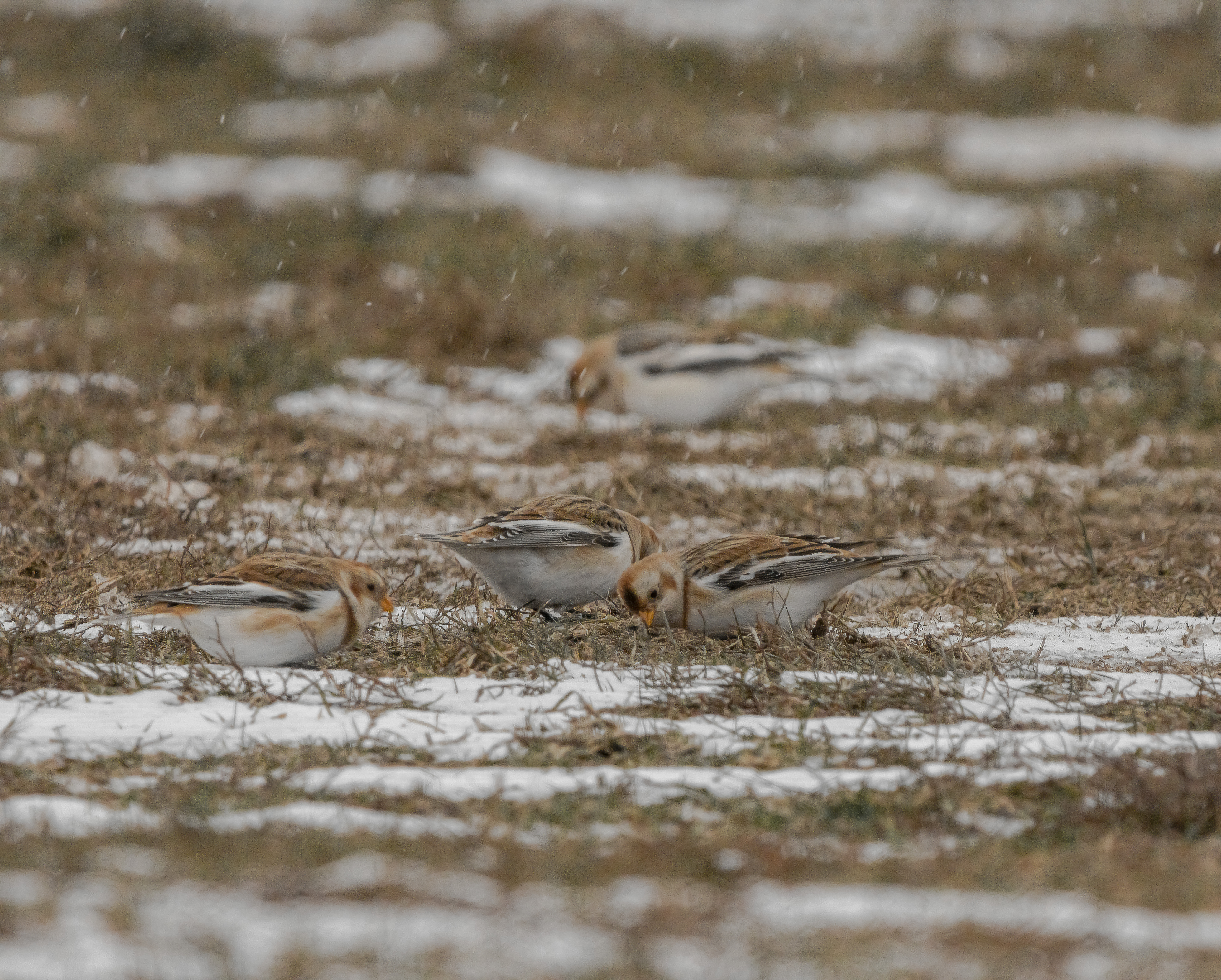

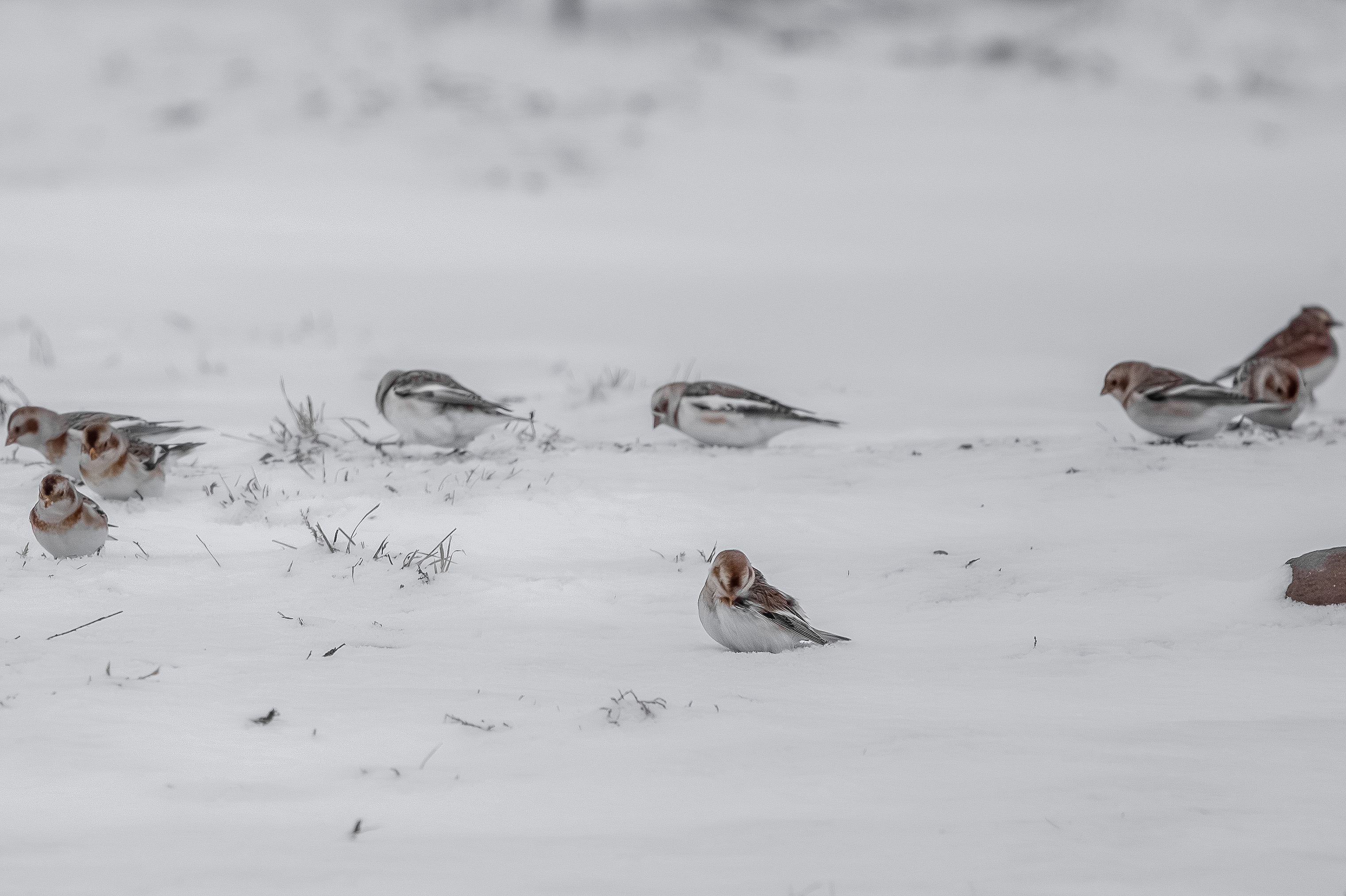
The Snow Bunting (Plectrophenax nivalis) is a hardy Arctic songbird best known for its striking white-and-black plumage and its ability to survive some of the coldest environments on Earth. Often called the “snowflake bird,” the Snow Bunting is one of the northernmost breeding passerines in the world. It is a seasonal visitor to northern parts of the United States during winter, where it frequents open fields, beaches, and tundra-like landscapes.
Physical Description
Snow Buntings are medium-sized songbirds with a stocky build and short, conical bills adapted for seed eating.
Plumage
Breeding males: Bright white body with bold black wings and black markings on the back. Breeding females: More muted tones with brownish-black and gray. Winter plumage: Both sexes appear browner and buff-colored, providing camouflage against snowy and rocky terrain.
Size
Length: 6–7 inches (15–18 cm), Wingspan: 12–14 inches (30–35 cm), Weight: 1.1–1.5 ounces (30–42 g)
Habitat and Range
Breeding Range
Snow Buntings breed in high Arctic regions, including:
Northern Canada, Greenland, Alaska, Siberia, and Arctic islands.
They nest in rocky crevices, cliffs, and tundra landscapes.
Winter Range
During winter, Snow Buntings migrate south to: Northern United States, Southern Canada, Coastal beaches, Open farmland, Prairies, and frozen lakeshores.
They are especially common in windswept, treeless areas that resemble Arctic tundra.
Behavior and Adaptations
Snow Buntings are uniquely adapted to cold environments:
Dense feathering, including feathers on their legs and feet, a high metabolic rate to maintain body heat, and the ability to forage in subzero temperatures
They are highly social in winter and often form large, fast-moving flocks that twist and turn in synchronized flight.
Diet and Feeding
The Snow Bunting is primarily granivorous but shifts its diet seasonally.
Diet Includes:
Grass and weed seeds, Sedges, Insects and larvae (especially during breeding season), Spiders and small invertebrates.
In winter, Snow Buntings often forage on the ground, sometimes scratching through snow to reach seeds.
Breeding and Nesting
Nesting
Nests are built in rock crevices or cavities. Constructed from grasses, moss, and feathers, lined heavily for insulation.
Reproduction
Clutch size: 4–7 eggs; egg color: pale blue or greenish with brown spotting; incubation: ~12–14 days; both parents feed the chicks.
Vocalizations
Snow Buntings have a pleasant, tinkling song often described as musical and flowing. Calls include: Soft whistles, Metallic chirps. Flight calls are used for flock coordination
Their song is most commonly heard on Arctic breeding grounds.
Migration Patterns
Snow Buntings are short- to medium-distance migrants. Unlike many songbirds, they migrate during harsh weather and can be active during snowstorms. Some individuals exhibit partial migration, with southernmost birds remaining closer to breeding areas.
Conservation Status
IUCN Status: Least Concern. Population Trend: Declining in parts of their range
Threats
Climate change is affecting Arctic breeding habitat, snow cover, wintering-ground habitat loss, and agricultural pesticide exposure.
Snow Bunting and Climate Change
Snow Buntings are considered an indicator species for Arctic ecosystem health. Warming temperatures can: Reduce suitable breeding habitat, alter insect availability, and increase competition with southern species moving north
Snow Bunting Identification Tips
Look for white flashes in the wings during flight. Observe flocking behavior in open winter landscapes. Compared to a sparrow, Snow Buntings appear chunkier with more extended wings.
Fun Facts About Snow Buntings
One of the few songbirds to overwinter in the High Arctic. Feathers on their legs act like natural insulation. Known to walk rather than hop when feeding. Historically associated with sailors as a sign of approaching land
Snow Bunting in Birding and Photography
Snow Buntings are popular among winter birders due to:
High contrast plumage against snow, dynamic flock movement, accessibility in open landscapes
The best times to observe them are early morning or late afternoon during the winter months.
 Wild Bird Journal
Leave a comment