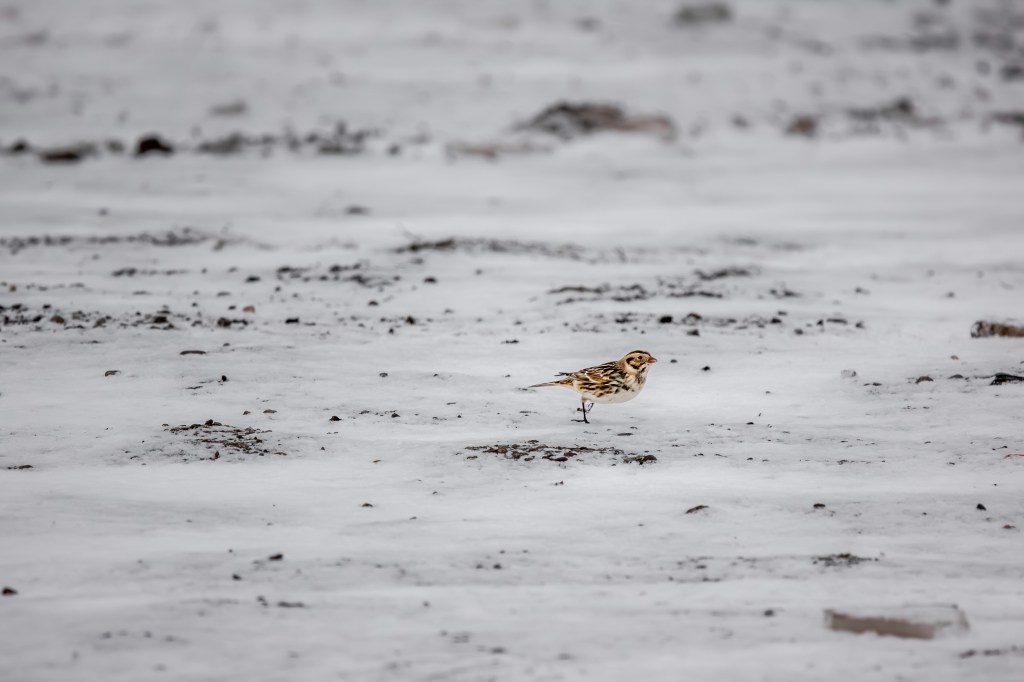

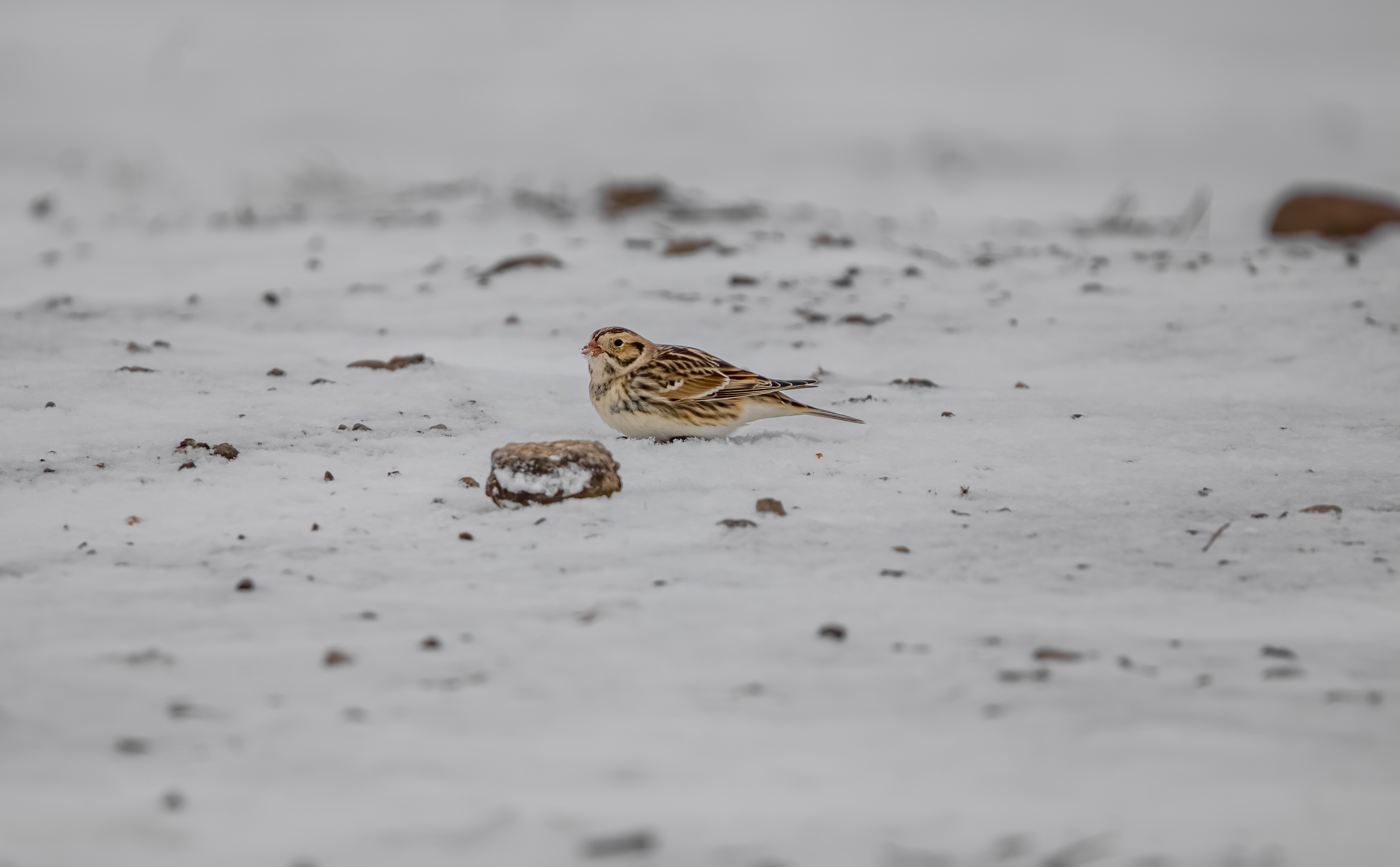
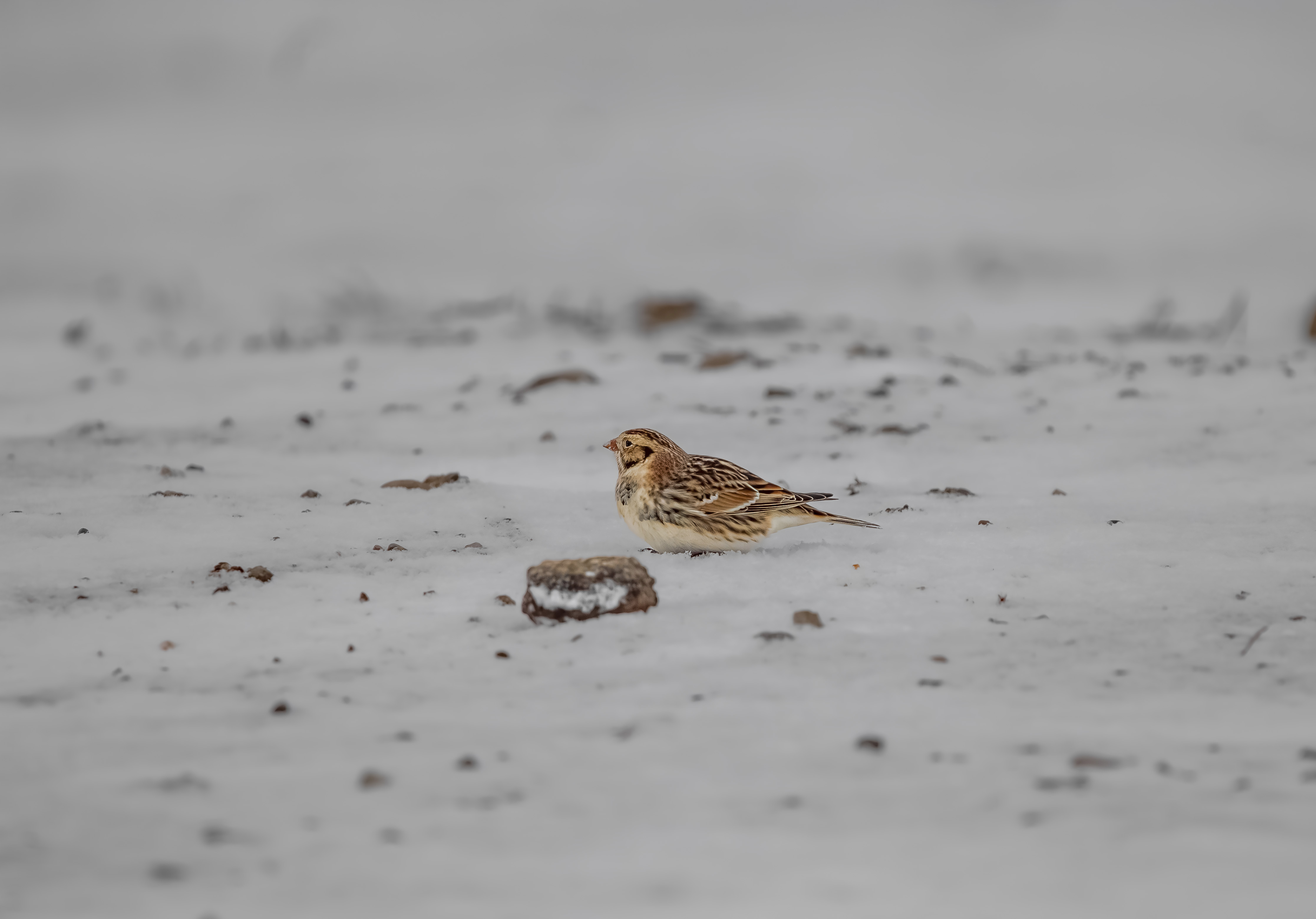
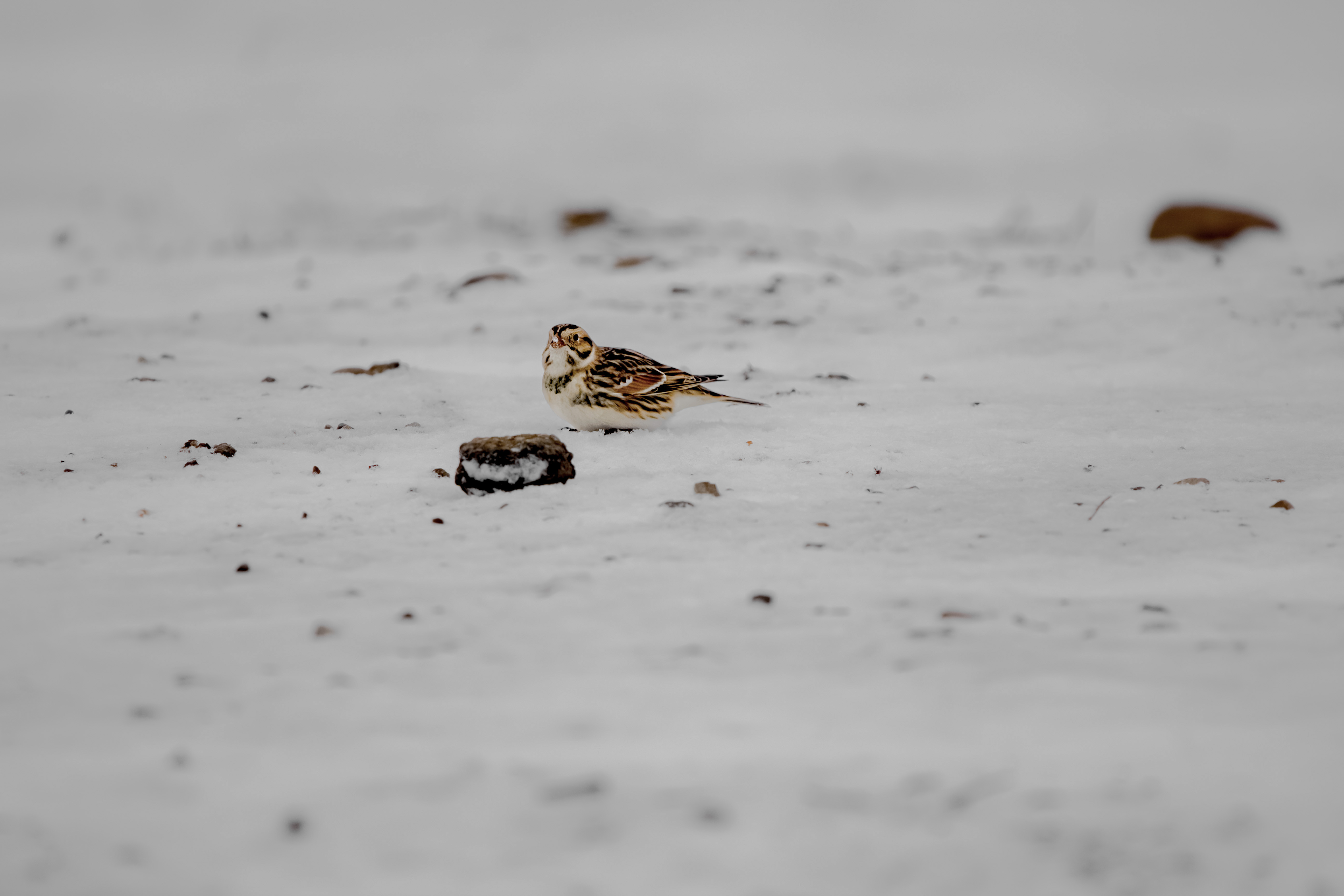
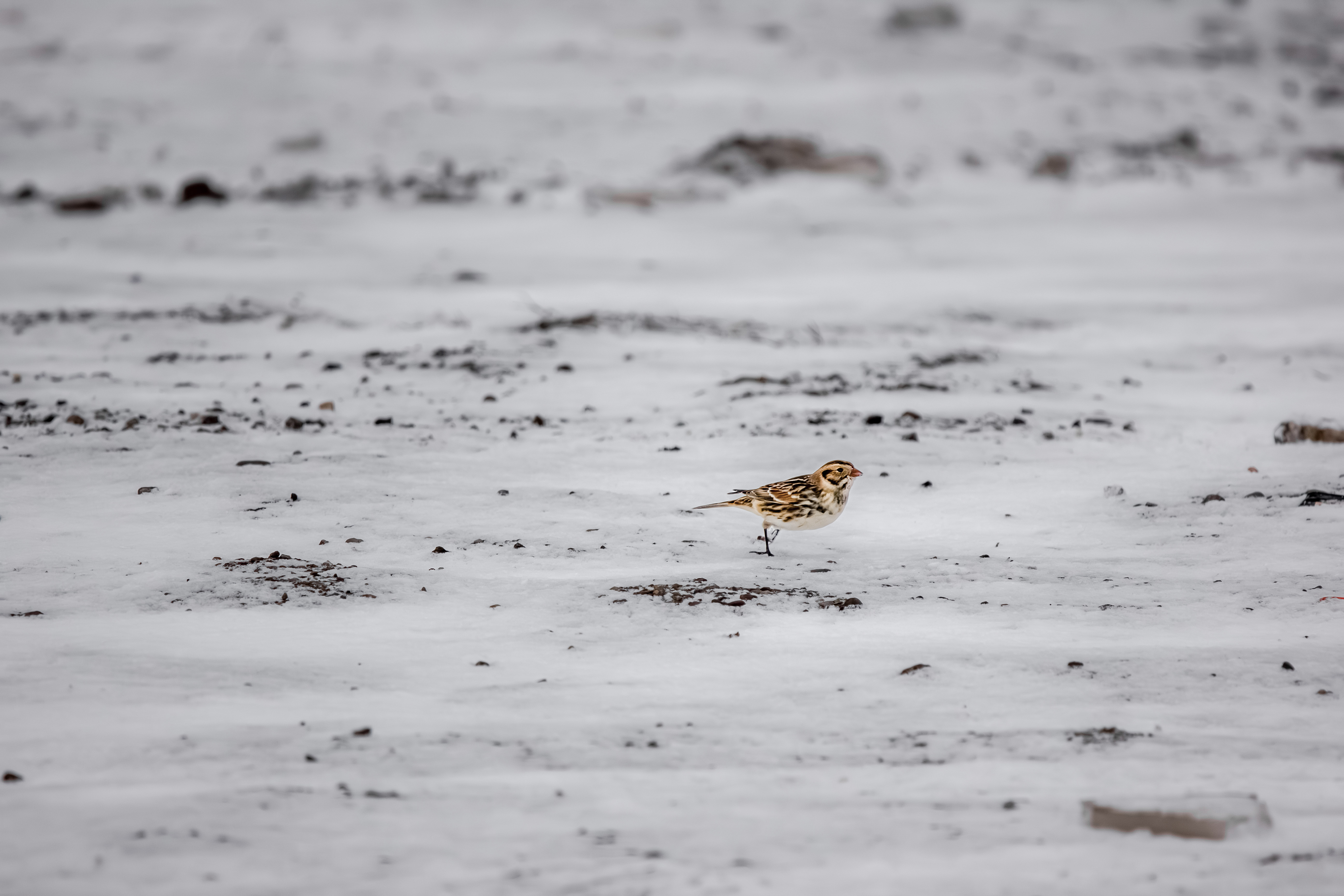

The Lapland Longspur is one of the most iconic birds of the high Arctic and open winter prairies. Hardy, social, and built for extremes, this species breeds farther north than almost any other songbird and then migrates thousands of miles to survive harsh winters across open farmland, grasslands, and shorelines. In winter, Lapland Longspurs often appear in massive flocks that seem to ripple across snowy fields like wind-driven leaves.
Physical Description
Size
Length: 5.5 to 6.3 inches, Wingspan: 10 to 11 inches, Weight: 0.7 to 1.0 oz.
General Appearance
Stocky, compact body. Short conical bill adapted for seeds. Long hind claw, known as a “longspur,” used for stability on tundra and snow.
Breeding Plumage (Males)
Jet-black face, throat, and chest. Chestnut nape and collar. Bold white eyebrow. Crisp contrast between black, white, and warm brown tones
Nonbreeding Plumage and Females
Overall, buffy brown with heavy streaking. Subtle facial markings. Less contrast, but still finely patterned. Excellent camouflage against tundra grasses and winter stubble
Range and Migration
Breeding Range
Arctic tundra across: Northern Alaska, Northern Canada, Greenland, Northern Scandinavia, and Siberia
Winter Range
Southern Canada, northern and central United States, occasionally as far south as the southern Great Plains
Lapland Longspurs are long-distance migrants, traveling up to 4,000 miles between breeding and wintering grounds. Their migration is closely tied to snow cover and food availability rather than strict calendar timing.
Habitat
Breeding Habitat
Open Arctic tundra, sparse grasses, mosses, and low shrubs. avoids trees entirely
Winter Habitat
Agricultural fields, shortgrass prairies, coastal flats and dunes, frozen lake edges and shorelines
They prefer wide-open landscapes with clear sightlines, reflecting their tundra origins.
Diet and Foraging Behavior
Diet
Seeds, especially: Grasses, Weeds, Agricultural grains.
Insects during breeding season: Beetles, Flies, Caterpillars, Spiders
Foraging Style
Ground foragers. Walk and hop methodically. Often forage in dense flocks in winter. Will burrow into snow to access buried seeds
Their ability to digest hard seeds and survive long winters makes them extremely resilient.
Song and Vocalizations
The Lapland Longspur’s song is surprisingly delicate for such a rugged bird.
Song
A cascading, tinkling series of notes. Often delivered during aerial display flights. Described as silvery, sweet, and musical
Calls
Dry rattles and soft chirps are used for flock communication
Their song is one of the most common sounds of the Arctic summer.
Breeding and Nesting
Courtship
Males perform fluttering song flights. Display the black chest prominently. Sing continuously during peak breeding
Nesting
Nest built on the ground. Hidden among grasses or tundra hummocks. Constructed from grass, moss, and feathers
Eggs
Clutch size: 4 to 6 eggs. Pale with brown spotting. Incubation: about 12 to 14 days
Both parents help feed the chicks, which grow rapidly in the short Arctic summer.
Adaptations to Extreme Environments
Lapland Longspurs are masters of survival.
Dense plumage provides insulation. High metabolic efficiency. Ability to forage in deep snow. Strong flight endurance for long migrations. Ground nesting reduces exposure to Arctic winds.
Few songbirds are as well adapted to cold environments.
Predators and Threats
Natural Predators
Arctic foxes, weasels, Jaegers, hawks, and falcons
Human-Related Threats
Habitat loss from agricultural intensification. Pesticide use reduces insect availability. Climate change is altering tundra ecosystems.
Despite these pressures, Lapland Longspurs remain one of the most abundant Arctic songbirds.
Conservation Status
IUCN Status: Least Concern. The population is estimated in the tens of millions. Stable overall, but regional declines possible
Their massive population size masks localized habitat threats, especially in wintering grounds.
Interesting and Lesser-Known Facts
Lapland Longspurs are among the most numerous breeding birds in the Arctic. They often roost in snow burrows during extreme cold. Their long hind claw inspired the name “longspur”. They can survive temperatures well below zero Fahrenheit. Fossil evidence suggests they have occupied Arctic regions for thousands of years
Identification Tips
Look for streaky brown birds flushing from snowy fields. Watch for large swirling flocks in winter. Listen for dry rattling calls overhead. In spring, males stand out with bold black and chestnut plumage
Why the Lapland Longspur Matters
The Lapland Longspur is a keystone species of the Arctic tundra, helping regulate insect populations and serving as prey for numerous predators. In winter, their massive flocks are living indicators of grassland health and agricultural ecosystems.
They are a reminder that even the harshest landscapes support rich and complex life.
Learn More
For additional scientific and identification details, visit the Cornell Lab of Ornithology species account:
https://www.allaboutbirds.org/guide/Lapland_Longspur
 Wild Bird Journal
Leave a comment