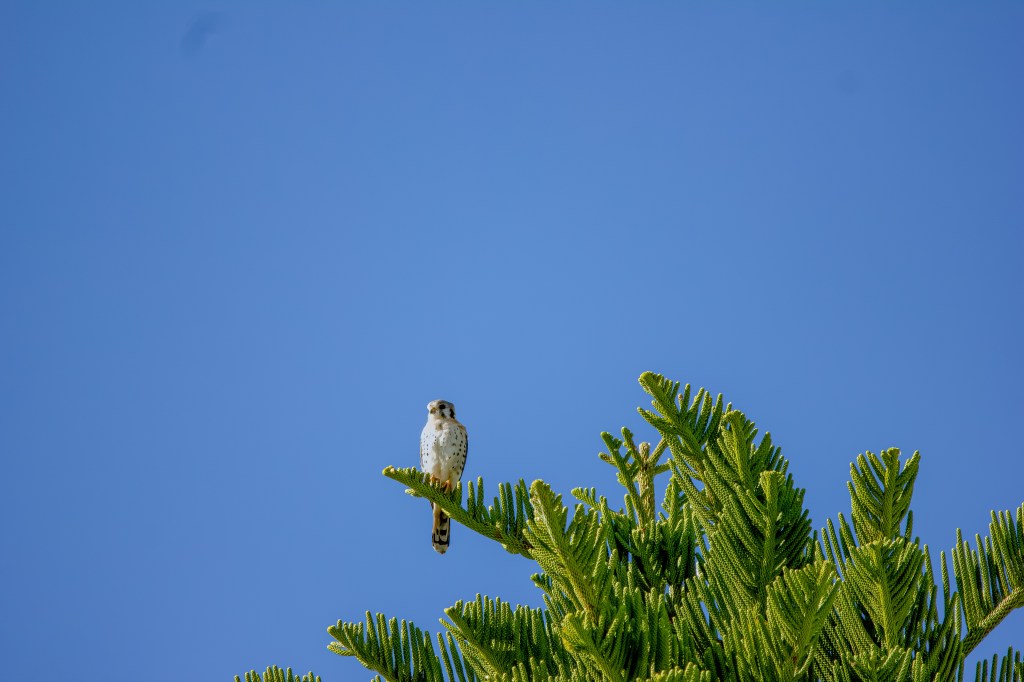
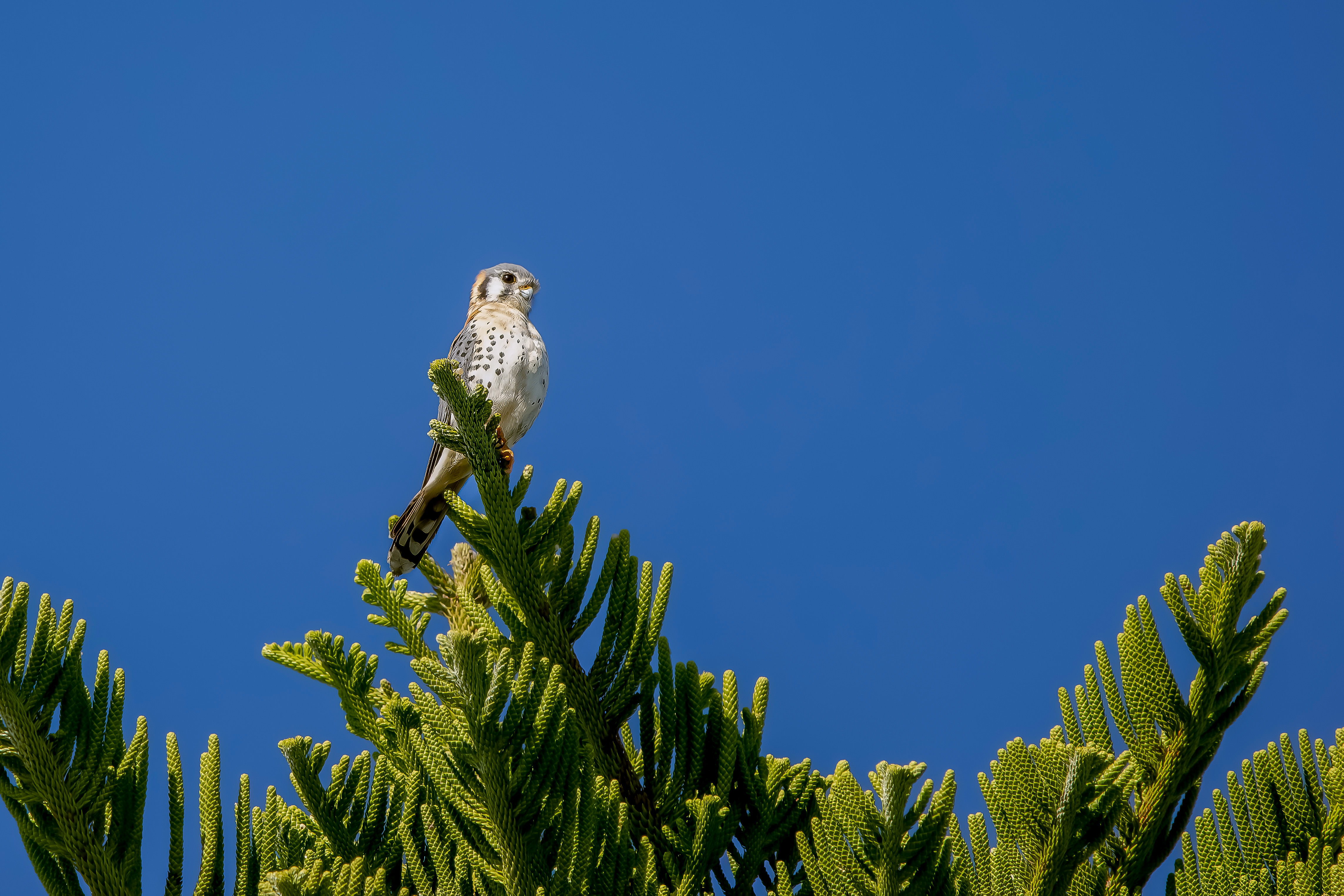
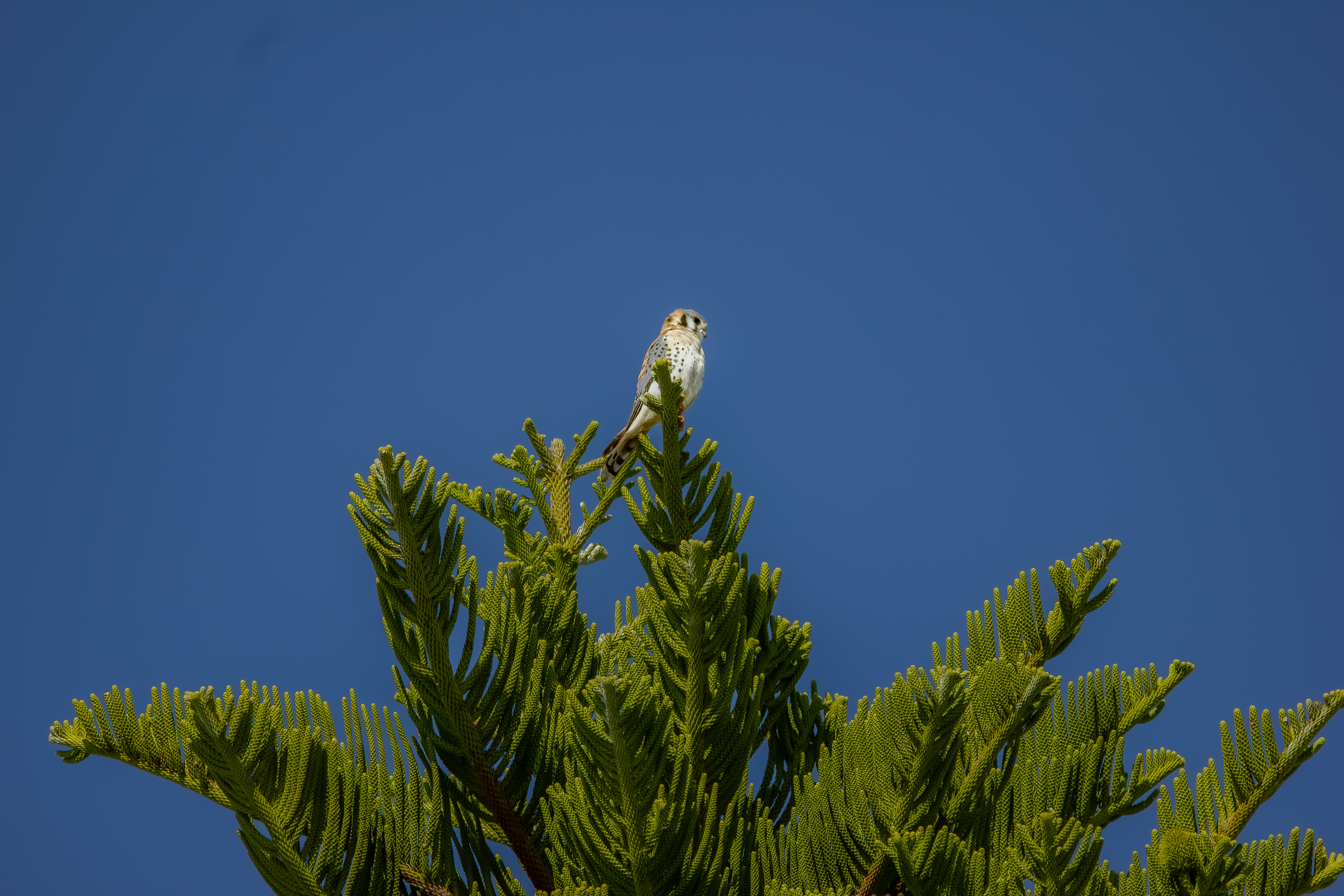
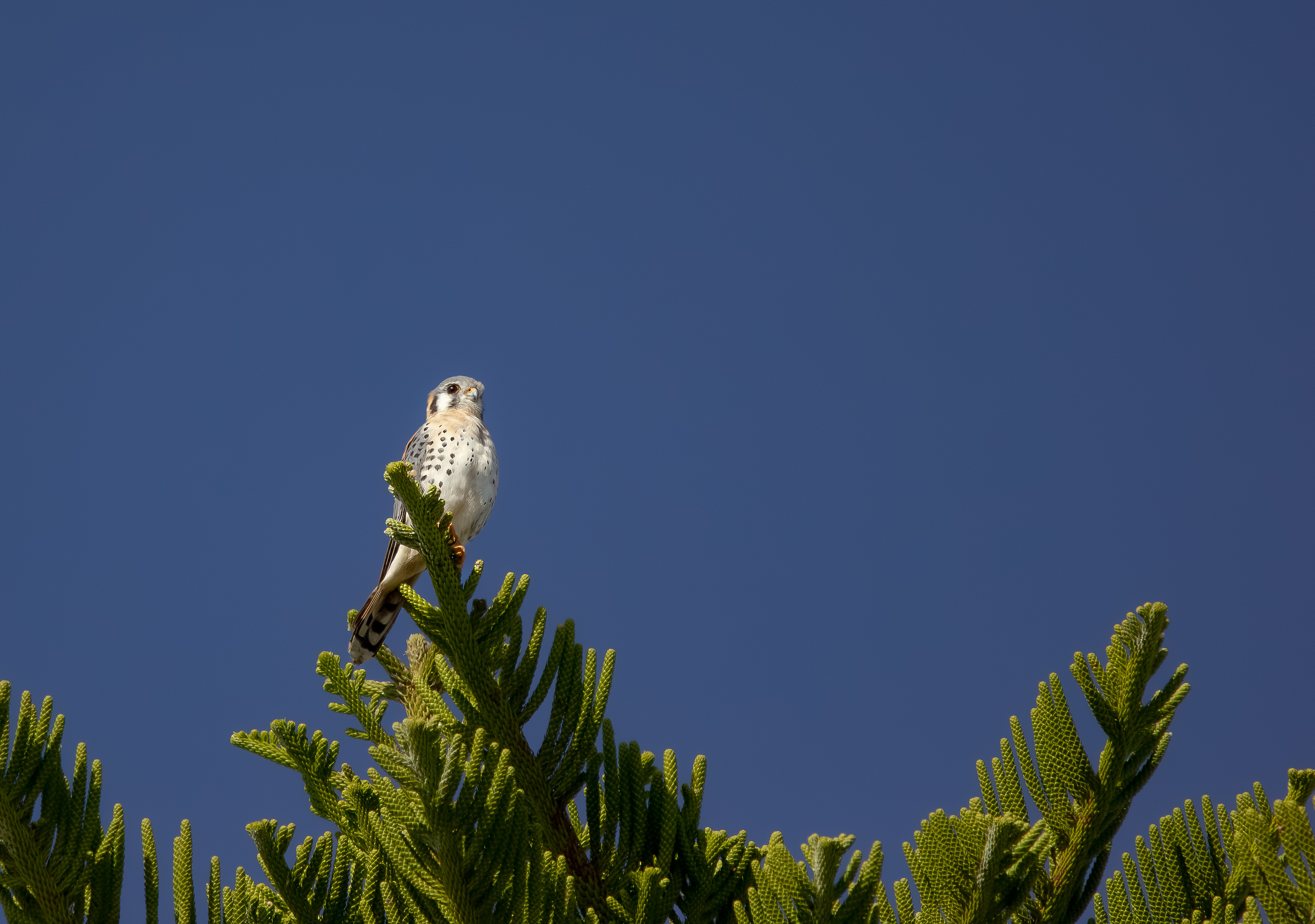
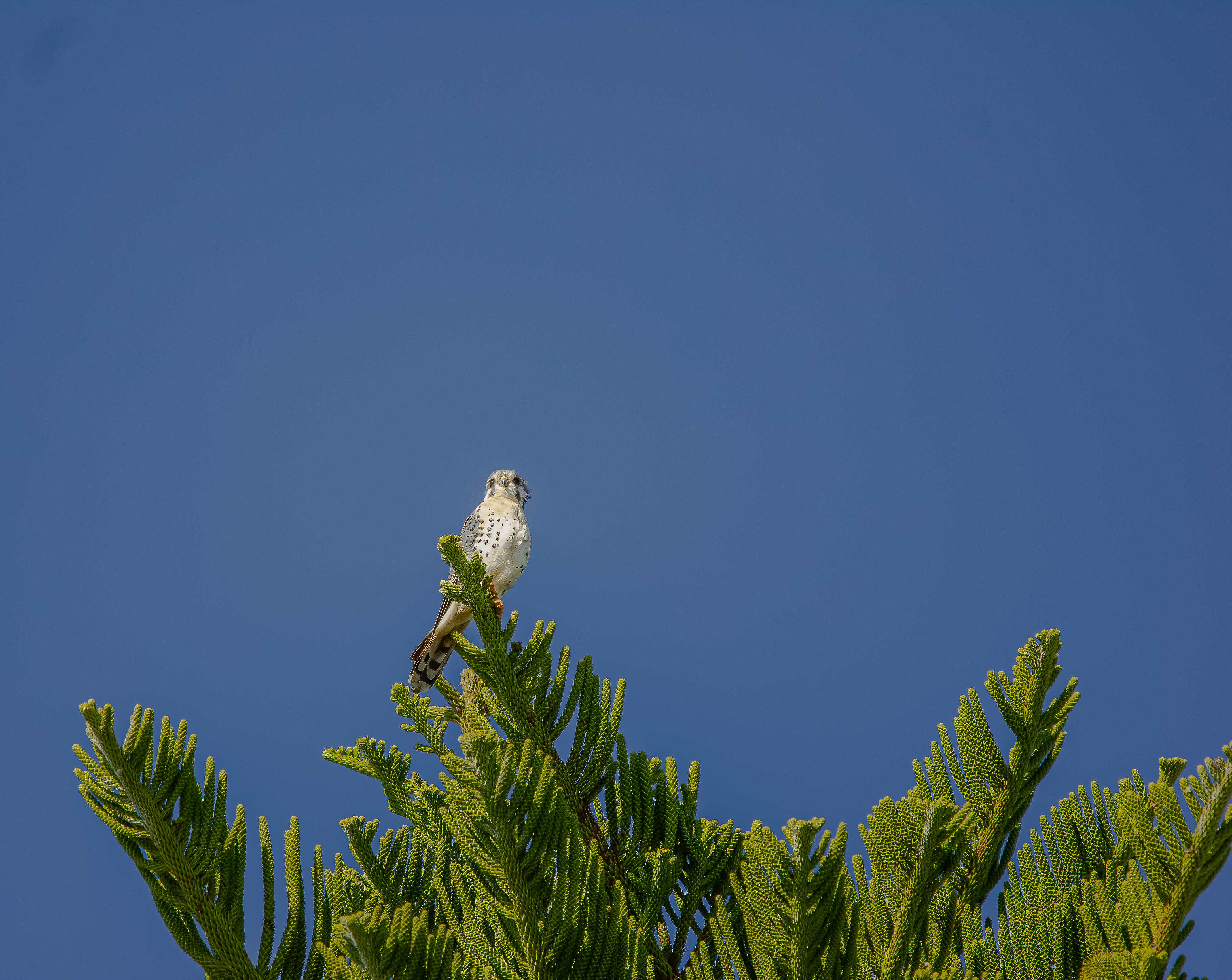

The American Kestrel (Falco sparverius) is the smallest and most widespread falcon in North America, known for its striking plumage, hovering hunting style, and adaptability to open landscapes. Often called the “sparrow hawk”, this colorful raptor is a favorite among birdwatchers, wildlife photographers, and conservationists.
American Kestrel Identification
Adult Male American Kestrel
Blue-gray wings, Reddish-brown back with black barring, Two bold vertical black facial stripes (“mustache marks”), White cheeks and throat, Rust-colored tail with a single black band and white tip
Adult Female American Kestrel
Larger than males, Reddish-brown wings and back with heavy barring, Same facial stripes as males but more muted, Brown tail with multiple black bands
Juvenile American Kestrel
Similar to adults but with more streaking on the chest, Duller coloration, Less defined facial markings
Key Field Marks: Small falcon size, long pointed wings, upright posture when perched, tail flicking, and frequent hovering.
American Kestrel Size Comparison
The American Kestrel is often confused with:
Merlin (larger, stockier, darker). Sharp-shinned Hawk (broader wings, longer tail, no hovering). Eastern Bluebird (similar size, but vastly different flight and behavior)
American Kestrel Habitat
American Kestrels thrive in open and semi-open landscapes, including:
Grasslands and prairies. Agricultural fields. Farmland edges. Desert scrub. Coastal dunes. Urban and suburban areas with open spaces. Roadsides and utility lines
They rely heavily on perches such as fence posts, power lines, dead trees, and nest boxes.
American Kestrel Range and Distribution
- North America: Widespread across the United States, Canada, and Mexico
- Central & South America: Extends into the Caribbean and northern South America
- One of the most widely distributed falcons in the Western Hemisphere
American Kestrel Migration
American Kestrel migration patterns vary by region:
Northern populations: Long-distance migrants. Southern populations: Year-round residents. Fall migration: Peaks from September to November. Spring migration: February to April
During migration, kestrels are commonly seen along:
Coastlines. Mountain ridges. Open agricultural corridors
American Kestrel Diet and Hunting Behavior
What Do American Kestrels Eat?
American Kestrels are opportunistic predators feeding on:
Grasshoppers and crickets, Beetles and moths, Mice and voles, Small birds, Lizards and snakes, Occasionally bats
Hunting Techniques
Hover-hunting (kiting): Facing into the wind while scanning the ground. Perch-and-pounce: Dropping swiftly from elevated perches. Head bobbing: Enhances depth perception
Their exceptional eyesight allows them to see ultraviolet light, helping locate urine trails of rodents.
American Kestrel Behavior
Diurnal (active during daylight). Highly territorial during breeding season. Frequently flicks tail when perched. Often solitary or in pairs. Aggressive toward intruders near nest sites
American Kestrel Nesting and Breeding
Nesting Sites
American Kestrels are cavity nesters and do not build their own nests. They rely on:
Tree cavities, Old woodpecker holes, Cliff crevices, Nest boxes, Building ledges
Breeding Cycle
Eggs: 3–7 per clutch. Incubation: ~30 days. Fledging: 28–31 days. Both parents feed the young
Nest boxes have become essential due to declining natural cavities.
American Kestrel Vocalizations
Common American Kestrel calls include:
“klee-klee-klee” – alarm or agitation. “kil-kil-kil” – territorial defense. Chattering calls during courtship
Their calls are high-pitched and sharp.
American Kestrel Conservation Status
Although listed as Least Concern, American Kestrel populations have declined significantly in parts of North America, especially in the Northeast and Midwest.
Major Threats
Loss of open habitat. Decline in insect populations. Reduced nesting cavities. Pesticide exposure. Competition with European Starlings
Conservation Efforts
Nest box programs. Grassland habitat restoration. Monitoring through eBird and Breeding Bird Surveys
American Kestrel and Humans
Often seen along highways and farmland. One of the first raptors people learn to identify. Popular species for education and conservation outreach. Frequently photographed due to tolerance of human presence
American Kestrel in Winter
In winter, American Kestrels:
Shift diets toward rodents and birds. Increase roadside hunting. Become more solitary. May move south or to lower elevations
Fun Facts About the American Kestrel
The smallest falcon in North America. Can hover like a hummingbird. Sees ultraviolet light. One of the most colorful raptors. Uses human-made structures extensively
Why the American Kestrel Matters
The American Kestrel is a keystone indicator species. Population declines can signal broader ecosystem problems such as insect loss and habitat degradation.
 Wild Bird Journal
Leave a comment