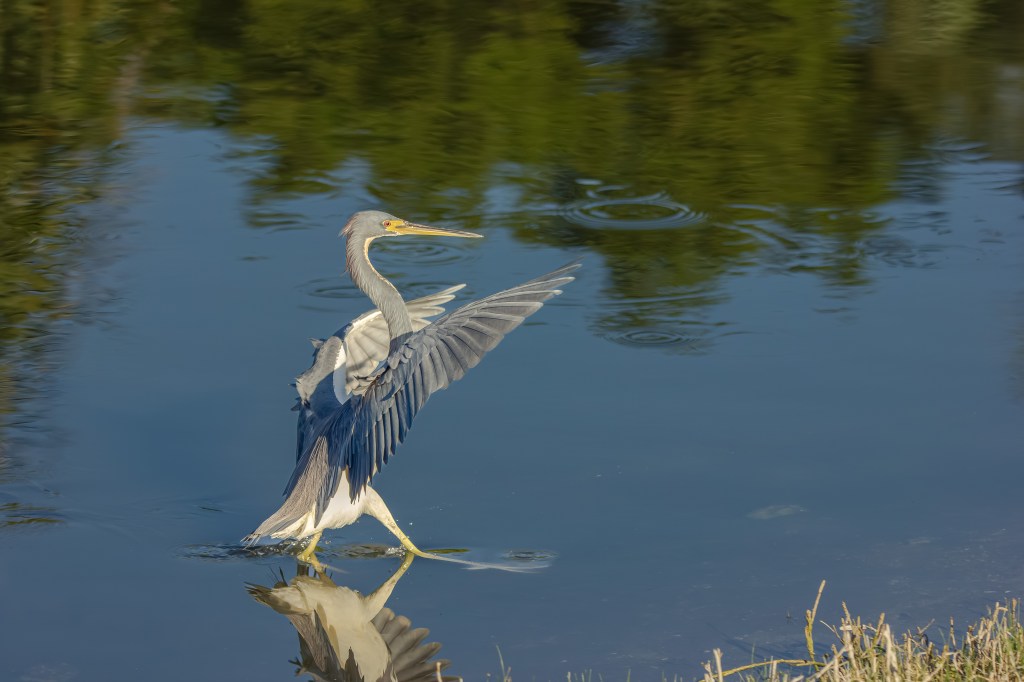
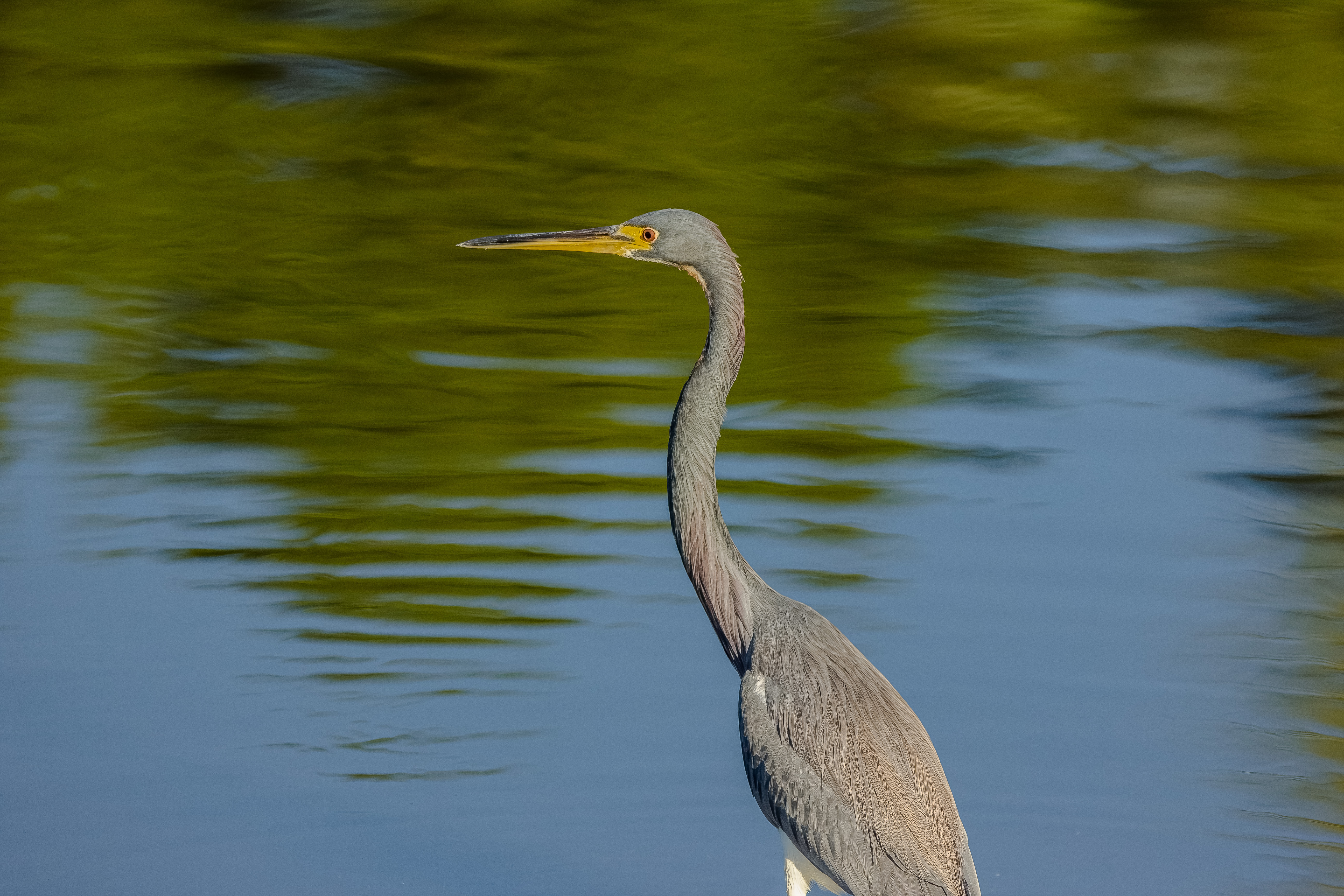
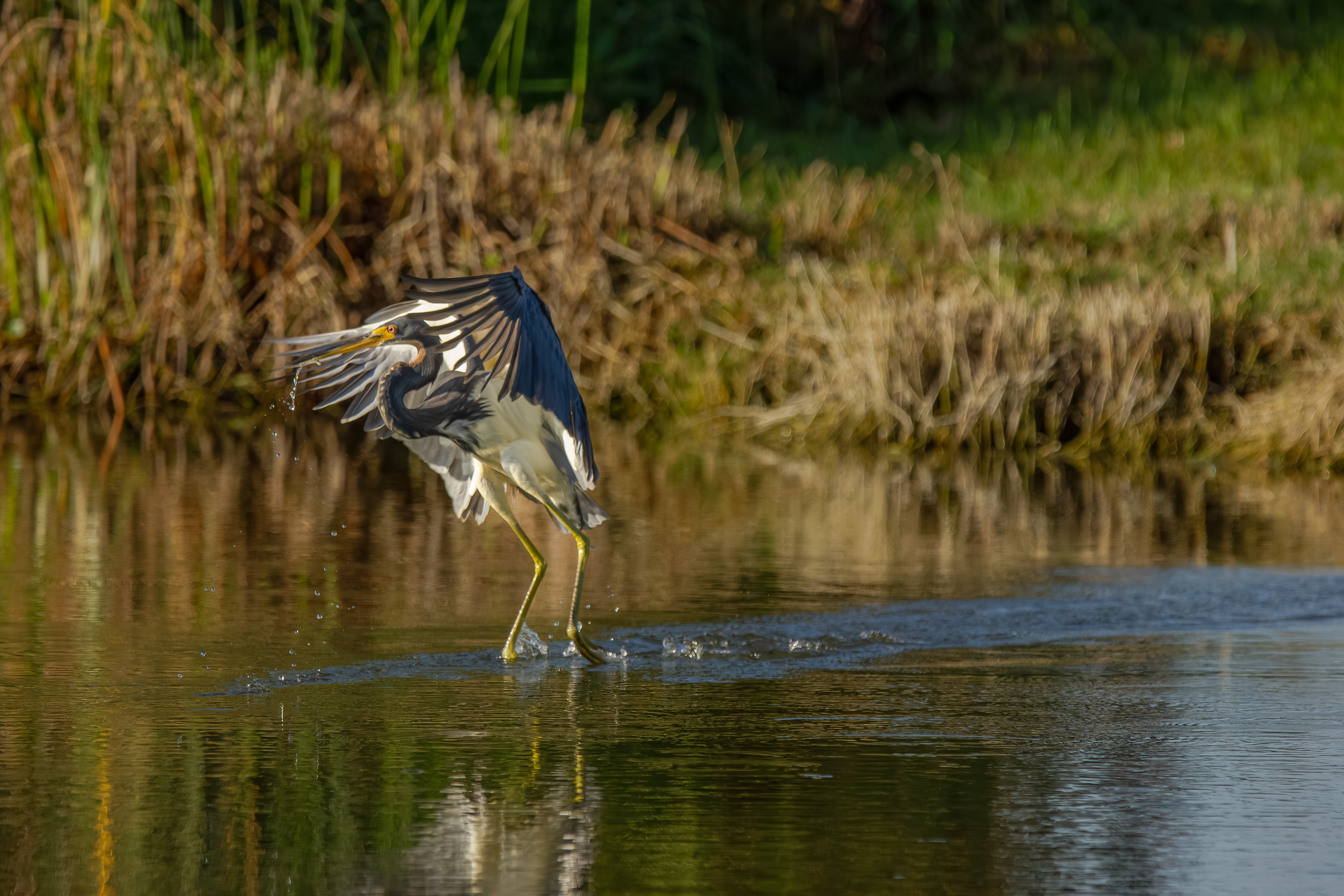
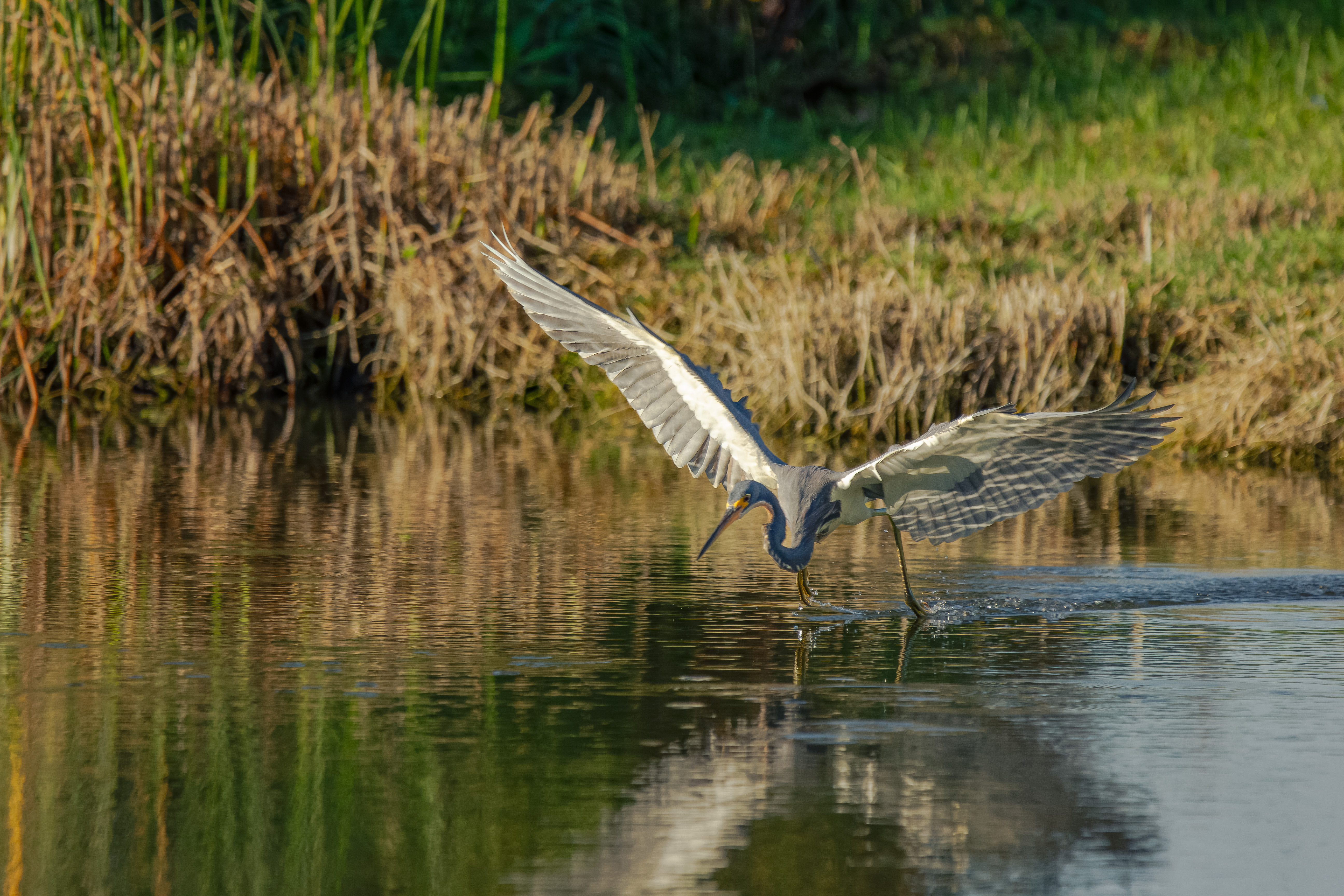
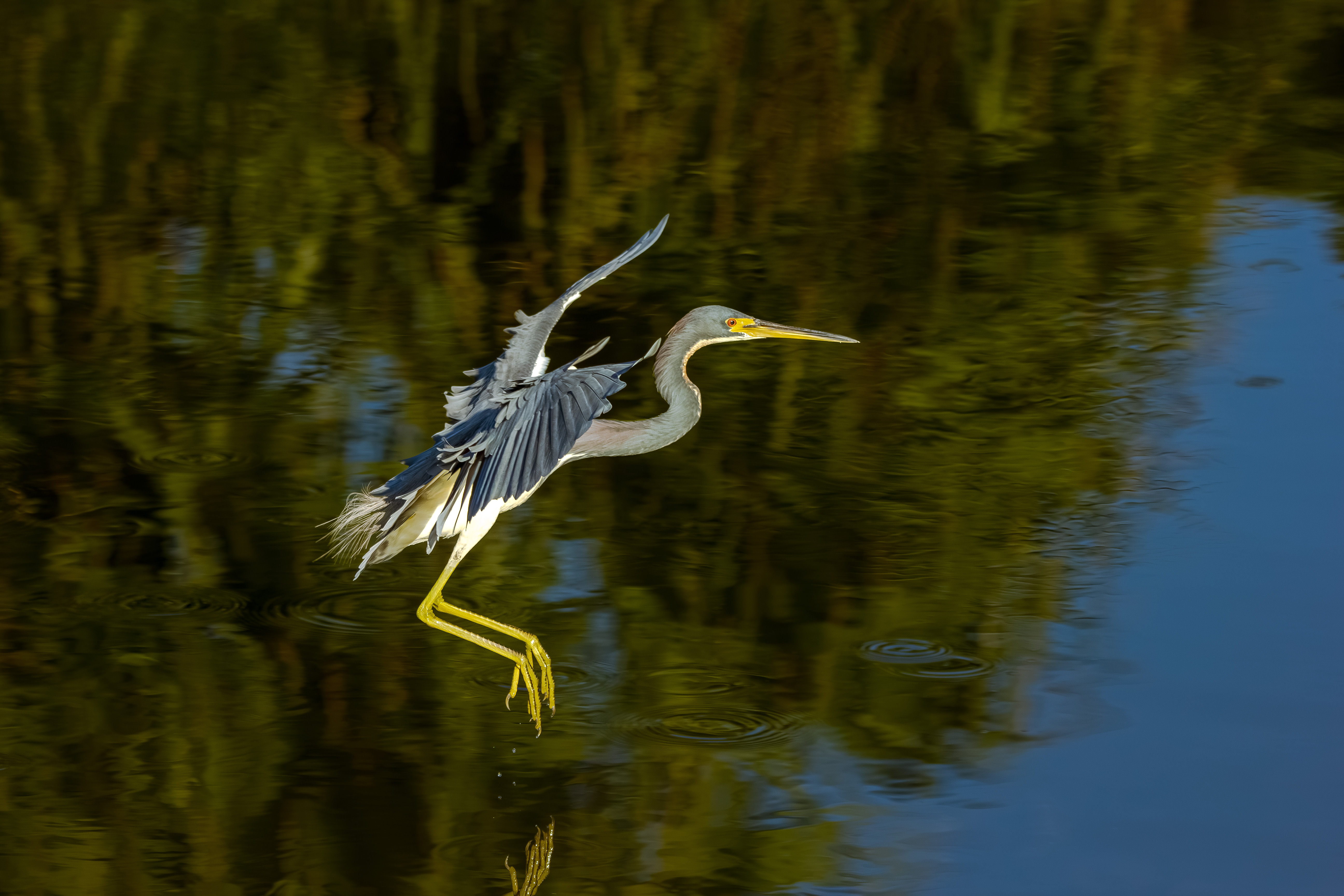
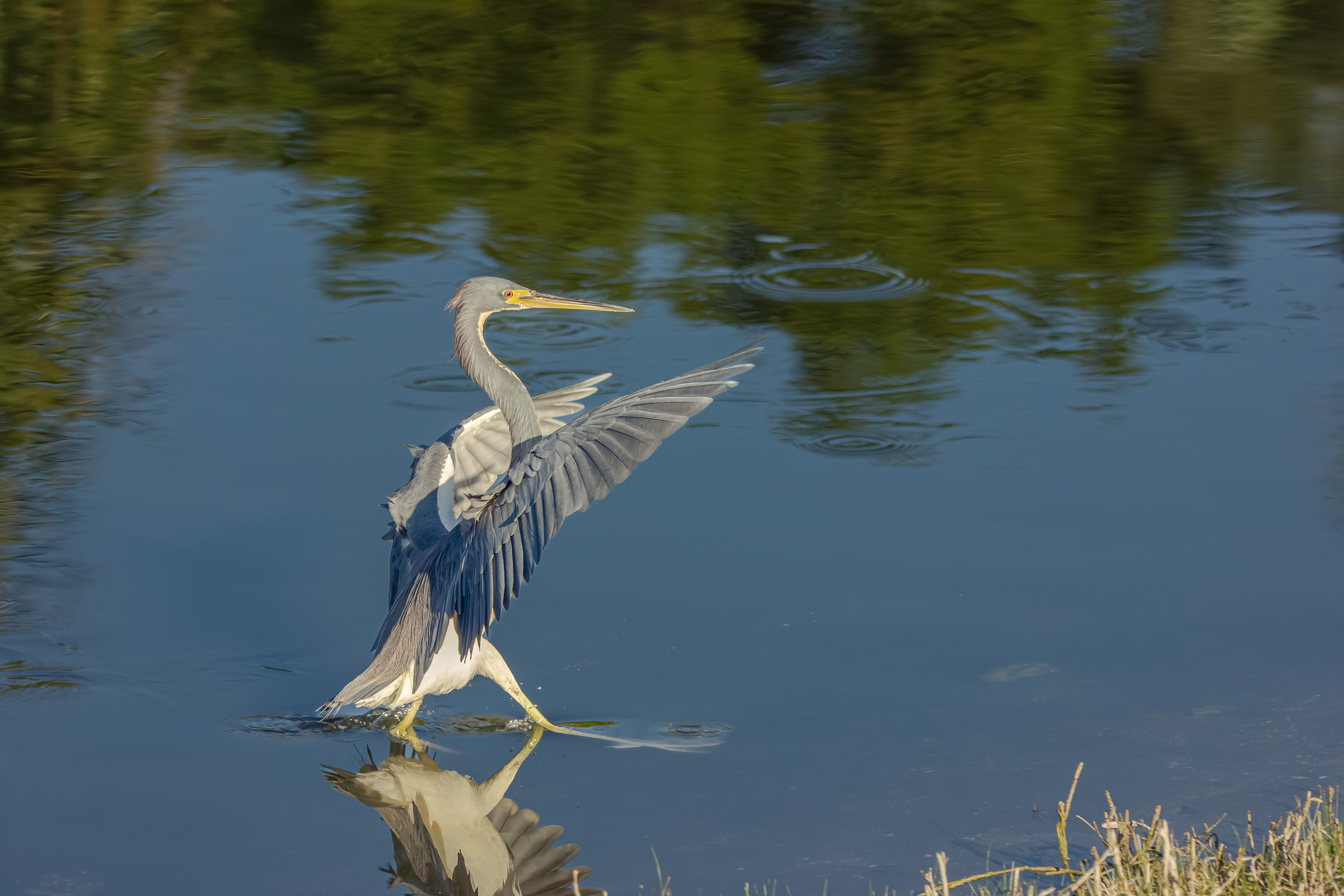
The Tricolored Heron is a slender, elegant wading bird native to the Americas, best known for its striking blue-gray, white, and rufous coloration and its energetic feeding behavior. Formerly known as the Louisiana Heron, this species is a member of the heron family, Ardeidae, and is commonly found in coastal wetlands, marshes, estuaries, and mangroves.
Unlike many herons that rely on patient stillness, the Tricolored Heron is an active hunter, often seen running, hopping, and lunging through shallow water.
Physical Description
Size & Shape
Length: 24–27 inches (61–69 cm), Wingspan: ~36 inches (91 cm), Weight: 12–16 oz (350–450 g), Build: Slim, long-necked, long-legged, lightweight heron
Adult Plumage
Head & Neck: Slate blue with a distinct white stripe running down the front of the neck. Body: Blue-gray upperparts. Belly: Clean white, Shoulders/Upper Neck: Rich rufous or chestnut tones, Legs: Yellow-green to olive, Bill: Long, slender, bluish-gray with darker tip
Breeding Plumage
During breeding season, adults develop: Long wispy white plumes on the back and neck, Brighter facial skin, More vivid rufous tones
Juveniles
Browner overall. Less contrast between colors. White belly still present, but less crisp.
Identification Tips
Slender and more delicate than the Great Blue Heron. Dark upperparts + white belly = key field mark. Active, fast feeding style. Often confused with:. Little Blue Heron (lacks white belly). Snowy Egret (entirely white)
Range & Distribution
Geographic Range
Breeds: Southeastern United States (Florida, Gulf Coast, Carolinas), Mexico, Central America, Caribbean, Northern South America, Non-breeding / Winter Range: Southern U.S. coasts, Central & South America
Migration
Partially migratory. Northern populations migrate south in winter. Florida and tropical populations are largely year-round residents.
Habitat
Tricolored Herons are wetland specialists, favoring: Salt marshes, Mangroves, Tidal flats, Estuaries, Coastal lagoons, Shallow freshwater marshes.
They generally avoid deep water and are rarely seen far inland compared to other herons.
Feeding Behavior & Diet
Hunting Style
One of the most energetic herons: runs through shallow water, darts quickly at prey, uses rapid jabs and lunges, often feeds alone or loosely spaced.
Diet
Primarily carnivorous: small fish (killifish, minnows), crustaceans (shrimp, crabs), aquatic insects, frogs and tadpoles, occasionally small reptiles.
Breeding & Reproduction
Breeding Season
Typically March–July (varies by latitude)
Nesting
Nests in colonies with other wading birds. Nest sites: Mangroves, shrubs, trees over water, nest built of sticks, lined with finer material.
Eggs & Chicks
Clutch size: 3–4 pale blue-green eggs, incubation: ~21–23 days, both parents incubate and feed young, chicks fledge at ~5–6 weeks.
Vocalizations
Generally quiet, but vocal near nests:
Harsh “krrr”, “croak”, or “awk” sounds. Calls are more frequent during courtship and colony interactions.
Behavior
Solitary or loosely social while feeding, these birds often gather in small groups to take advantage of abundant food sources. They are known as colonial nesters, building their homes close together in various environments, which provides safety in numbers against predators. Being diurnal, they are active during the day, engaging in foraging and social interactions as the sun rises and sets. Their remarkable agility and flight capabilities allow them to navigate the air with ease, characterized by steady wingbeats and a distinctive tucked-neck position, making them a captivating sight against the blue sky.
Lifespan
Average: 7–10 years in the wild. Longer in protected habitats.
Predators & Threats
Natural Predators
Raccoons, snakes, birds of prey (especially for chicks), large fish (chicks near water).
Human-Related Threats
Wetland loss and degradation, coastal development, pollution, climate change and sea-level rise, and disturbance at nesting colonies.
Conservation Status
IUCN Red List: Least Concern. Population Trend: Stable overall, but declining locally in some areas.
Conservation Importance
Highly dependent on healthy coastal wetlands. Sensitive to habitat disturbance. Indicator species for wetland ecosystem health.
Ecological Role
Controls small fish and invertebrate populations. Part of complex coastal food webs. Shares nesting colonies with egrets, ibises, and spoonbills.
Fun & Interesting Facts
Formerly called the Louisiana Heron. One of the most active hunters among North American herons. Often feeds with wings slightly spread to reduce glare. Despite bold colors, can be surprisingly hard to spot in marsh vegetation.
Cultural & Birding Significance
A favorite among bird photographers due to its color contrast. Often seen in iconic coastal bird colonies.


 Wild Bird Journal
Leave a comment