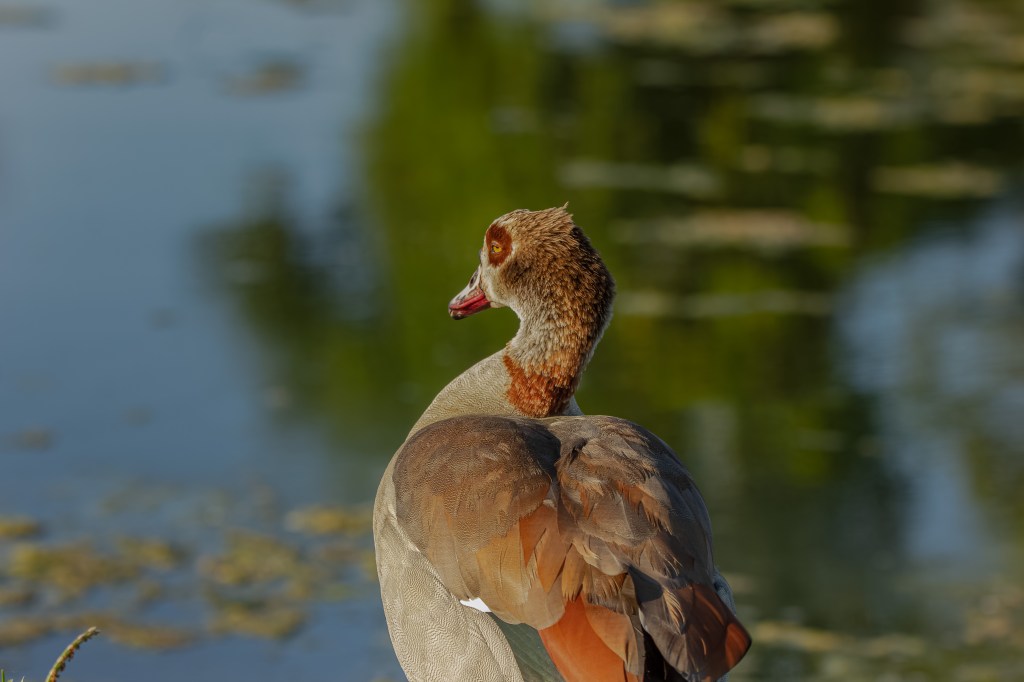
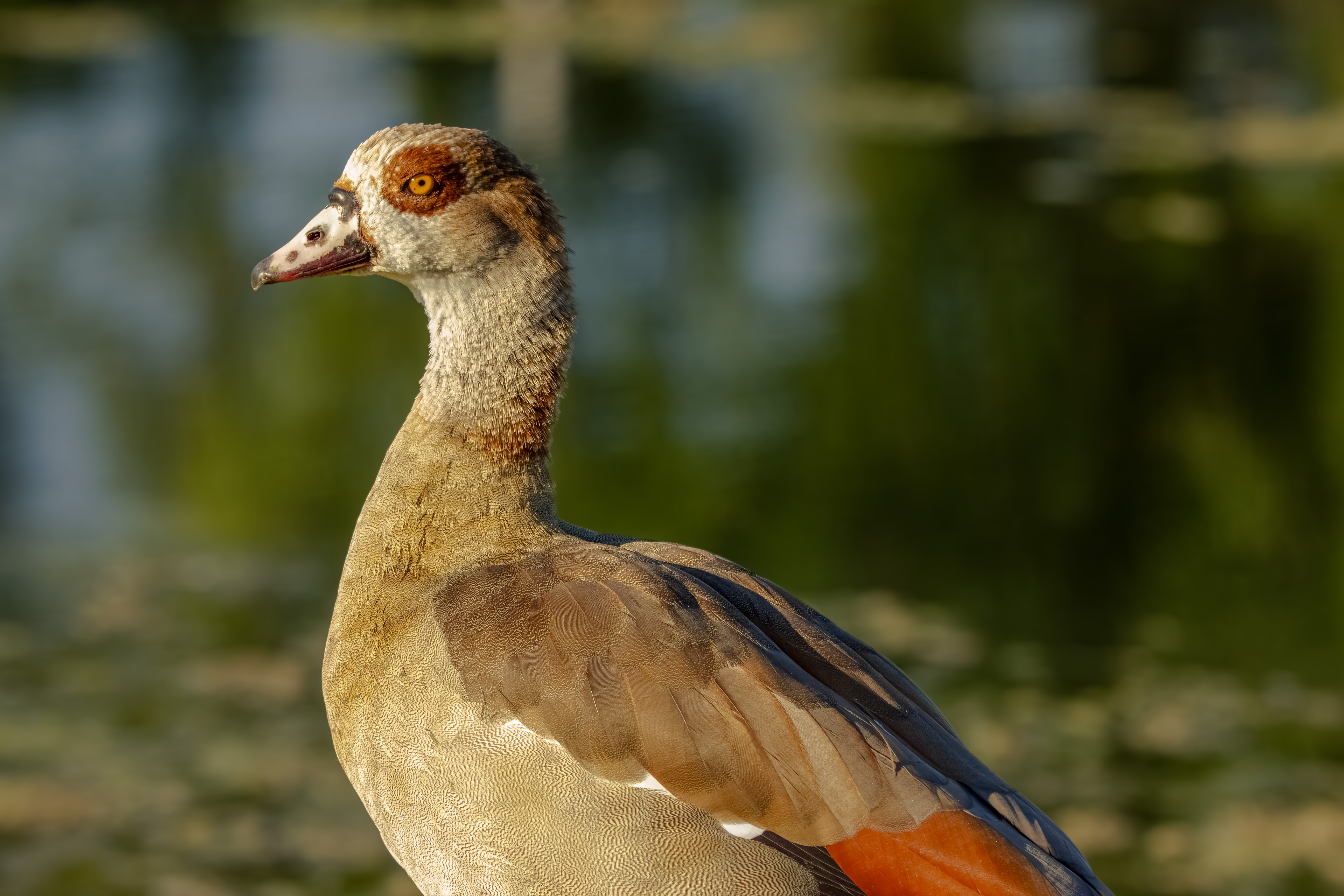
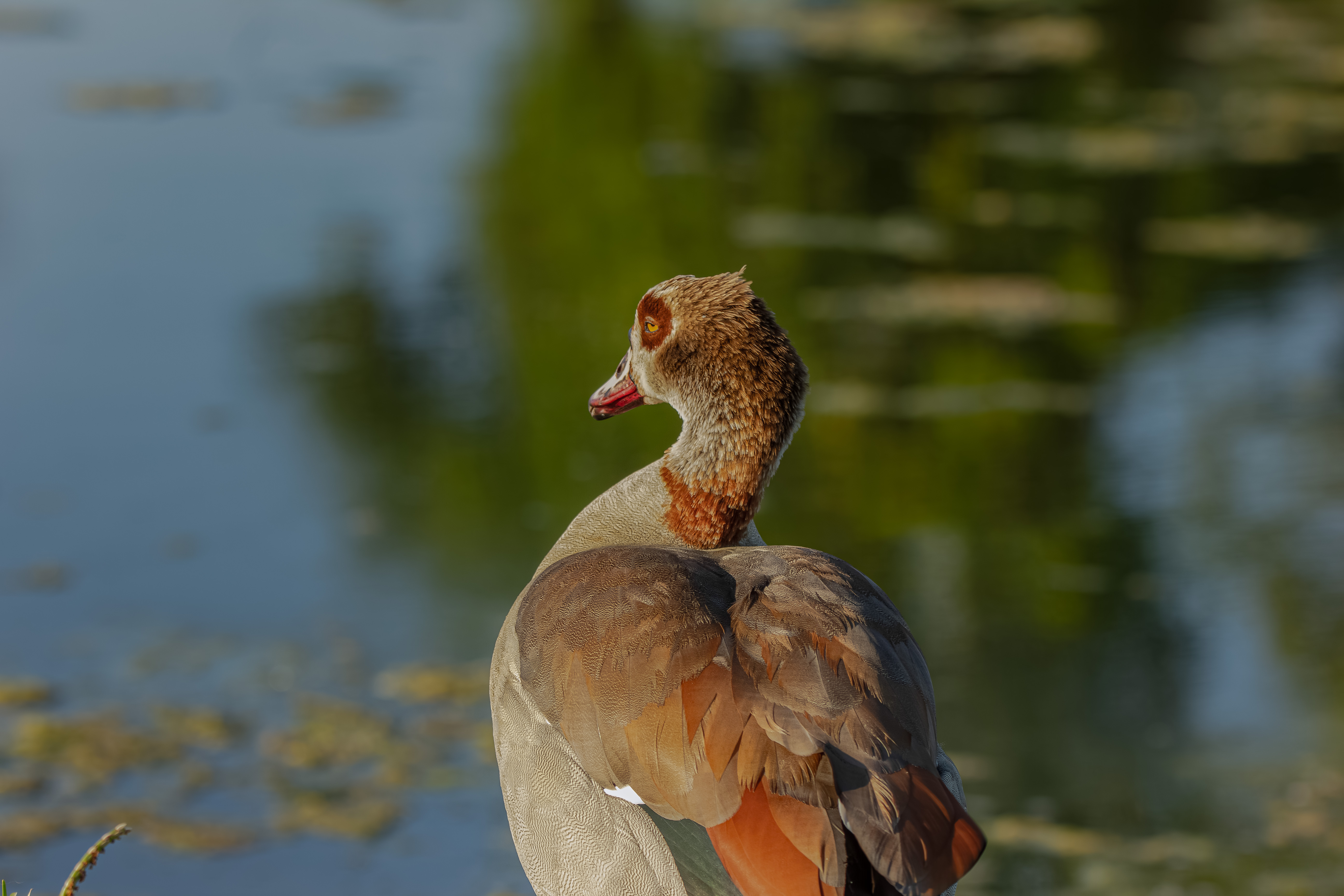
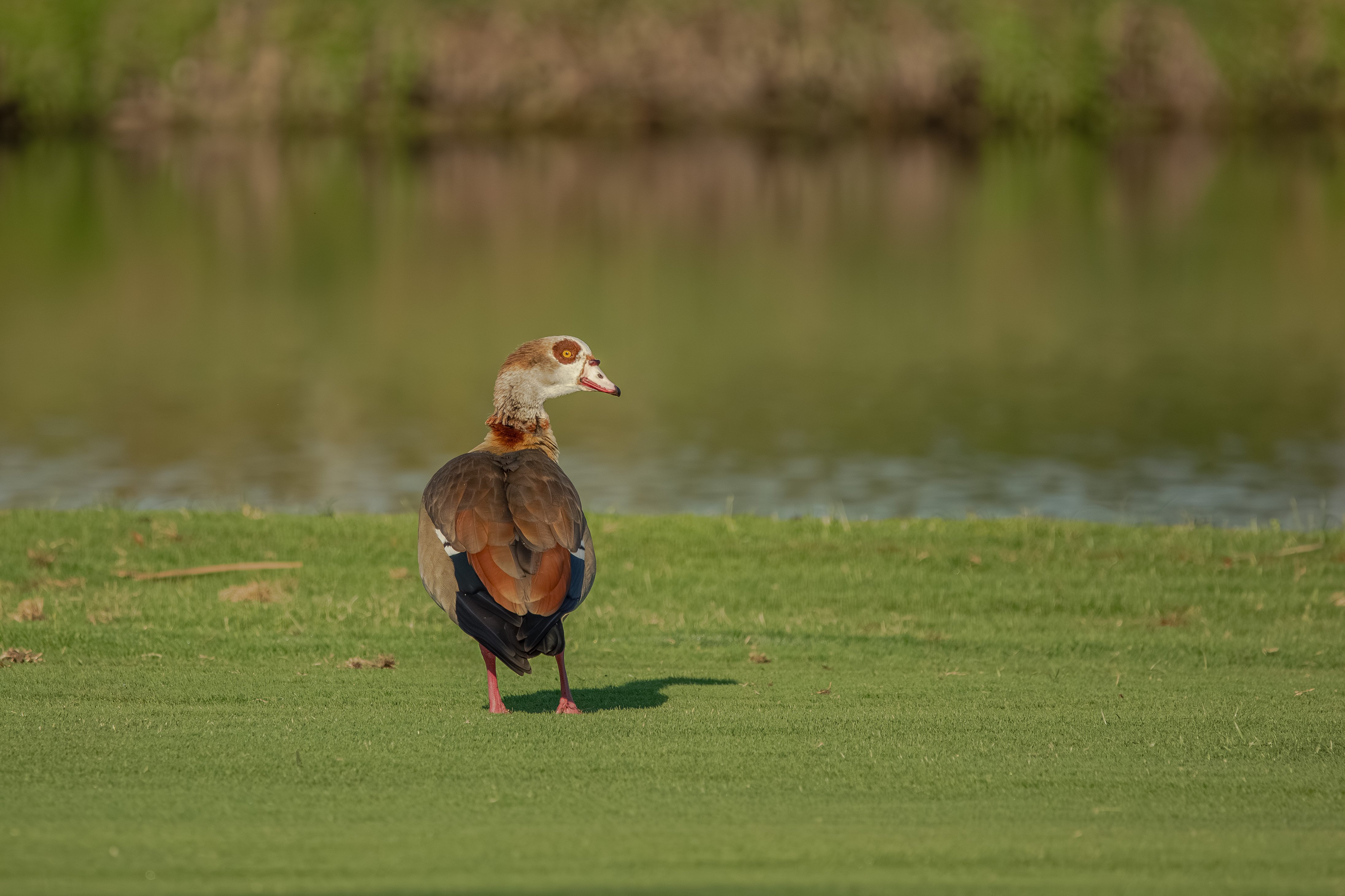
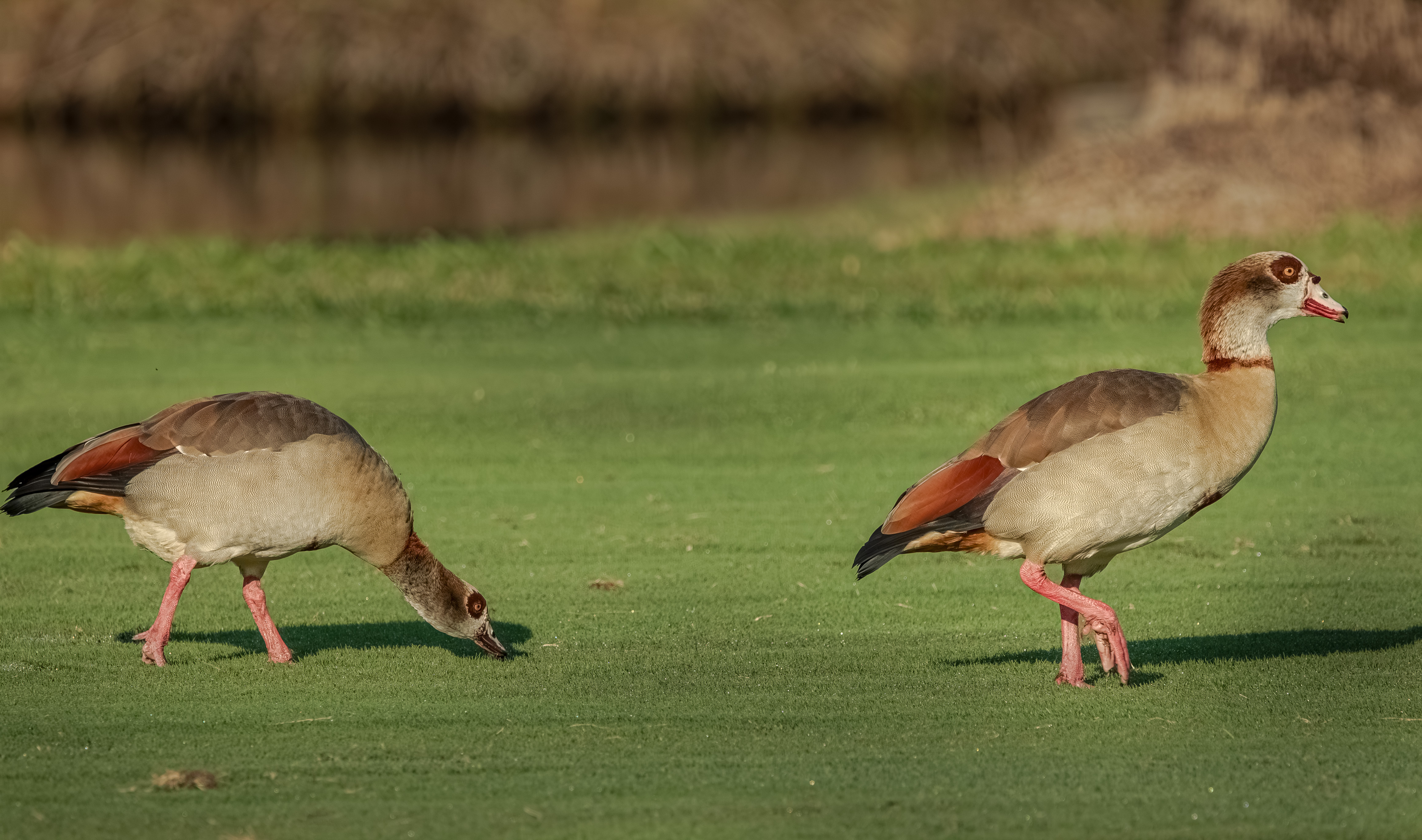
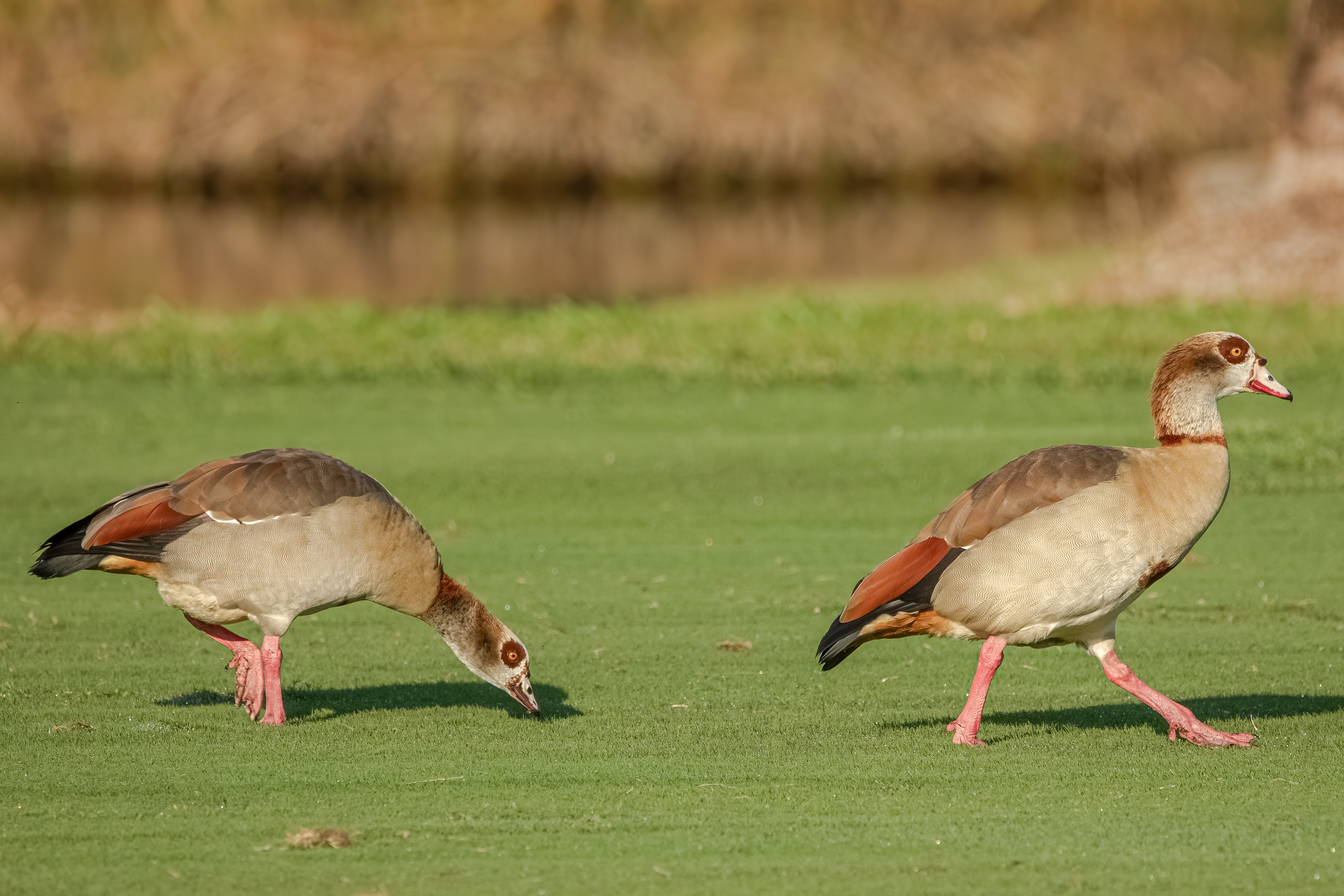
The Egyptian Goose is native to sub-Saharan Africa and the Nile Valley. It has been culturally significant since ancient times, frequently depicted in art from Ancient Egypt. In the United States, it is not native. It is considered an introduced (non-native) species, established through:
Escapes from zoos and private collections, Intentional ornamental releases, Waterfowl collections in parks and estates.
Today, stable breeding populations exist in: Florida, Texas, Southern California, Parts of Arizona.
Identification & Physical Characteristics
Key Features:
Buff to tan body, Dark brown chest patch, Prominent dark eye patch (looks like eyeliner), Pink legs, Pink bill with dark tip, White wing patches visible in flight, Wings show iridescent green when extended.
Size:
Length: 24–29 inches, Wingspan: ~47–55 inches, Weight: 3.3–5 pounds.
Males and females look similar, though males are slightly larger.
Habitat in the U.S.
In the U.S., Egyptian Geese prefer:
Urban lakes, Golf course ponds, Retention basins, Parks, Slow rivers, Agricultural fields.
They thrive in human-modified environments, which has helped their spread.
Diet
Egyptian Geese are primarily herbivorous, but opportunistic.
They eat: Grass, Seeds, Aquatic plants, Grain, Leaves, Occasionally insects and small invertebrates.
In suburban areas, they graze heavily on manicured lawns (especially golf courses).
Behavior & Breeding
Aggression
They are known to be: Highly territorial, Aggressive toward other waterfowl, Defensive during breeding season.
They may displace native species from nesting areas.
Nesting
Nest in tree cavities, on the ground, or on buildings, Lay 5–12 eggs, Both parents guard young aggressively, Goslings leave the nest quickly after hatching.
They can breed multiple times per year in warm climates like Florida.
Flight & Movement
Strong, direct flight, Loud honking calls, Males make a hoarse, raspy sound, Females produce louder quacking vocalizations.
Unlike many geese, they perch in trees.
Ecological Impact in the U.S.
Egyptian Geese are considered invasive in some states.
Potential Impacts:
Compete with native waterfowl, Aggressive toward species like Canada Geese, Native ducks, Heavy grazing damages turf, Large droppings contribute to nutrient loading in ponds.
Some states classify them as exotic non-protected species, meaning they may be legally removed.
Historical & Cultural Importance
In Ancient Egypt, Egyptian Geese were:
Domesticated for meat and eggs, Associated with fertility and rebirth, Depicted in tomb paintings, Linked symbolically to the sun god Ra.
Their scientific name Alopochen means “fox goose” in Greek.
Predators (U.S.)
Adults: Large raptors, Coyotes, Alligators (Florida).
Eggs and young: Raccoons, Snakes, Large fish.
However, in suburban environments, predator pressure is often low.
Adaptability
Egyptian Geese are highly adaptable because they:
Tolerate heat well, Thrive in urban areas, Breed aggressively, Have flexible nesting strategies.
This makes them successful outside their native range.
Population Trends in the U.S.
Expanding range since the 1980s. Rapid increase in Florida. Self-sustaining breeding populations. Often seen year-round (non-migratory in U.S.).
Fun Facts
They can perch in trees. Their eye patch helps quick field identification. They are more closely related to shelducks than true geese. In Africa, they are one of the most common waterfowl species. In the U.S., they often behave like resident (non-migratory) birds.
Where You’re Most Likely to See Them in the U.S.
South Florida canal systems, Houston suburban ponds, Southern California park lakes, Arizona golf communities.
They are especially common in manicured suburban landscapes.

 Wild Bird Journal
Leave a comment