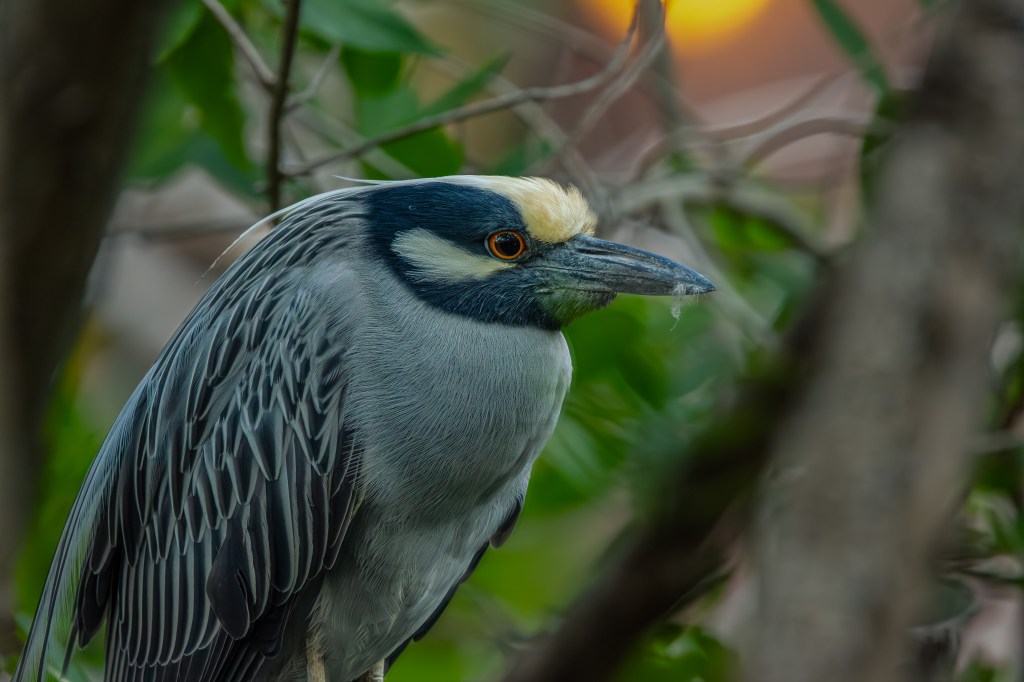
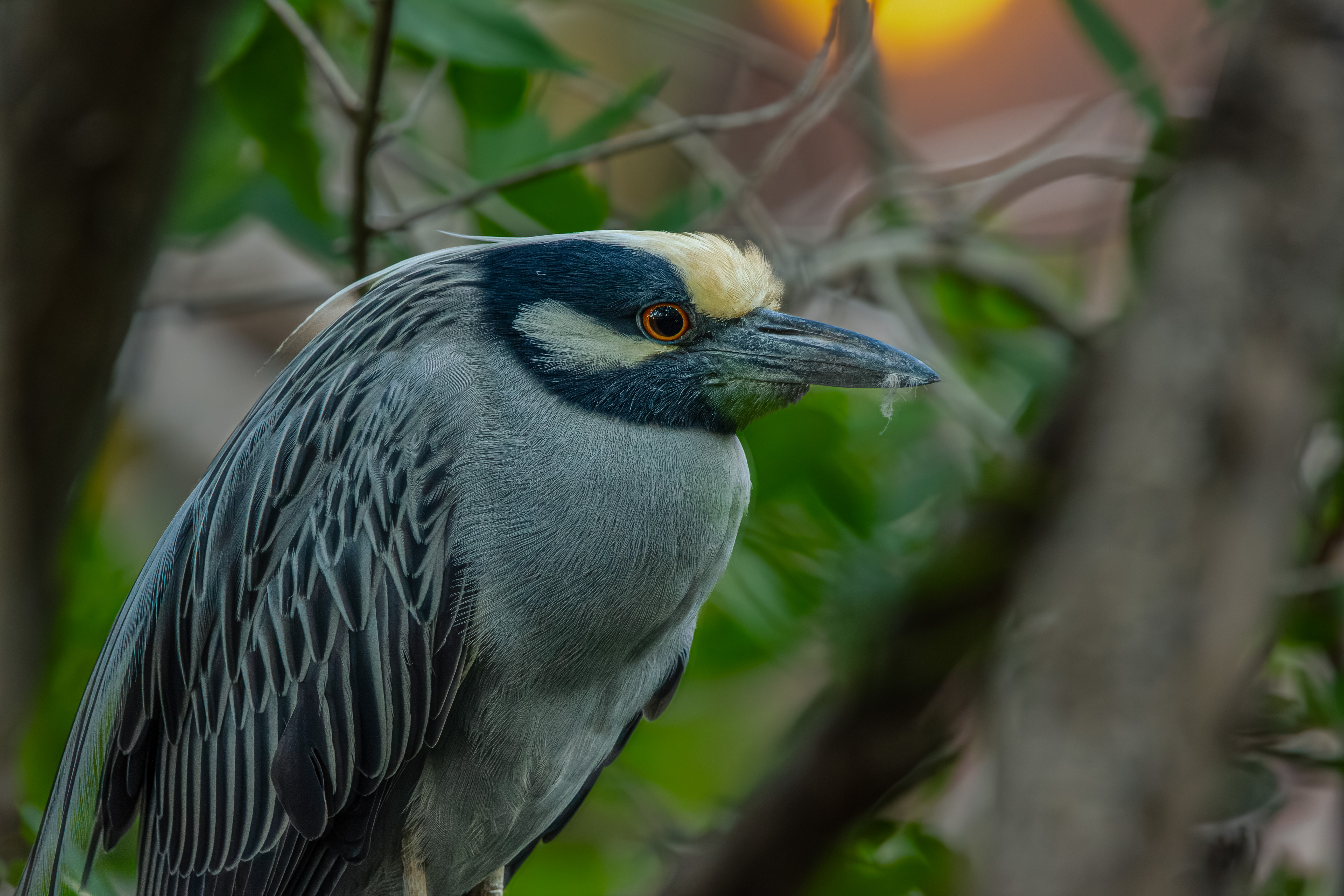
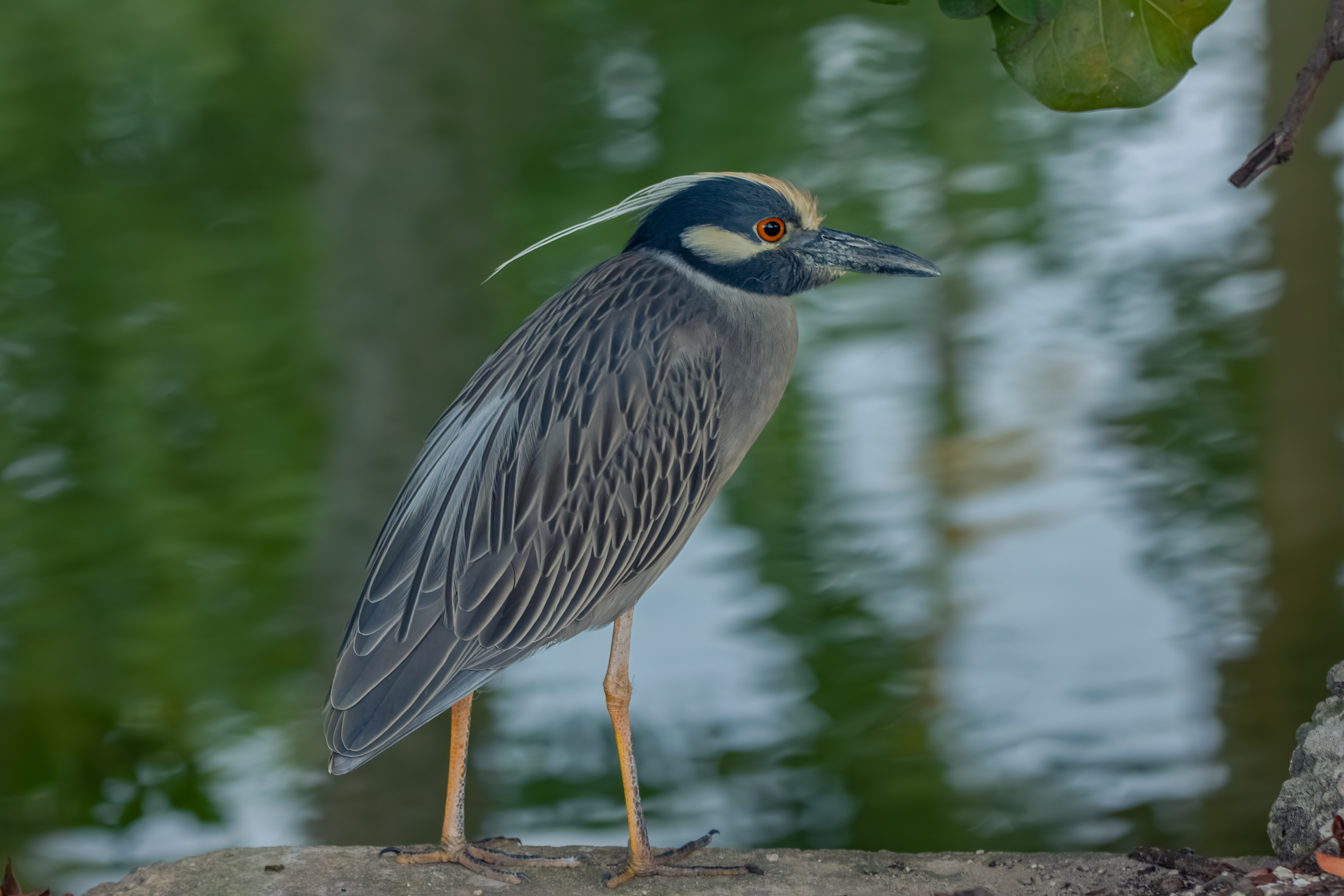
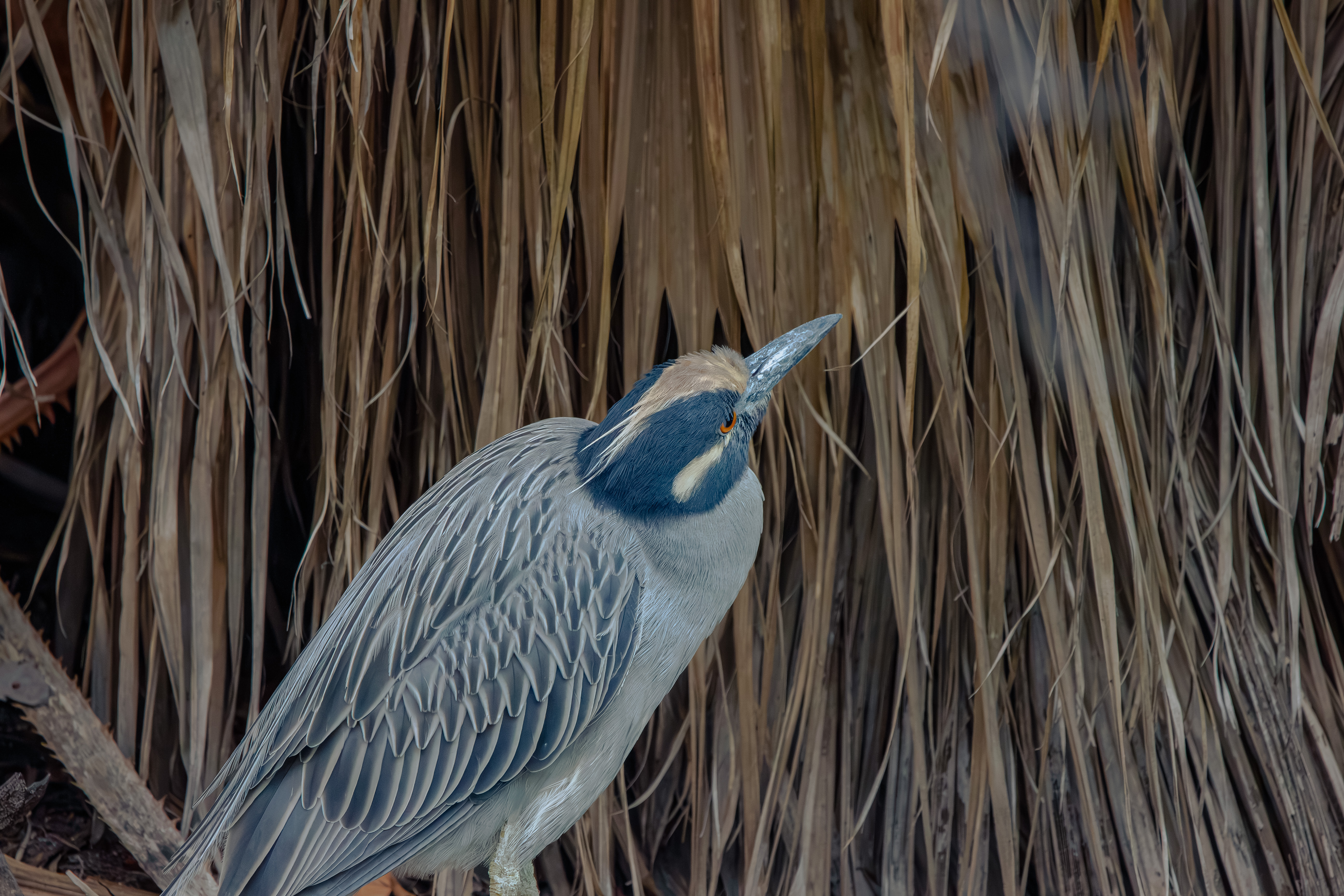
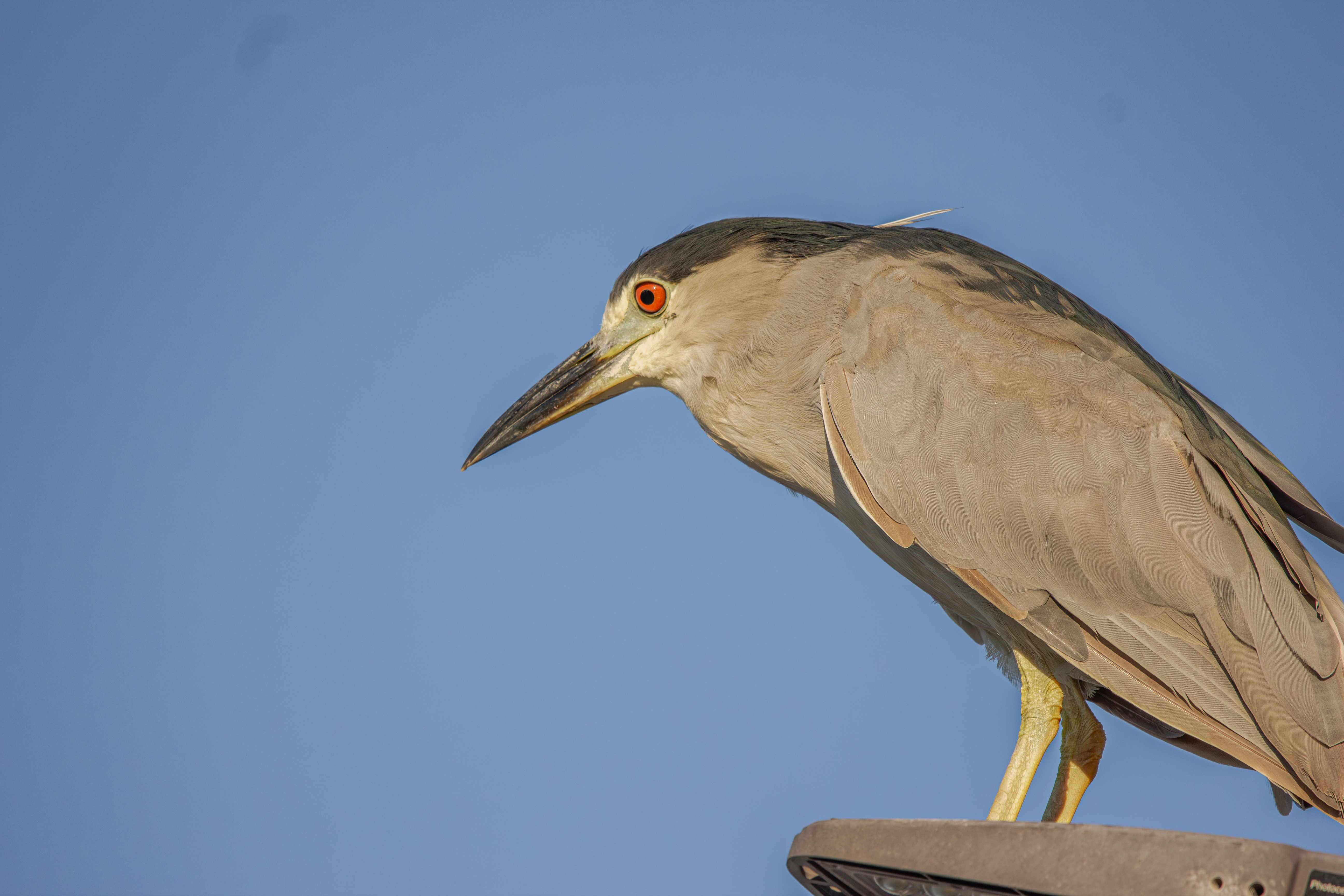
The Yellow-crowned Night Heron (Nyctanassa violacea) is a medium-sized wading bird found across the Americas. Known for its bold facial markings, pale crown, and glowing red eyes, this species is highly specialized in feeding on crustaceans like crabs and crayfish.
Unlike many herons, it is primarily nocturnal or crepuscular, meaning it is most active at dusk and dawn.
Key Identification Features
Adult Yellow-crowned Night Heron
Crown: Pale yellow to white (distinctive), Face: Black with white cheek patches, Eyes: Deep red, Body: Bluish-gray, Legs: Yellow to gray, Bill: Thick, black, slightly curved.
Juvenile (Immature)
Brown with heavy white streaking, More camouflaged and less bold than adults, Takes ~2 years to develop full adult plumage.
Habitat and Range
The Yellow-crowned Night Heron thrives in a wide variety of environments:
Common Habitats
Coastal marshes and mangroves, Freshwater wetlands, Urban ponds and retention basins, Riverbanks and wooded swamps.
Geographic Range
Eastern and southern United States (including Ohio during migration), Central America, South America, Caribbean.
In urban areas, they are surprisingly adaptable and may nest in residential neighborhoods near water.
Diet and Feeding Behavior
One of the most unique aspects of this bird is its diet: Primarily eats crabs, crayfish, and other crustaceans, Also consumes insects, small fish, and amphibians, Hunts slowly and deliberately, often at night, Uses strong bill to crush hard shells.
Behavior and Vocalization
Mostly solitary hunters, Active during dusk, night, and early morning, Flight is steady with slow wingbeats, Call is a low, harsh “quawk”.
They are quieter than many other herons, making them harder to detect unless seen.
Nesting and Breeding
Nest in trees or shrubs, often near water, Build platform nests from sticks, Lay 2–5 eggs per clutch, Both parents help raise young.
They may nest in small colonies, sometimes alongside other heron species.
How to Find Yellow-crowned Night Herons (Birding Tips)
If you’re birding in northeast Ohio or near Kent State, here’s how to maximize your chances: Check wetlands, retention ponds, and slow rivers, Visit at sunset or early morning, Scan edges of water for slow-moving birds, Look for crab remains or shells nearby, Listen for soft calls in quiet areas.
Local tip: During migration, try areas around Cuyahoga River corridors or marshy parks near Lake Erie.
Yellow-crowned vs Black-crowned Night Heron
| Feature | Yellow-crowned | Black-crowned |
|---|---|---|
| Crown | Pale yellow/white | Black |
| Face pattern | Bold black & white | Simpler |
| Build | Slightly slimmer | Stockier |
| Diet | Crustaceans (crabs) | Fish & varied prey |
Conservation Status
Listed as Least Concern. Populations are stable but affected by: Wetland loss, Pollution, Human disturbance.
Urban adaptation has helped maintain populations in some regions.
Fun Facts About Yellow-crowned Night Herons
One of the few birds specialized in eating crabs.
Their eyes appear to glow red in low light.
Often mistaken for juveniles of other heron species.
Can remain motionless for long periods while hunting
 Wild Bird Journal
Leave a comment