


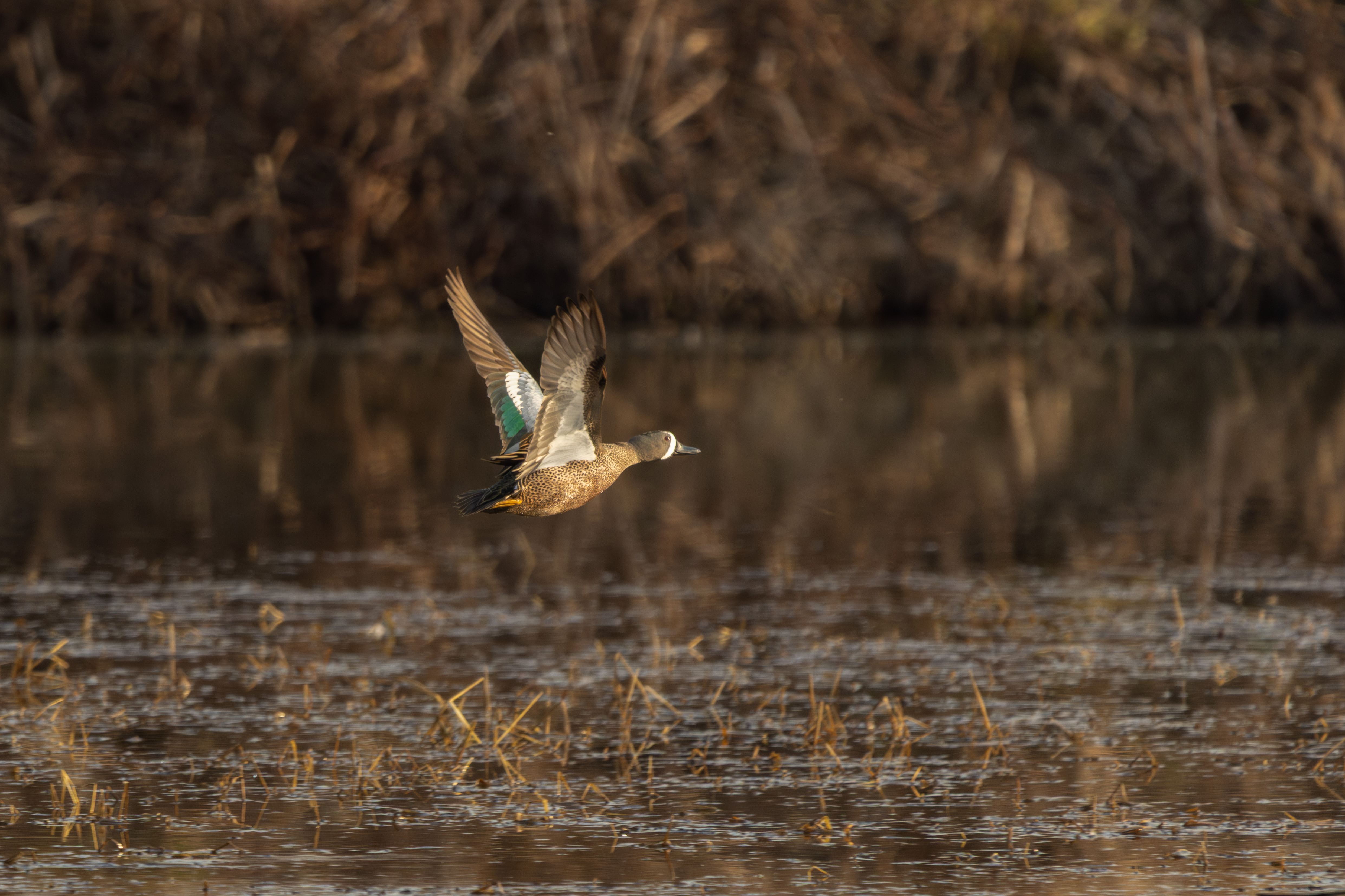

The Blue-winged Teal (Spatula discors) is one of the most widespread and recognizable dabbling ducks in North America. Known for its striking powder-blue wing patch and bold facial markings, this small duck is a favorite among birders, wildlife photographers, and conservationists. It is especially famous for being one of the earliest migrants among North American waterfowl, often departing breeding grounds before most other species.
Identification: How to Recognize a Blue-winged Teal
Male (Breeding Plumage)
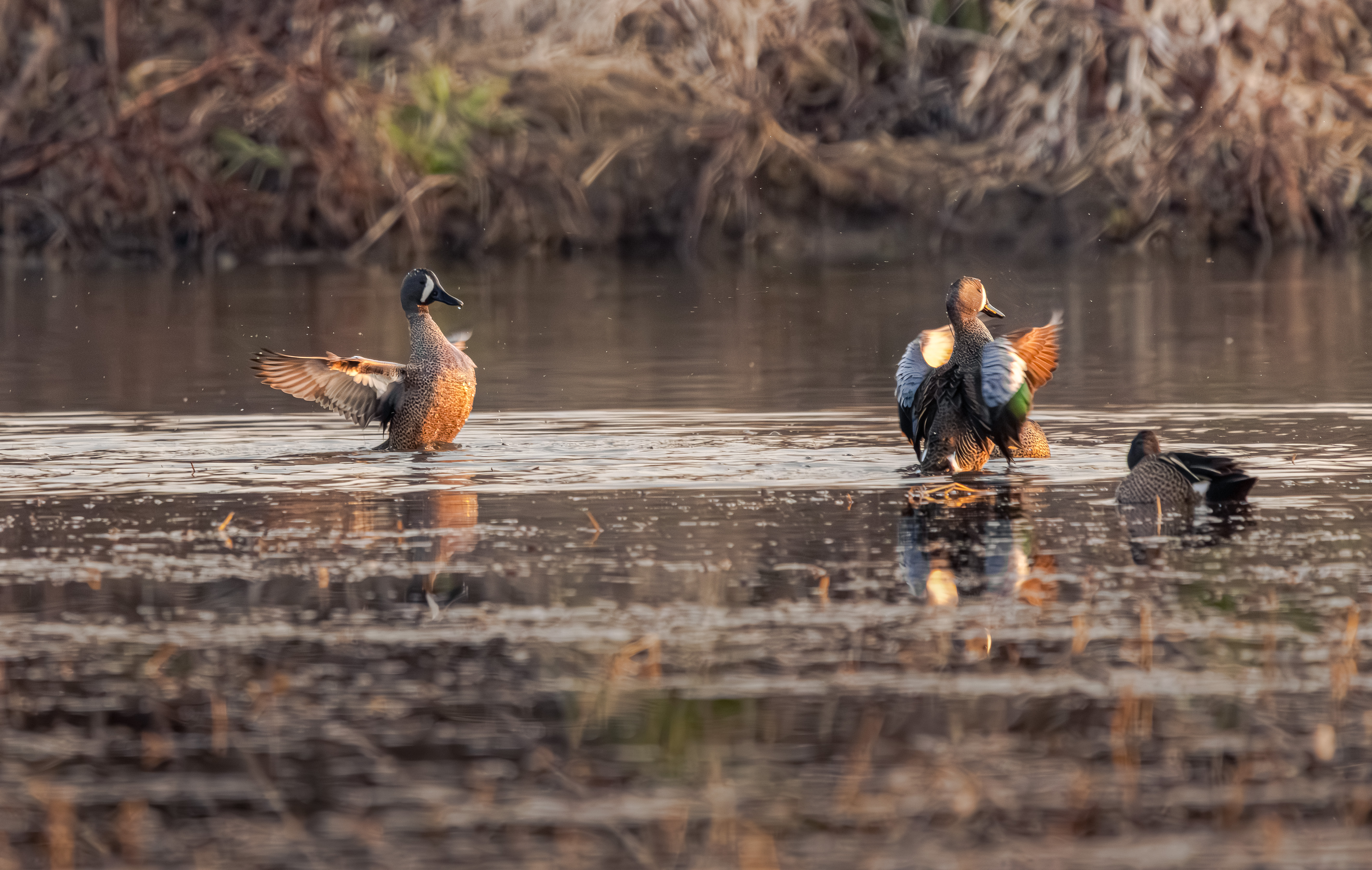
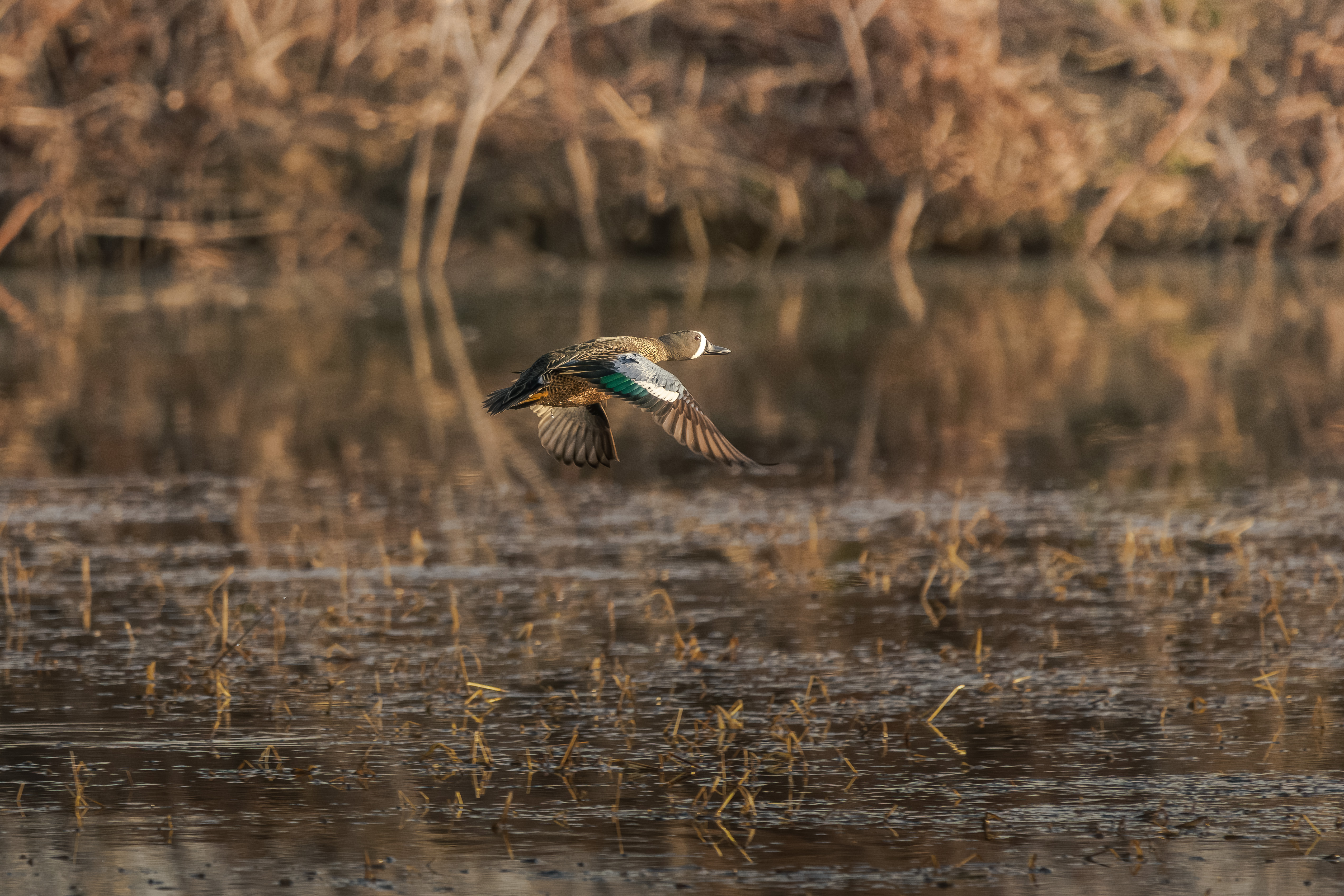
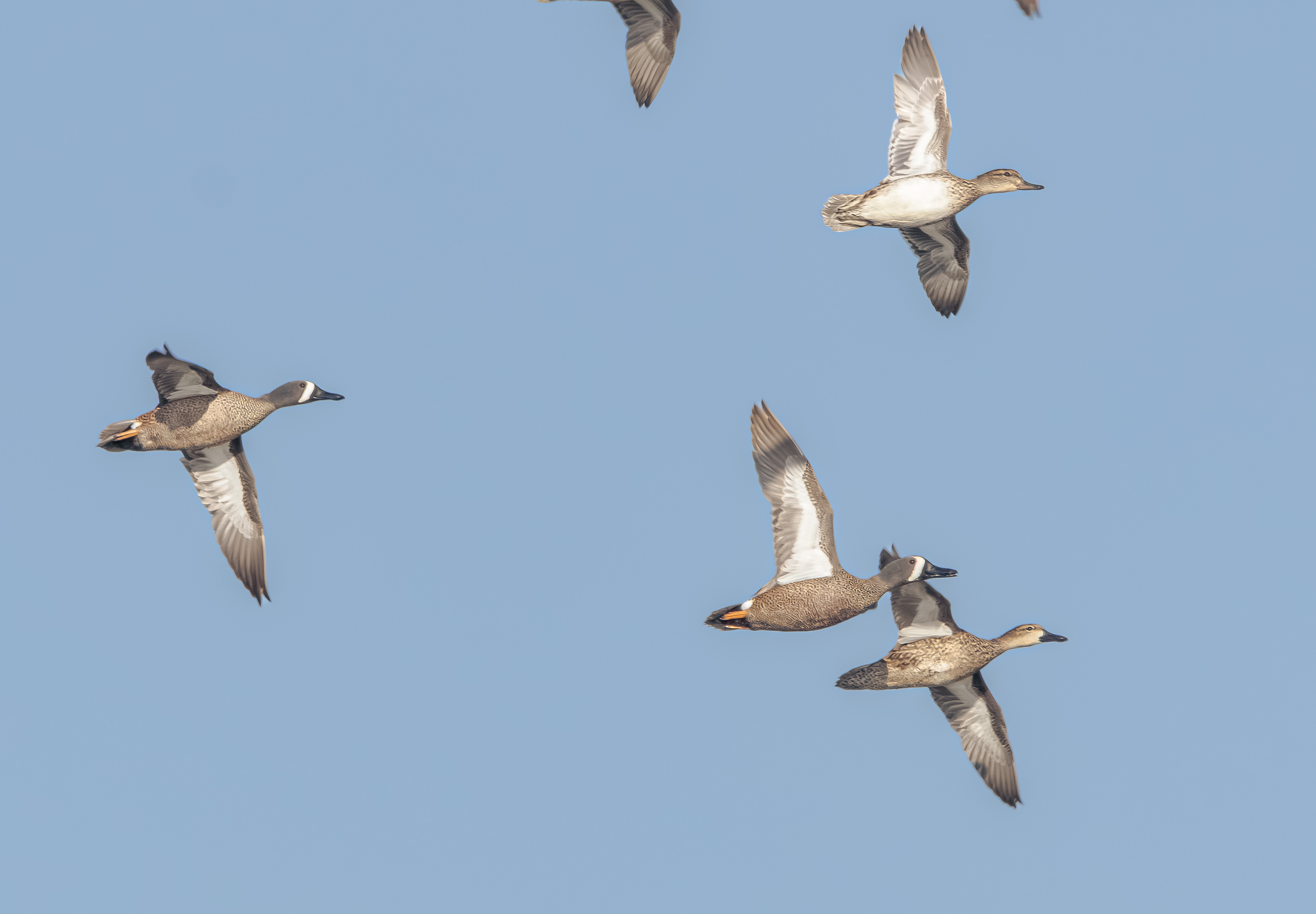
Slate-gray head with a distinct white crescent in front of the eye, Black bill and white flank patch, Light blue forewing patch visible in flight, Compact body with quick, agile movement.
Female (Nonbreeding Plumage)
Mottled brown overall with subtle markings, Smaller and more delicate than many ducks, Blue wing patch still visible in flight.
Key Field Marks
Powder-blue shoulder patch (best seen in flight), Small size compared to mallards, Fast, erratic flight style.
Habitat and Range
The Blue-winged Teal thrives in shallow freshwater wetlands, marshes, ponds, and flooded fields.
Breeding Range
Primarily in the Prairie Pothole Region (Dakotas, Canada), Also found across northern U.S. wetlands.
Wintering Range
Southern U.S., Central America, Caribbean, and northern South America
Migration
This species is notable for long-distance migration, often traveling thousands of miles. Many individuals migrate as far as: Venezuela, Colombia, Brazil.
Behavior and Feeding
Blue-winged Teal are dabbling ducks, meaning they feed by tipping forward in shallow water rather than diving.
Diet Includes: Aquatic invertebrates, Seeds and grains, Small crustaceans, Insects and larvae.
They are highly active feeders and often forage in groups, especially during migration.
Migration Patterns
Fall Migration: Begins as early as August, Spring Migration: One of the last ducks to return north, Unique Trait: Among the earliest fall migrants of all ducks.
Because of this early departure, birders often associate them with late-summer wetland activity.
Breeding and Nesting
Nest on the ground near water, hidden in dense vegetation, Females lay 6–14 eggs per clutch, Incubation lasts about 23–24 days, Ducklings are precocial (leave the nest quickly after hatching).
Conservation Status
The Blue-winged Teal is currently considered: Stable and abundant across most of its range, Managed under North American waterfowl conservation programs.
However, threats include: Wetland loss, Climate change, Agricultural runoff.
Conservation efforts focus heavily on protecting wetland habitats.
Blue-winged Teal vs Cinnamon Teal
Many people confuse the Blue-winged Teal with the Cinnamon Teal.
Differences: Blue-winged Teal males have a white crescent face mark, Cinnamon Teal males are rich reddish-brown overall, Blue-winged Teal are more widespread in eastern North America.
Interesting Facts About Blue-winged Teal
They can fly at speeds up to 48 mph (77 km/h), One of the smallest dabbling ducks in North America, Known for forming large migratory flocks, Frequently seen in mixed-species duck groups.
 Wild Bird Journal
Leave a comment