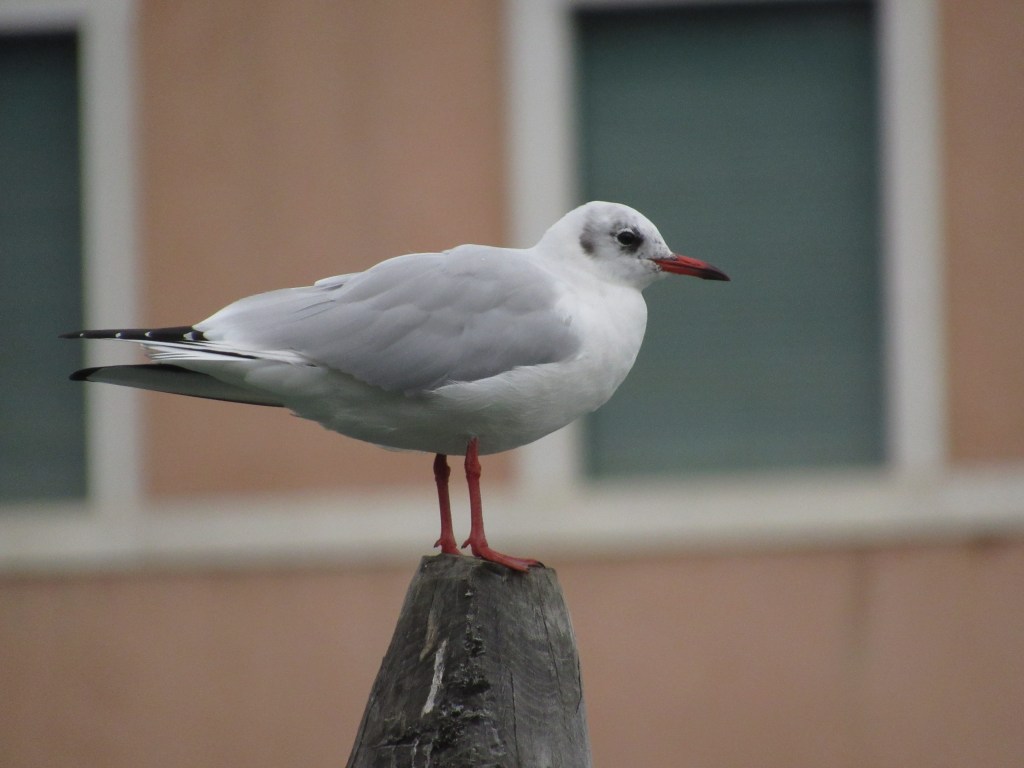


The Black-headed Gull (Chroicocephalus ridibundus) is a medium-sized gull that, despite its name, does not actually have a black head for most of the year. This species is widely distributed, commonly found across Europe, Asia, and in parts of North America. It is a highly adaptable bird that thrives in a variety of habitats, including coastal areas, lakes, rivers, and even urban settings.
Physical Appearance
During the breeding season, Black-headed Gulls develop a distinctive dark chocolate-brown head, which is where the name comes from. Outside of the breeding season, their head markings fade to a few black or brownish spots near the eyes. Their body is primarily white, with a pale grey back and wings, and their wingtips are black. They have a short, red bill and red legs, adding to their distinctive look. Juveniles are browner overall with less distinct head markings until they mature.
Habitat and Distribution
Black-headed Gulls are found throughout much of the Old World, with significant populations in Europe, Asia, and North Africa. They migrate seasonally; birds in northern Europe, for instance, migrate to more temperate areas during the winter, sometimes traveling as far as North Africa or the Middle East. They’re commonly seen around lakes, rivers, marshes, and even urban parks, where they’ve adapted to scavenging and feeding on human waste.
Behavior and Diet
This gull species is highly opportunistic in its diet, feeding on insects, fish, small mammals, earthworms, and even discarded human food. In coastal areas, they often follow fishing boats to scavenge on scraps, and in urban settings, they’ve been known to raid garbage bins. They’re also adept hunters, catching insects mid-flight or skimming the water’s surface for fish. Their vocalizations are loud and shrill, often described as a “laughing” call, which is common in large colonies or gatherings.
Breeding and Reproduction
Black-headed Gulls breed in colonies, often in large numbers. They build their nests on the ground, generally in wetlands or marshes with dense vegetation for protection. The nests are simple, made from grasses and other nearby plant materials. Breeding season runs from April to July, and each pair typically lays 2-3 eggs, which are incubated for around three weeks. After hatching, the chicks fledge within five weeks, though both parents continue to care for them until they’re capable of independence.
Conservation Status and Threats
The Black-headed Gull is currently classified as “Least Concern” by the IUCN, as its population is stable and widespread. However, they still face certain threats, particularly habitat loss due to wetland drainage and urban expansion. Pollution, particularly plastic waste and toxic chemicals, can also impact their populations. Additionally, as they are often attracted to urban areas, they may encounter increased risk from vehicles, entanglement, and human conflict.
Unique Adaptations
Black-headed Gulls display remarkable adaptability, especially in urban environments. Their ability to scavenge human food and their tolerance of noise and people make them successful in cities, where many other bird species would struggle. They are also strong swimmers and agile fliers, which allows them to catch prey on both land and water, and to evade many potential threats.
Role in Ecosystem
These gulls play a key role in controlling insect populations in their habitats and contribute to the food chain as prey for larger birds of prey. They are also important indicators of environmental health, as they are sensitive to changes in their habitat quality and can reflect broader ecological impacts, such as pollution and food availability changes.


 Wild Bird Journal
Leave a reply to festivalwildly0565641a15 Cancel reply