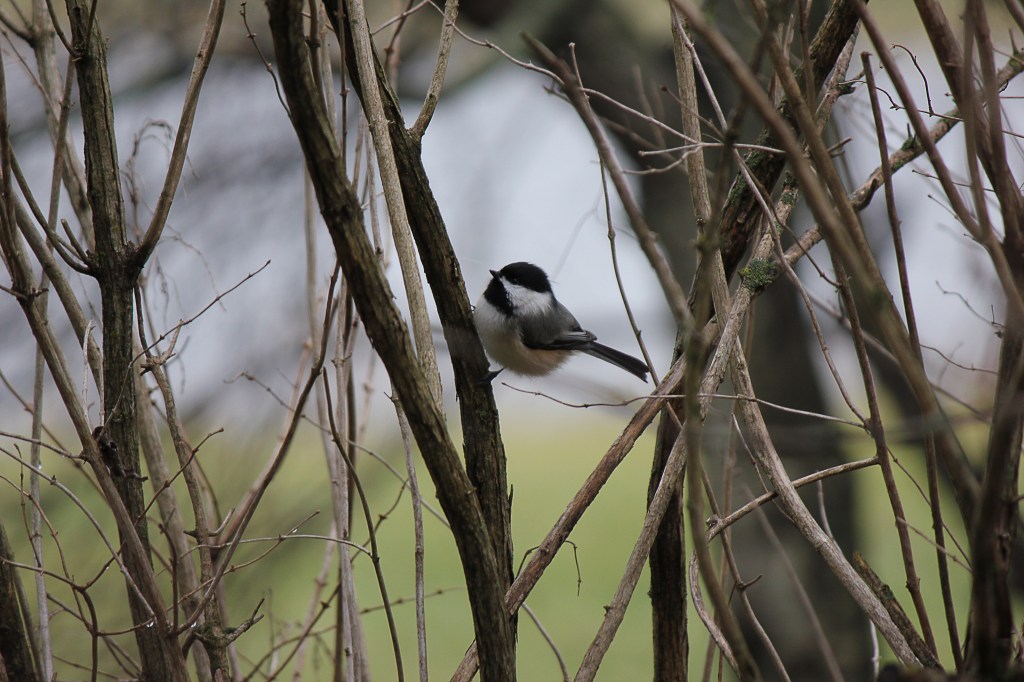
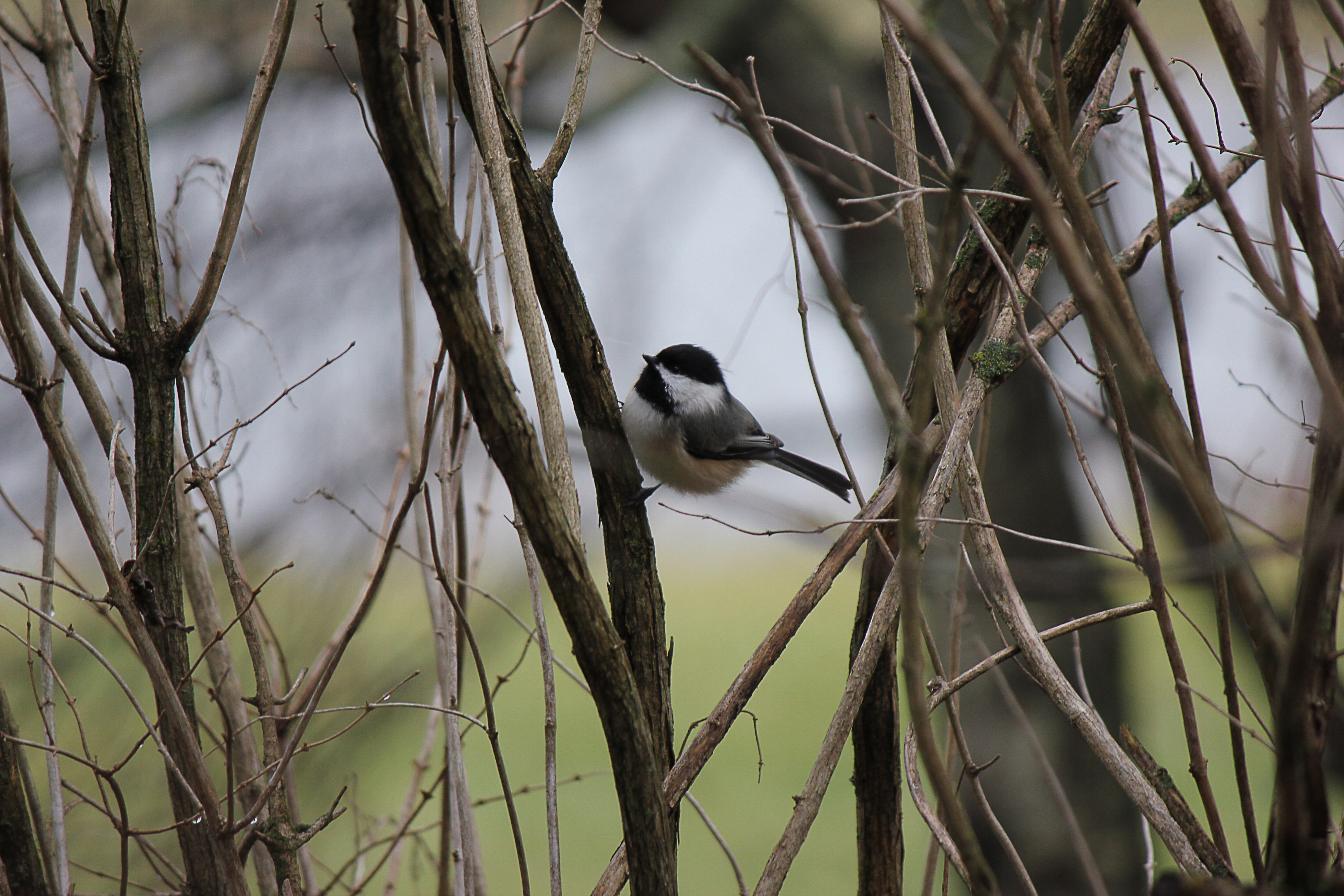


The Black-capped Chickadee is a small, nonmigratory songbird native to North America. It belongs to the tit family (Paridae) and is widely known for its distinctive black cap and bib, as well as its cheerful “chick-a-dee-dee-dee” call. These birds are highly adaptable and intelligent, often storing food for later consumption and remembering its location.
Physical Characteristics
Size: 4.7–5.9 inches (12–15 cm)
Wingspan: 6.3–8.3 inches (16–21 cm)
Weight: 9–14 grams (0.32–0.49 oz)
Plumage:
Black cap and bib. White cheeks. Soft gray back and wings. Buff-colored underparts. Beak: Small, pointed, and black. Eyes: Dark and round
Habitat and Range
Found throughout North America, especially in Canada and the northern United States. Prefers deciduous and mixed forests, as well as suburban and urban areas with trees and shrubs. Remains in its territory year-round (non-migratory).
Behavior and Adaptations
Vocalizations
Famous for its “chick-a-dee-dee-dee” call, which varies in intensity depending on perceived threats. Produces a clear, whistling “fee-bee” song, especially during mating season. Can mimic the sounds of other birds.
Feeding Habits
Omnivorous diet: Insects and spiders (caterpillars, beetles, aphids, and larvae). Seeds and berries. Sap from trees. Frequently visits bird feeders, preferring sunflower seeds, peanuts, and suet. Stores food in multiple locations (a behavior called caching) and remembers where it was hidden.
Social Structure
Forms small flocks in winter, sometimes mixed with other species like nuthatches and woodpeckers. Hierarchical dominance structure within flocks.
Cognitive Abilities
Remarkable memory: Can recall hidden food locations for weeks. Problem-solving skills: Can figure out how to open containers or manipulate objects to access food.
Breeding and Nesting
Breeding season: Begins in early spring (March–June). Mating: Forms monogamous pairs. Nesting sites: Uses natural tree cavities or woodpecker holes but will also nest in birdhouses. Nest construction: Lined with moss, fur, and soft plant material. Female incubates 6–8 eggs for about 12–13 days. Chicks fledge in 16–18 days. Both parents feed and protect the young.
Predators and Threats
Common predators: Birds of prey (hawks, owls),Snakes,Domestic cats,Squirrels (may eat eggs and nestlings)
Threats: Habitat destruction. Harsh winters. Window collisions. Pesticide exposure
Conservation Status
Classified as Least Concern (LC) by the IUCN Red List. Populations are stable and widespread. Bird feeders and nest boxes help support local populations.
Interesting Facts
State bird of Massachusetts and Maine. Can lower its body temperature at night to conserve energy (a process called torpor). The number of “dee” sounds in its call signals the level of danger. Sometimes follows woodpeckers to find insects hidden in tree bark.


 Wild Bird Journal
Leave a reply to Aidan Slaman Cancel reply