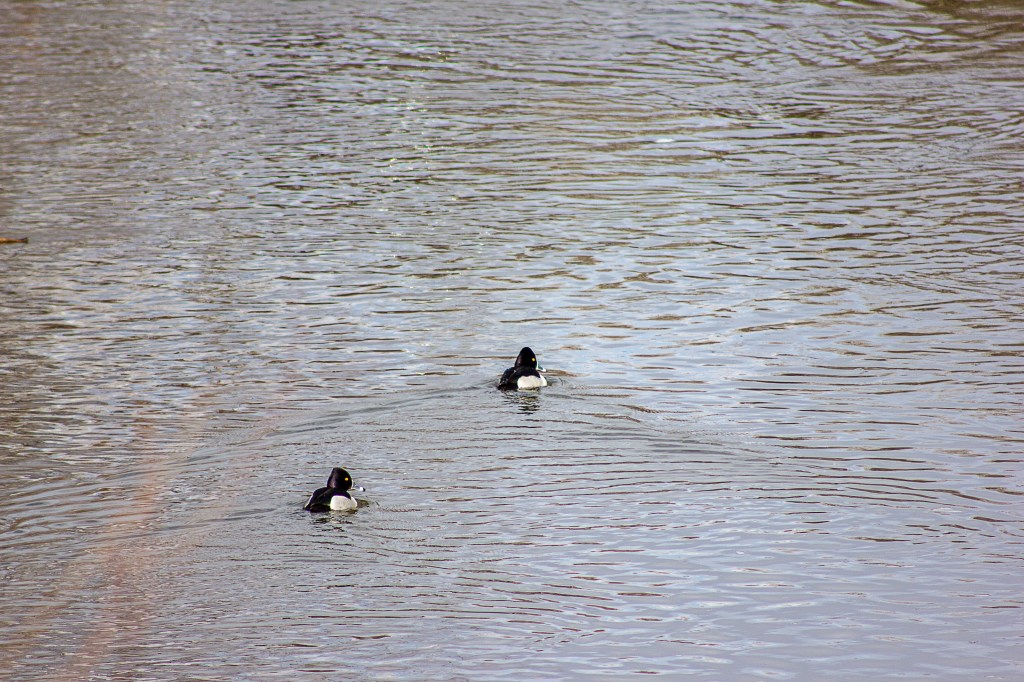
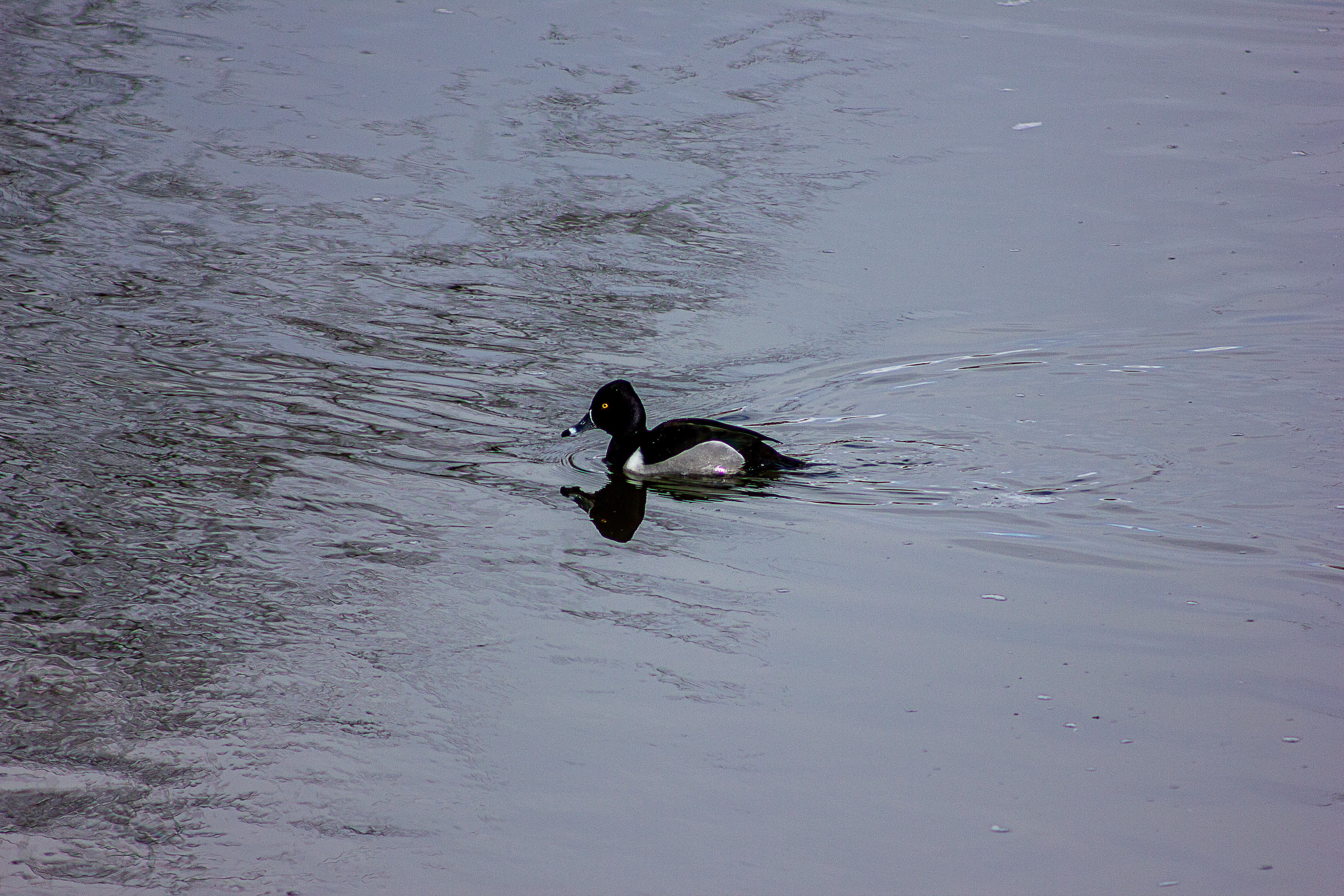

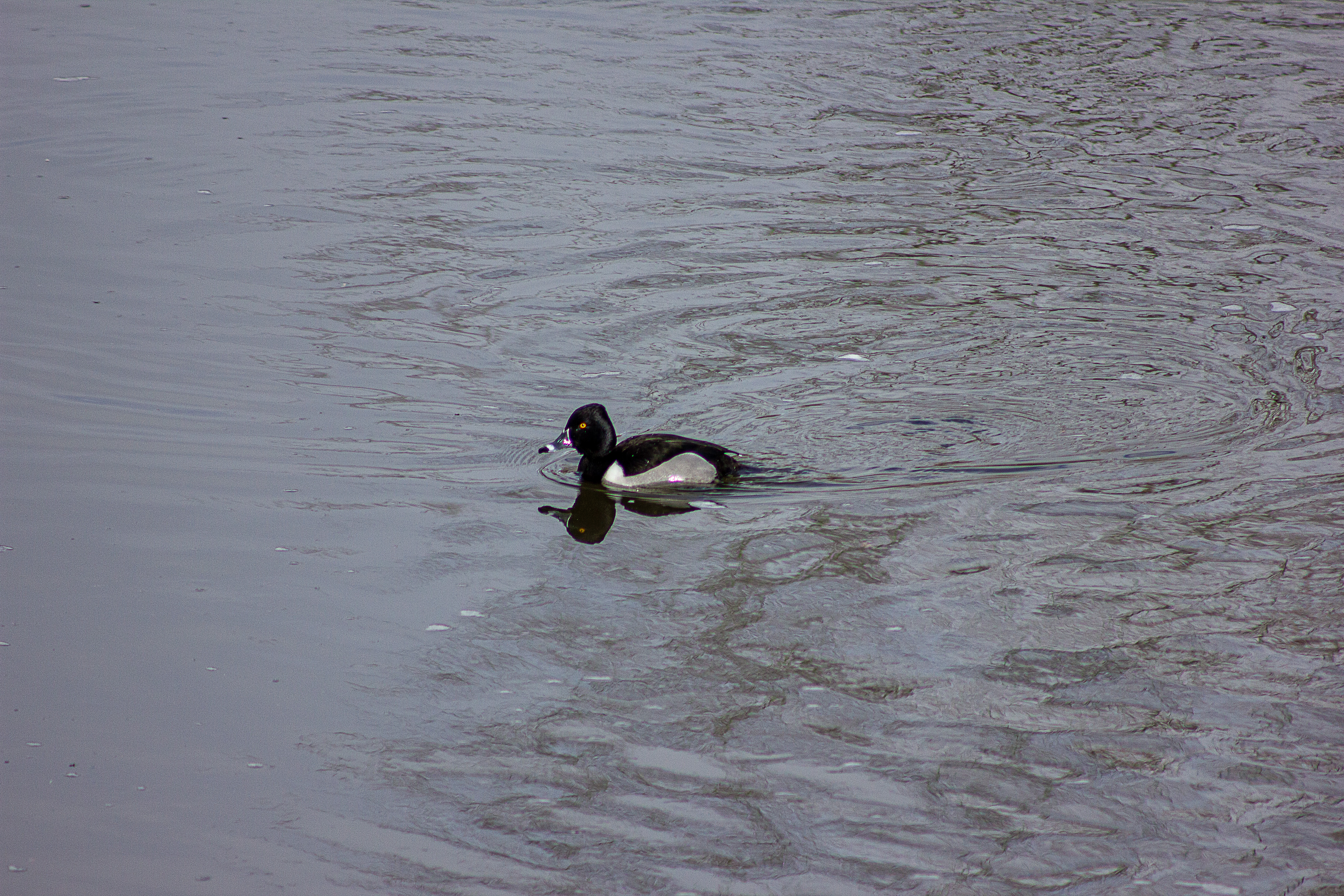
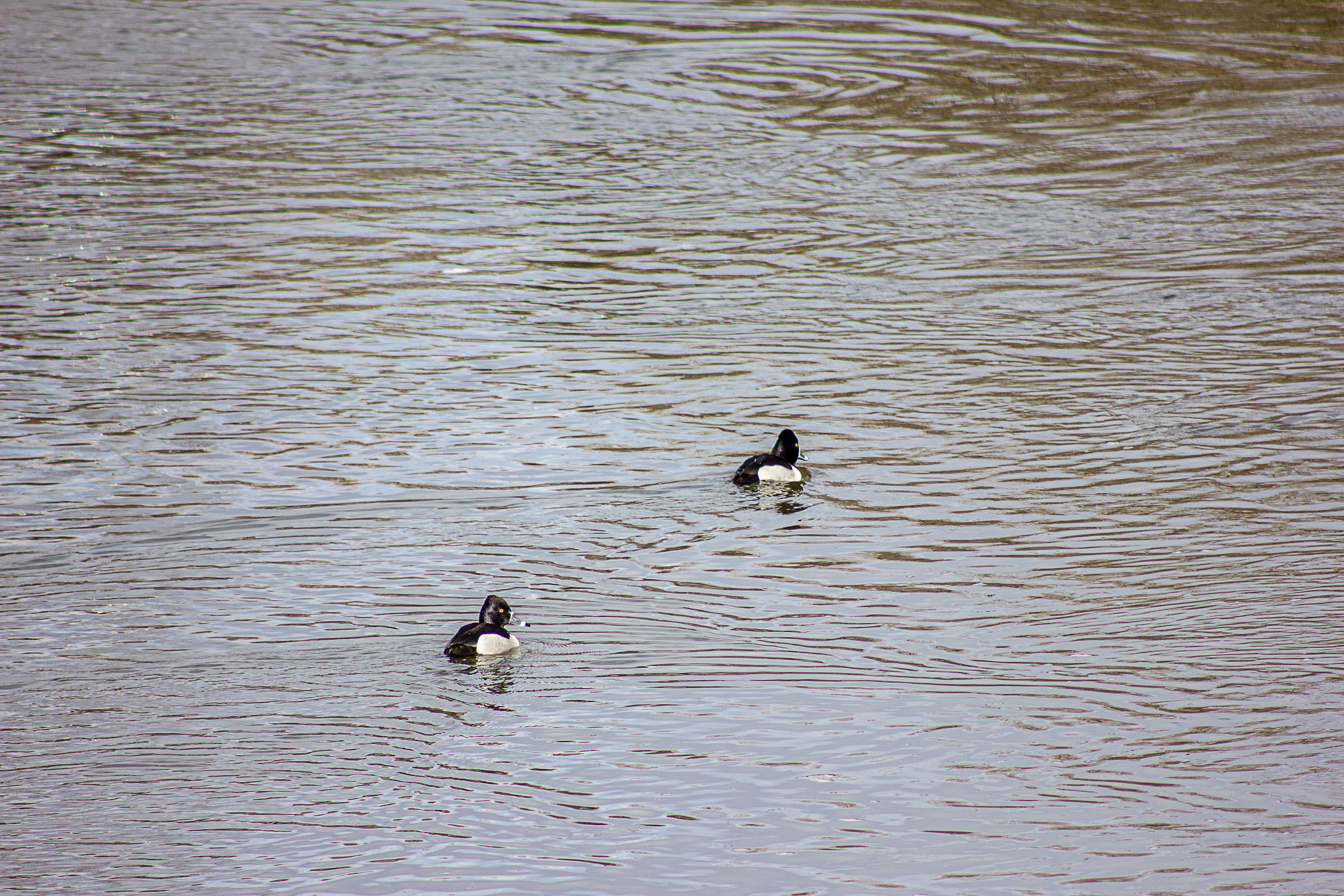
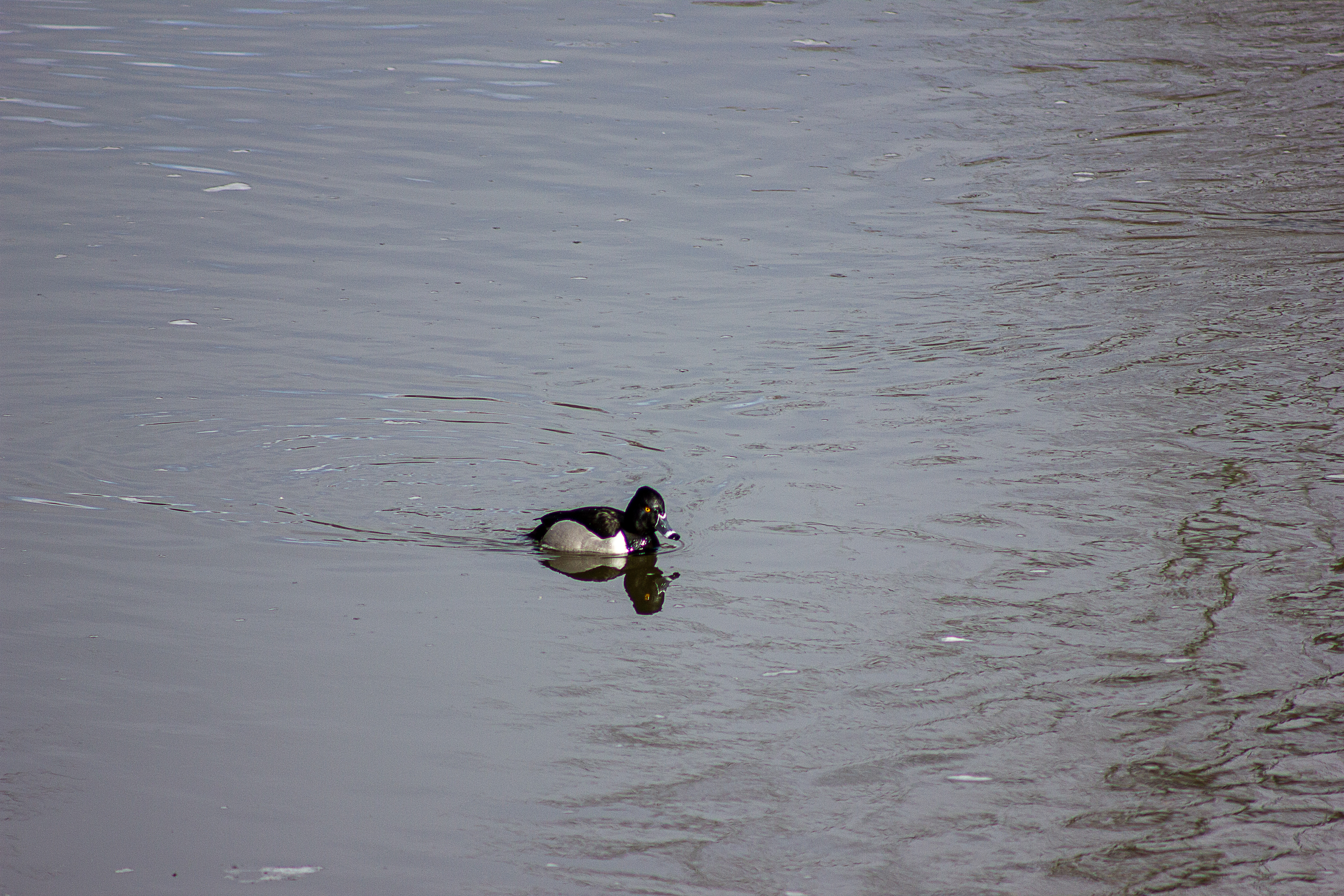
The Ring-necked Duck (Aythya collaris) is a medium-sized diving duck native to North America. Despite its name, the most distinctive ring is not on its neck but rather on its bill. The name originates from a faint, hard-to-see chestnut-colored ring around the male’s neck, which is rarely noticed in the field.
Physical Description
Ring-necked Ducks exhibit sexual dimorphism, meaning males and females have distinct appearances.
Males: They have a glossy black head with a purplish sheen, black back, and light gray sides. A key distinguishing feature is the white vertical wedge on the side of the breast, along with a bold white ring near the tip of their blue-gray bill, which has a black tip. The supposed “ring” on the neck is barely visible.
Females: They are brown overall, with a lighter face and a white eye-ring that extends slightly behind the eye. Their bill is similar in shape to the male’s but has less contrast in color.
Size: They measure about 15–18 inches (38–46 cm) in length, have a wingspan of 24–30 inches (61–76 cm), and typically weigh between 1.5–2.5 pounds (0.7–1.1 kg).
Habitat and Range
Ring-necked Ducks breed in freshwater marshes, ponds, and lakes across Canada and the northern United States. They favor boreal forest regions with shallow, vegetated water bodies.
During migration and in the winter, they move south to the southern United States, Mexico, and Central America, frequenting lakes, reservoirs, and even coastal estuaries. They can be found as far south as the Caribbean and sometimes along the Pacific and Atlantic coasts.
Behavior and Diet
Unlike many other diving ducks, Ring-necked Ducks are known for their ability to take off from the water quickly without a running start. They are strong fliers and can migrate long distances.
They primarily feed by diving and dabbling in shallow waters, consuming a diet that includes: Plant matter: Seeds, tubers, stems, and leaves of aquatic vegetation (such as pondweed, wild rice, and sedges).
Invertebrates: Insects, mollusks, and crustaceans, especially during the breeding season when they need extra protein.
Reproduction
Breeding season occurs in late spring and early summer. Ring-necked Ducks prefer to nest near water, typically in dense vegetation to provide concealment.
Nesting: Females build nests close to the water using grasses, sedges, and down feathers.
Eggs: Clutches typically contain 6–14 eggs, which are creamy-white to olive-buff in color.
Incubation: The female incubates the eggs for 25–29 days.
Ducklings: Once hatched, the young are precocial, meaning they can leave the nest and swim shortly after birth. The mother leads them to water and protects them, but they feed themselves.
Predators and Threats
Predators of the Ring-necked Duck include: Birds of prey (e.g., hawks, eagles), Snapping turtles, Mammals such as raccoons, foxes, and mink, Large fish that prey on ducklings
Habitat loss due to wetland drainage and pollution poses the biggest long-term threats to their population. However, hunting regulations and conservation efforts have helped maintain stable populations.
Conservation Status
The IUCN Red List categorizes the Ring-necked Duck as Least Concern, meaning its populations are stable and not currently at risk of extinction. However, ongoing wetland conservation is essential for their long-term survival.
Interesting Facts
They are sometimes confused with Scaup (Greater and Lesser), but their bill markings and white side wedge help differentiate them.
Unlike many diving ducks, they can take off directly from the water without a long running start.
They are one of the few diving ducks that frequently mix with dabbling ducks in shallow water.
Feel Free to subscribe! All it does is let you know when I next post!

 Wild Bird Journal
Leave a comment