

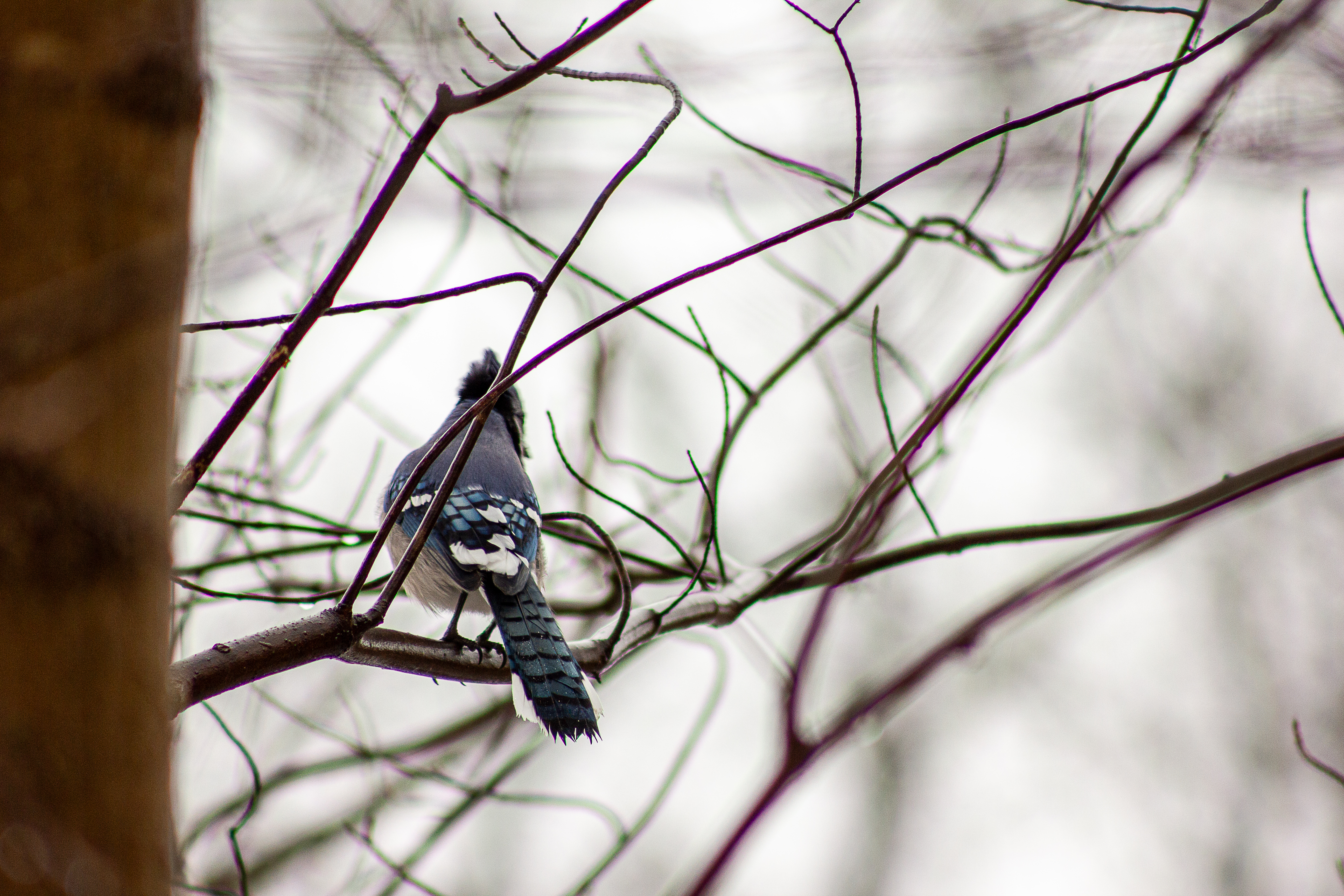
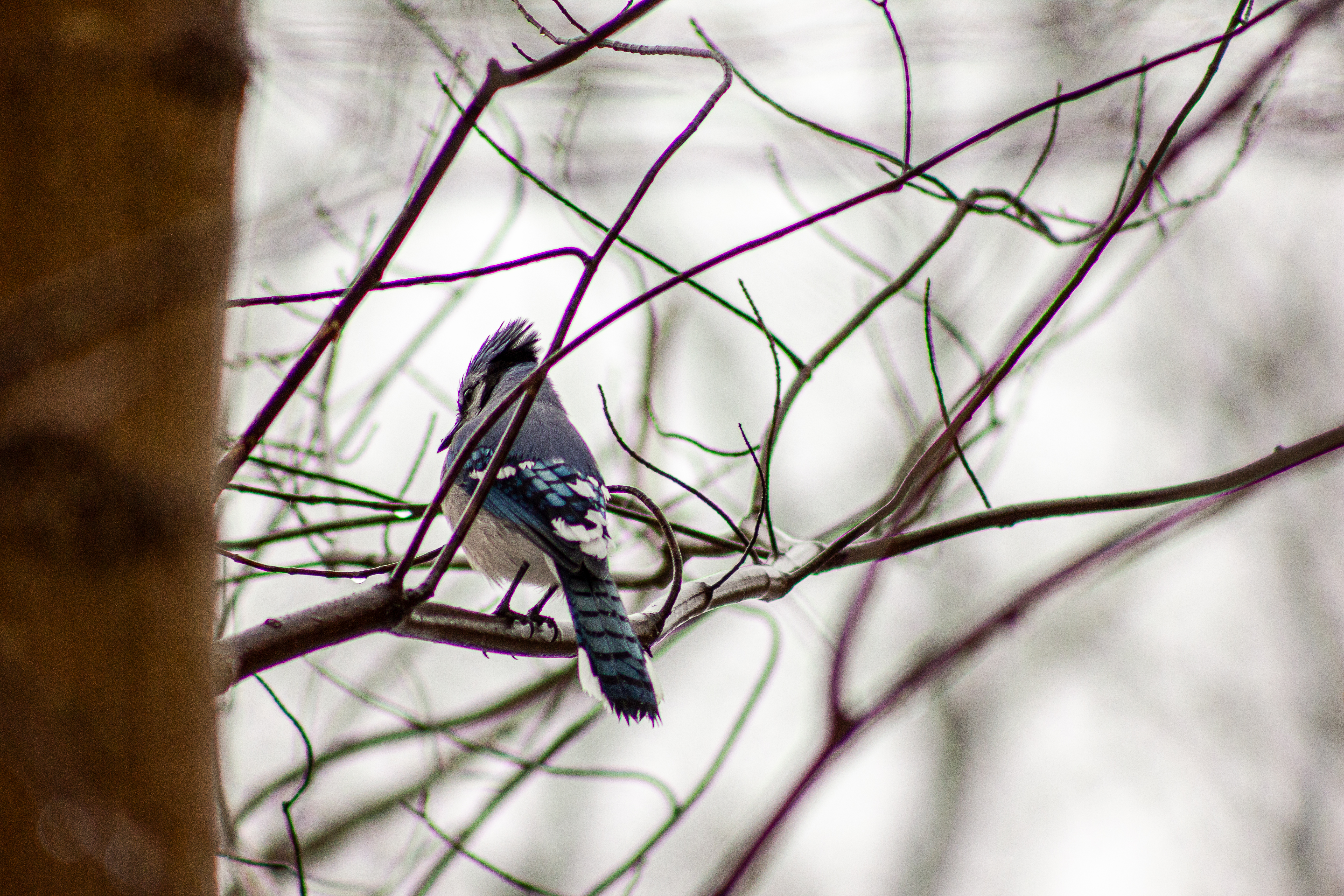
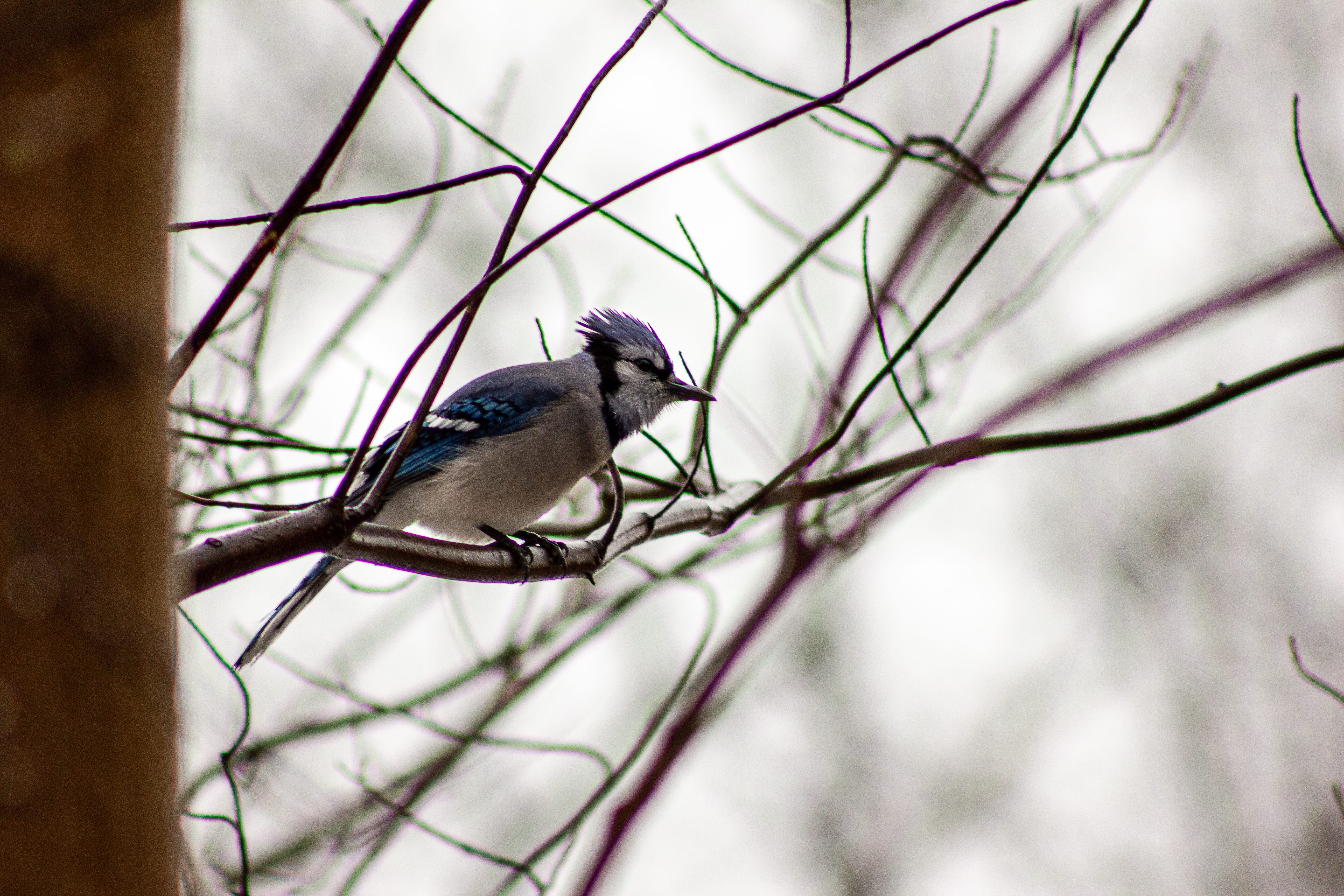
The blue jay (Cyanocitta cristata) is a striking, intelligent bird native to North America, known for its vibrant blue coloration, distinctive calls, and complex social behaviors. It belongs to the Corvidae family, which includes crows, ravens, and magpies—some of the most intelligent birds in the world.
Physical Characteristics
Size & Shape: Length: 9–12 inches (23–30 cm), Wingspan: 13–17 inches (33–43 cm), Weight: 2.5–3.5 ounces (70–100 g)
Plumage & Appearance
Predominantly blue with white underparts and black markings. A black “necklace” runs across the throat and around the head. The crest on top of its head can be raised or lowered depending on mood. Blue jays do not actually have blue pigment—their feathers appear blue due to light refraction (structural coloration). The wings and tail feature intricate black, white, and blue barring.
Habitat & Range
Found in eastern and central North America, from southern Canada to Florida. Prefers woodlands, oak forests, and suburban areas with plenty of trees. Common in backyards, parks, and gardens, where they visit bird feeders.
Behavior & Intelligence
Social Structure: Blue jays are highly social and often form family groups. They have complex vocalizations and can imitate hawk calls to scare off predators or competitors. Sometimes they mob predators like hawks and owls, working together to drive them away.
Communication & Calls
Their calls include a loud “jay-jay”, clicks, whistles, and mimicry. Can imitate red-tailed hawks and other birds. Their wide vocal range helps them warn others of danger.
Tool Use & Problem Solving: Known for caching food (hiding nuts and seeds for later). Some blue jays have been observed using tools to obtain food, showcasing their intelligence.
Diet & Feeding Habits
Omnivorous, eating seeds, nuts, fruits, insects, small animals, and eggs. Particularly fond of acorns, helping to spread oak trees (important for forest ecology). Visits bird feeders for peanuts, sunflower seeds, and suet.
Reproduction & Nesting
Mating & Courtship: Monogamous, forming long-term pair bonds. Males often feed the female as part of courtship.
Nest & Eggs
Build cup-shaped nests in trees using twigs, grass, and mud. Lay 3–7 pale greenish-blue eggs with brown spots. Both parents participate in incubation (17–18 days) and feeding the chicks.
Predators & Threats
Natural Predators: Hawks, owls, snakes, raccoons, and domestic cats.
Threats
Habitat destruction, climate change, and window collisions pose risks. Sometimes persecuted due to their habit of raiding nests for eggs.
Cultural Significance & Symbolism
In Native American mythology, blue jays are seen as tricksters and messengers. In dreams & symbolism, they represent communication, curiosity, and intelligence. Sports teams, like the Toronto Blue Jays, use them as mascots due to their bold and spirited nature.
Fun Facts
Blue jays can recognize humans and remember people who feed or threaten them. They molt their feathers once a year, appearing scruffy in late summer. Unlike some migratory birds, their migration patterns are inconsistent and mysterious—some stay year-round, while others travel south.
The blue jay is a brilliant, resourceful bird with a mix of beauty, intelligence, and adaptability. Whether seen at a bird feeder or calling loudly from the treetops, it remains one of North America’s most fascinating birds.
Feel Free to subscribe! All it does is let you know when I next post!

 Wild Bird Journal
Leave a reply to Ilovebirds Cancel reply