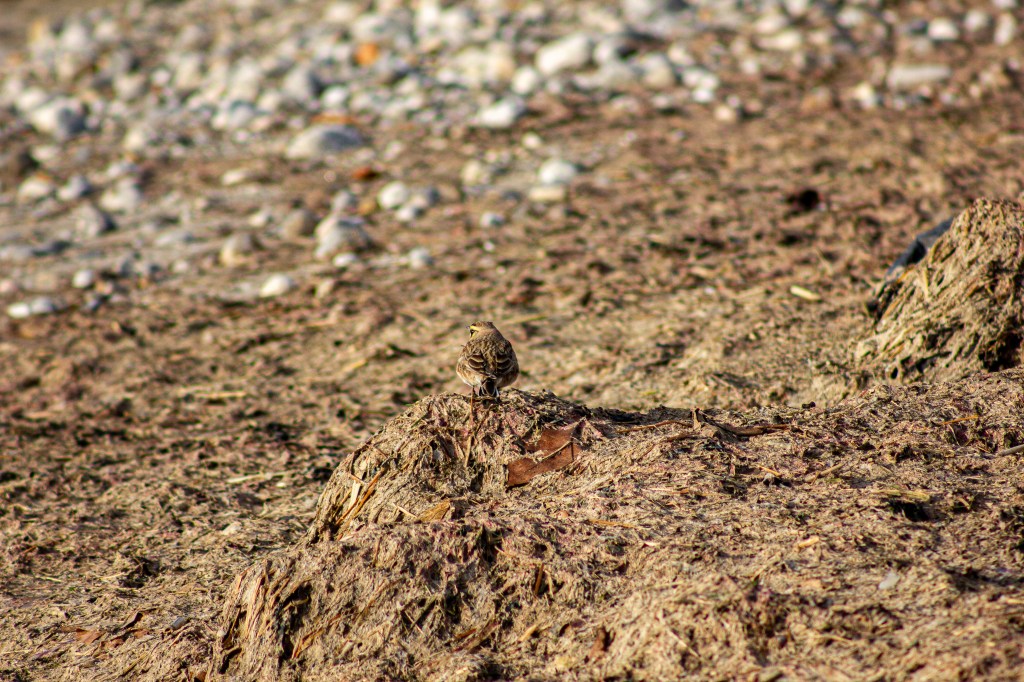
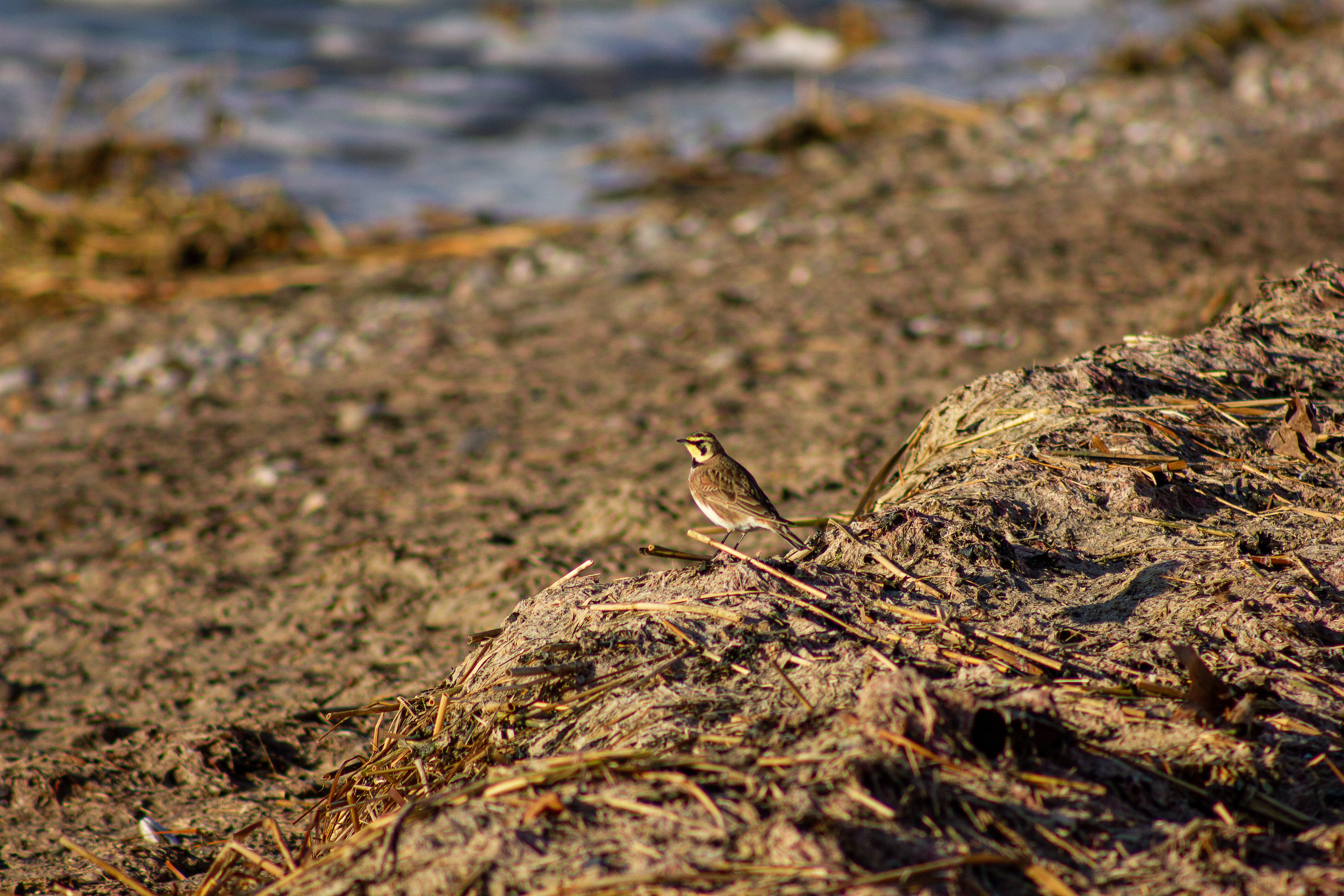
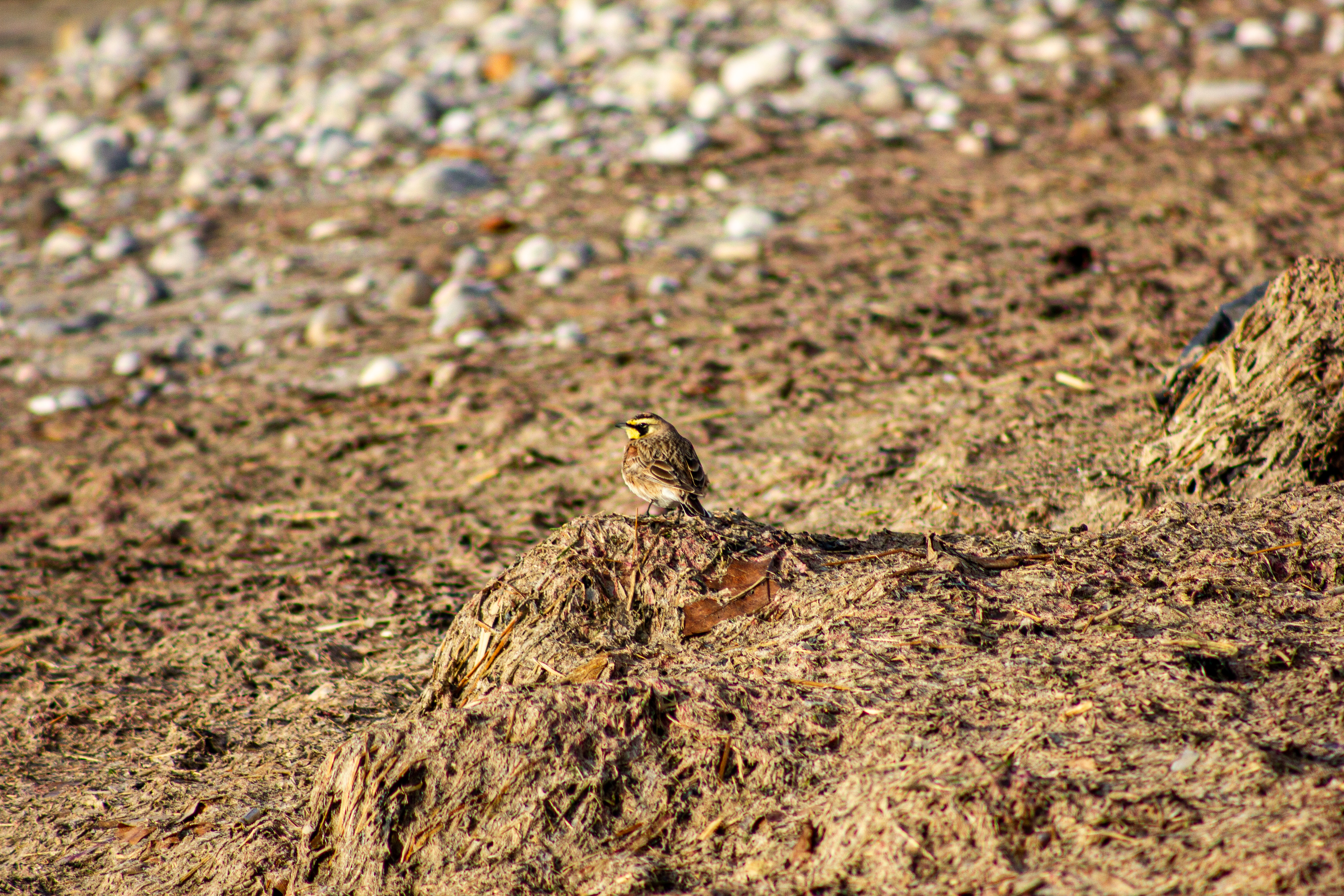
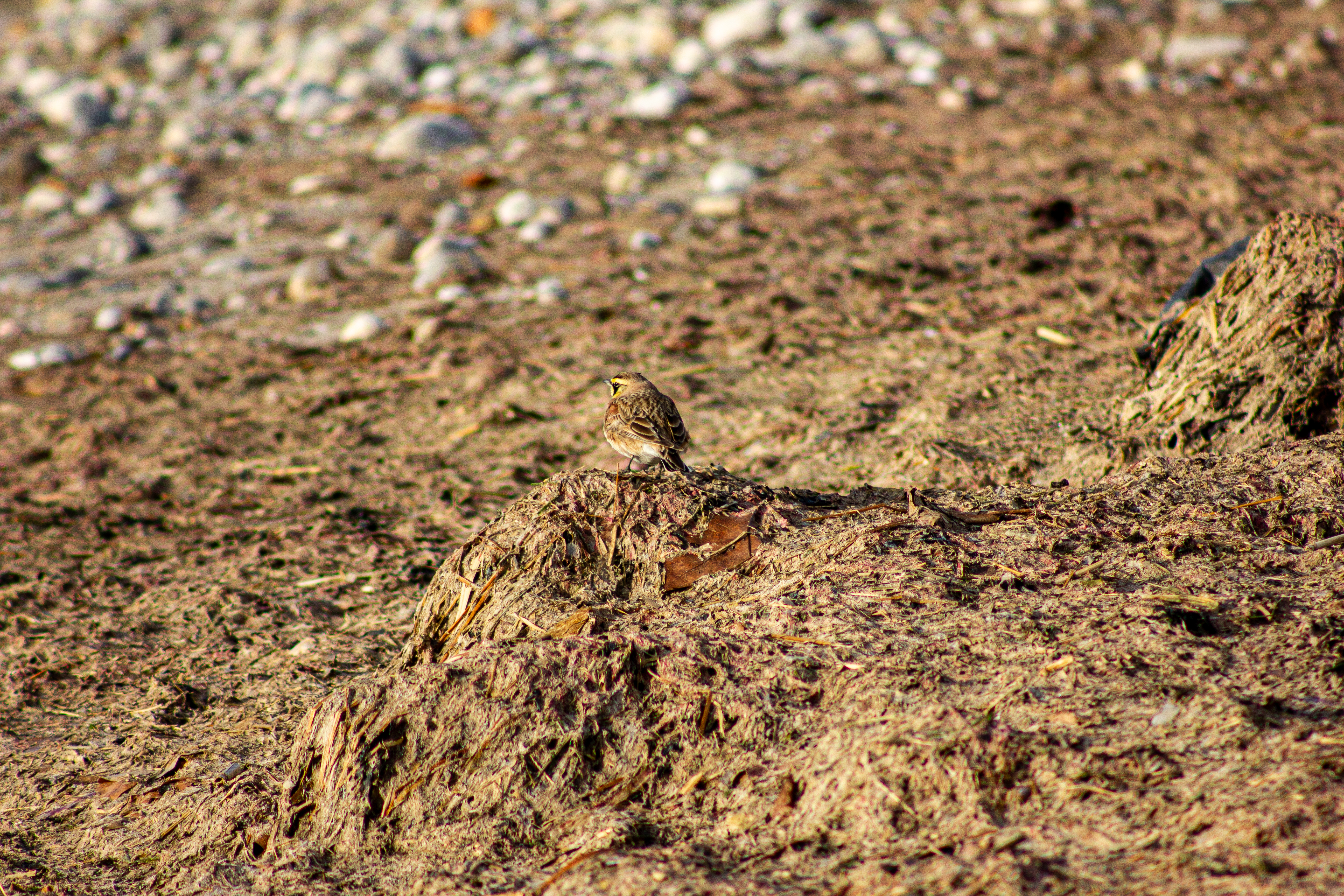
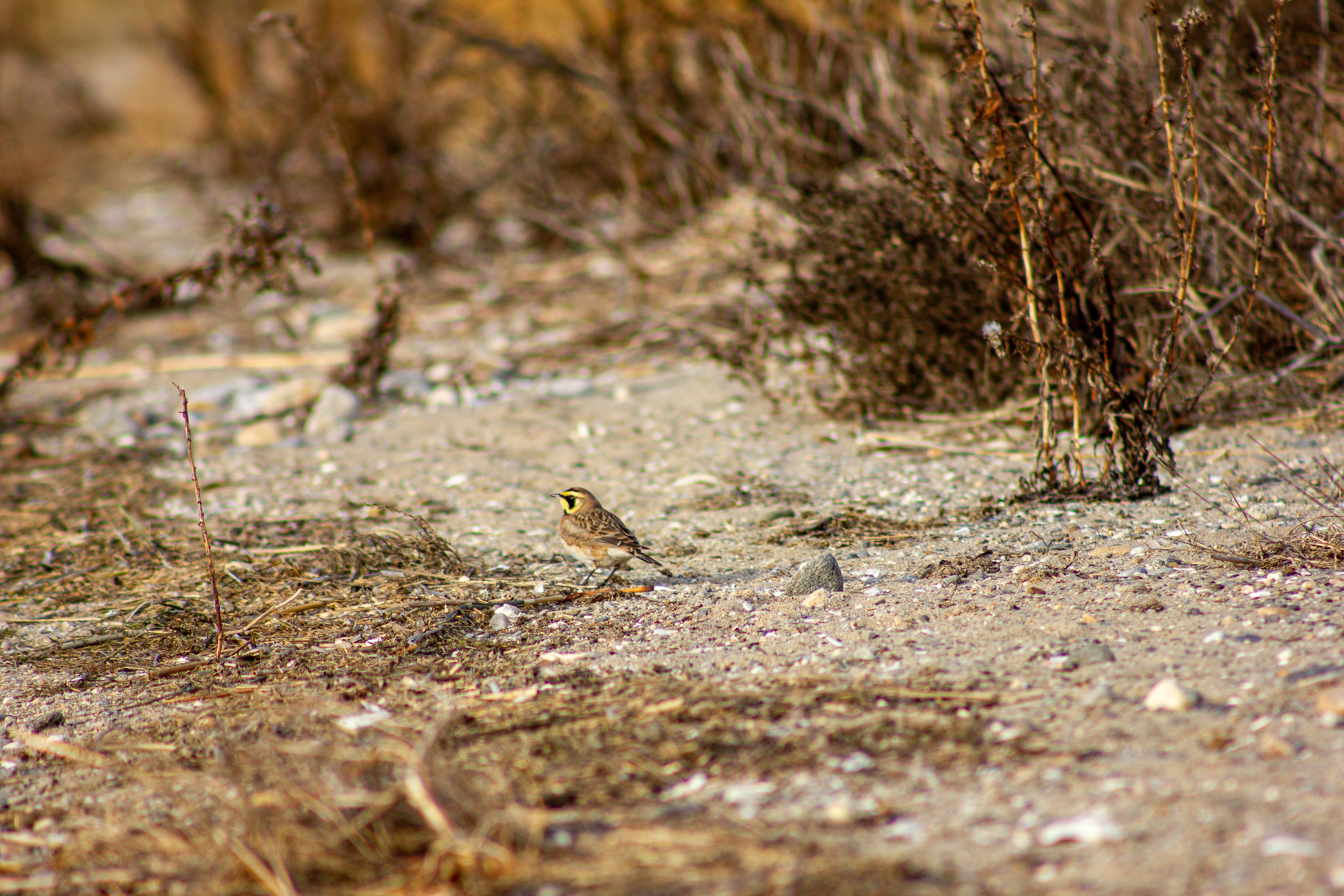
The Horned Lark (Eremophila alpestris) is a small, ground-dwelling songbird found across North America, Eurasia, and parts of northern Africa. It is notable for the tiny “horns” of feathers on its head, giving it a distinctive appearance.
Physical Description
Size: 6–8 inches (15–20 cm) in length, with a wingspan of 12 inches (30 cm).
Weight: Typically 1–1.5 ounces (28–42 grams).
Plumage: Males have a striking black-and-yellow face pattern with a black bib and sideburn-like markings. Their backs are brownish with streaks, helping with camouflage in open landscapes. The tiny “horns” (erectable tufts of feathers) are most noticeable when they are alert. Females are duller and lack the distinct black markings seen in males.
Habitat and Distribution
Preferred Habitat: Open landscapes such as prairies, deserts, tundra, coastal dunes, and agricultural fields. They avoid forested areas, preferring vast, treeless regions.
Geographic Range: Found across North America, Europe, and Asia. Northern populations migrate south in winter, while southern populations are largely sedentary.
Behavior and Diet
Foraging: Primarily eats seeds and small insects. During breeding season, they consume more insects like beetles, grasshoppers, and ants for protein. In winter, they rely heavily on seeds from grasses and weeds.
Flight and Movement: Capable of long, undulating flights, often singing while in the air. Prefers running on the ground rather than perching in trees.
Vocalizations: High-pitched, tinkling song that is often sung in flight. Calls are soft and buzzy, blending well with wind-swept environments.
Breeding and Nesting
Mating Rituals: Males perform aerial displays, rising high into the air before gliding down while singing.
Nesting: Nests are built on the ground, typically in shallow depressions lined with grass and small pebbles. Females do most of the nest-building and incubation.
Eggs and Incubation: Clutch size: 2–5 eggs, usually pale with dark speckles. Incubation lasts about 10–12 days. Chicks fledge within 9–12 days after hatching.
Adaptations and Survival Strategies
Camouflage: Their brown, streaked plumage blends with dry, open landscapes, helping them avoid predators.
Cold Weather Adaptations: Can withstand extreme temperatures, using their thick plumage for insulation.
Ground Nesting: Though it makes them vulnerable to predators, they rely on cryptic coloration and choosing inconspicuous locations to stay hidden.
Threats and Conservation Status
Threats: Habitat loss due to agriculture and urbanization. Climate change affecting migration patterns and food availability. Pesticides reducing insect populations.
Conservation Status: Listed as Least Concern by the IUCN, but some populations are declining due to habitat fragmentation.
Interesting Facts
Only true lark in North America: While the name “lark” is used for other birds, the Horned Lark is the only native North American member of the true lark family (Alaudidae).
Symbol of open landscapes: Their presence is often an indicator of healthy, undisturbed grasslands.
High-altitude dwellers: Some populations breed at elevations over 10,000 feet, including in alpine meadows and high deserts.
Subspecies Variety: Over 40 recognized subspecies exist, each with slight variations in plumage and size based on their environment.
Conclusion
The Horned Lark is a fascinating and resilient bird, thriving in some of the most open and harsh landscapes. Its distinctive appearance, ground-dwelling behavior, and beautiful aerial songs make it a remarkable species to observe. However, habitat loss poses a threat, making conservation efforts increasingly important.
Feel Free to subscribe! All it does is let you know when I next post!

 Wild Bird Journal
Leave a reply to Birds Cancel reply