
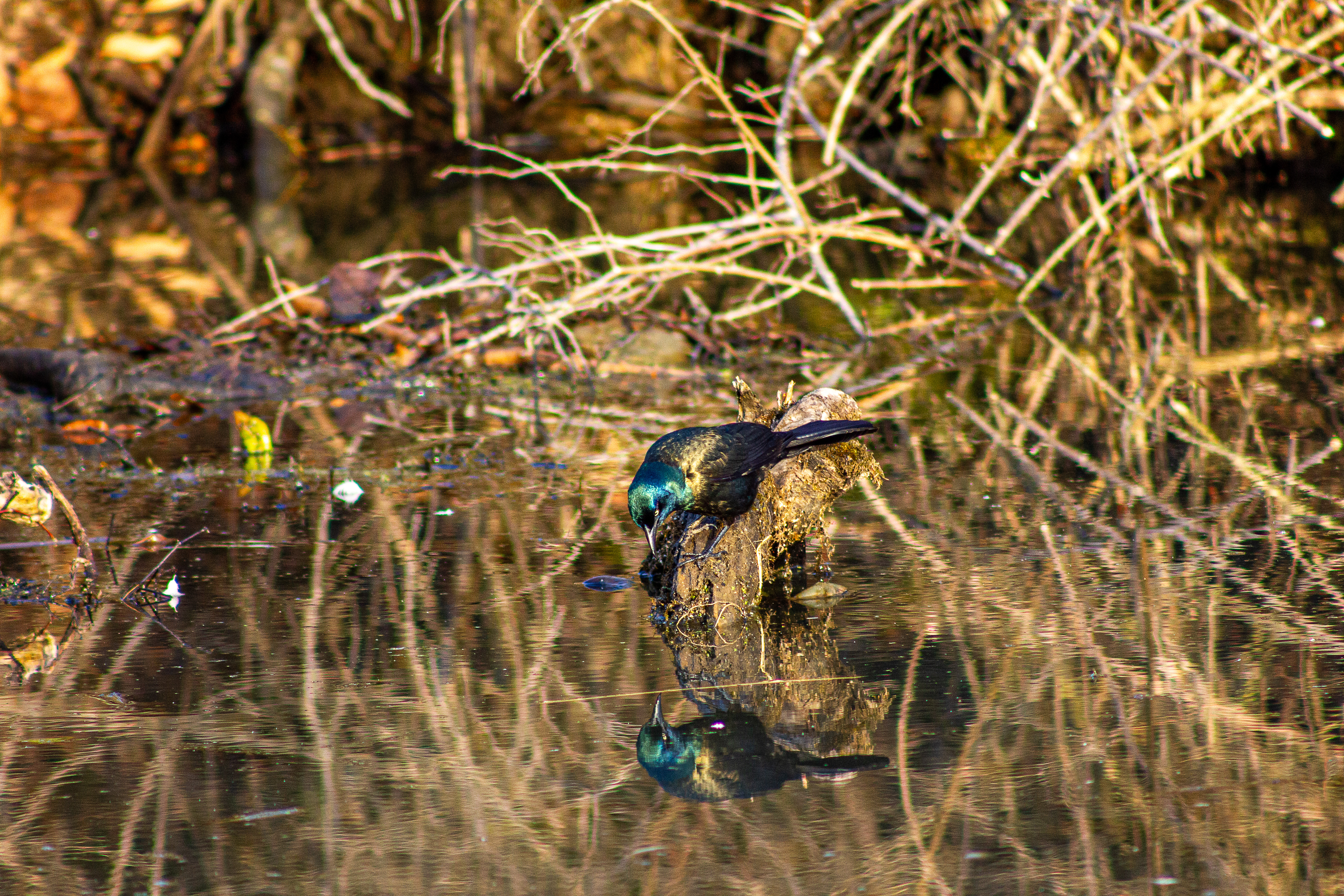
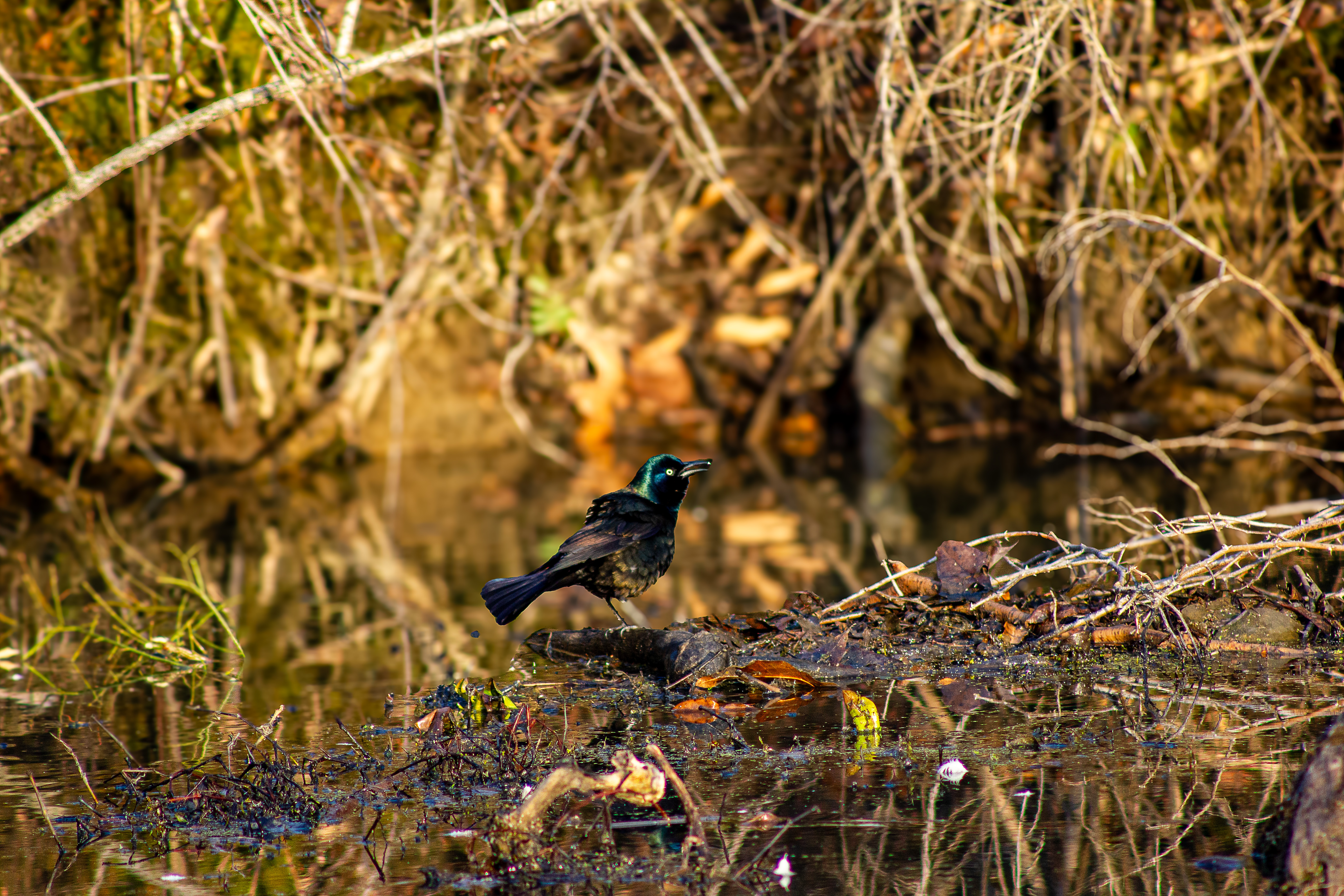
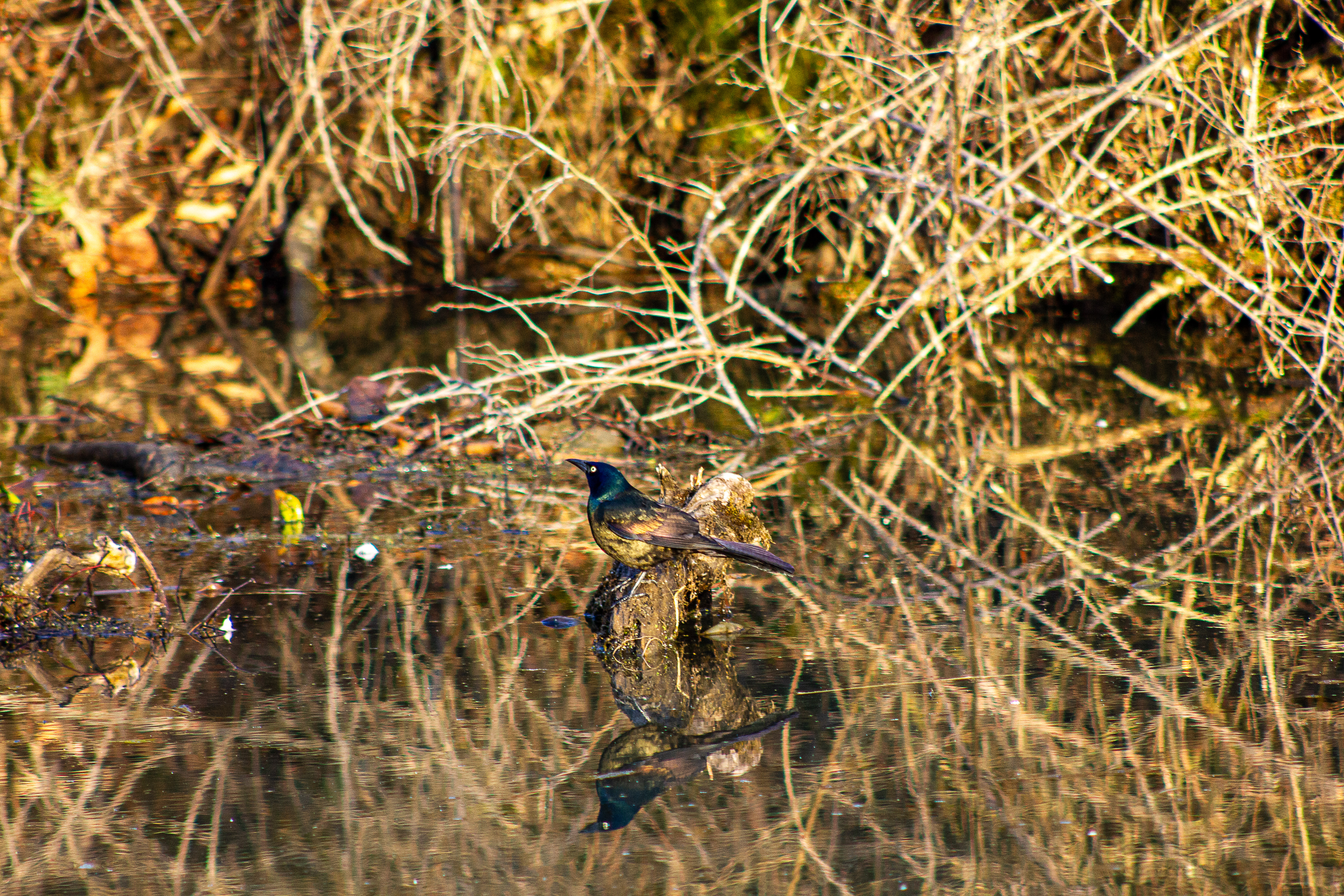
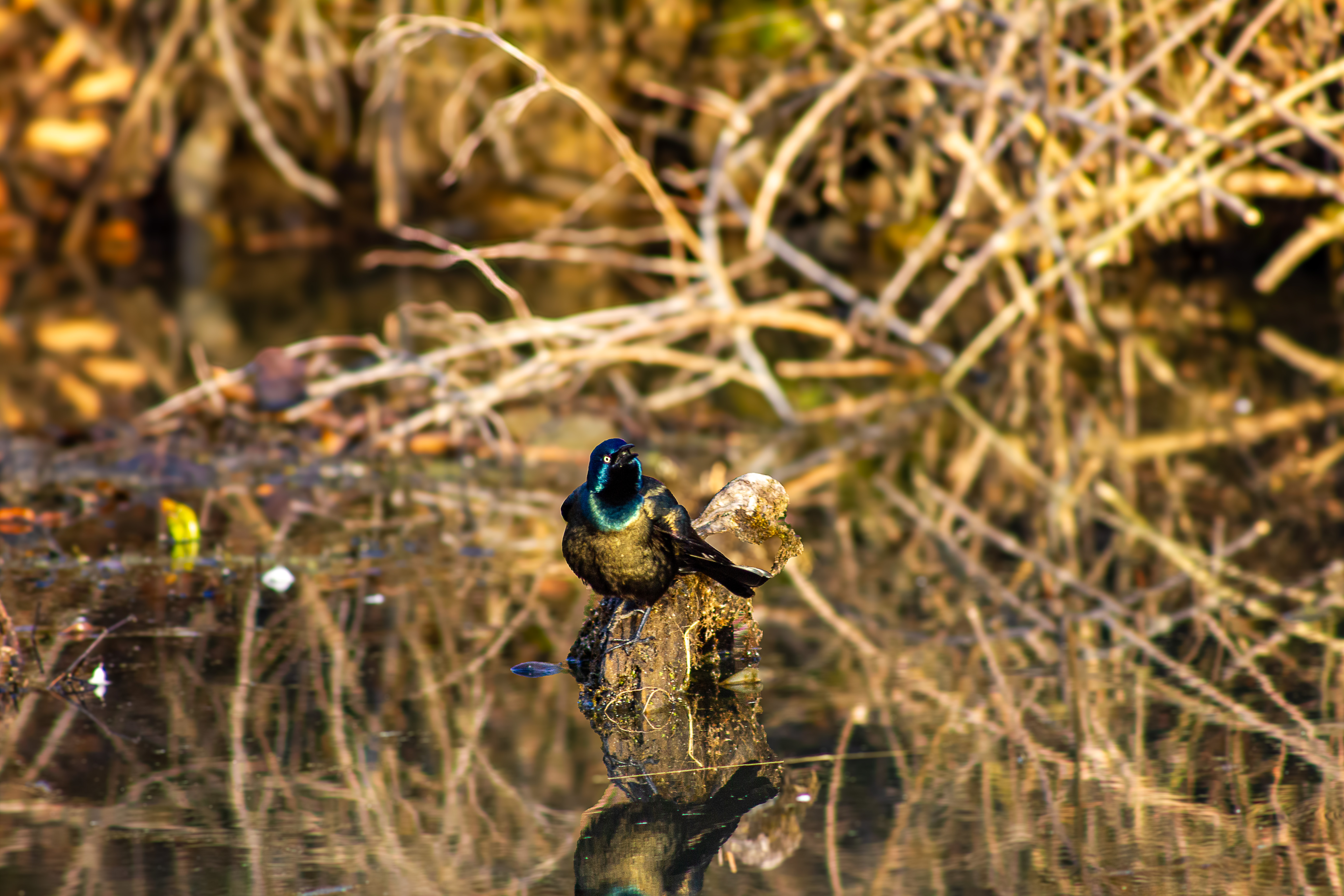
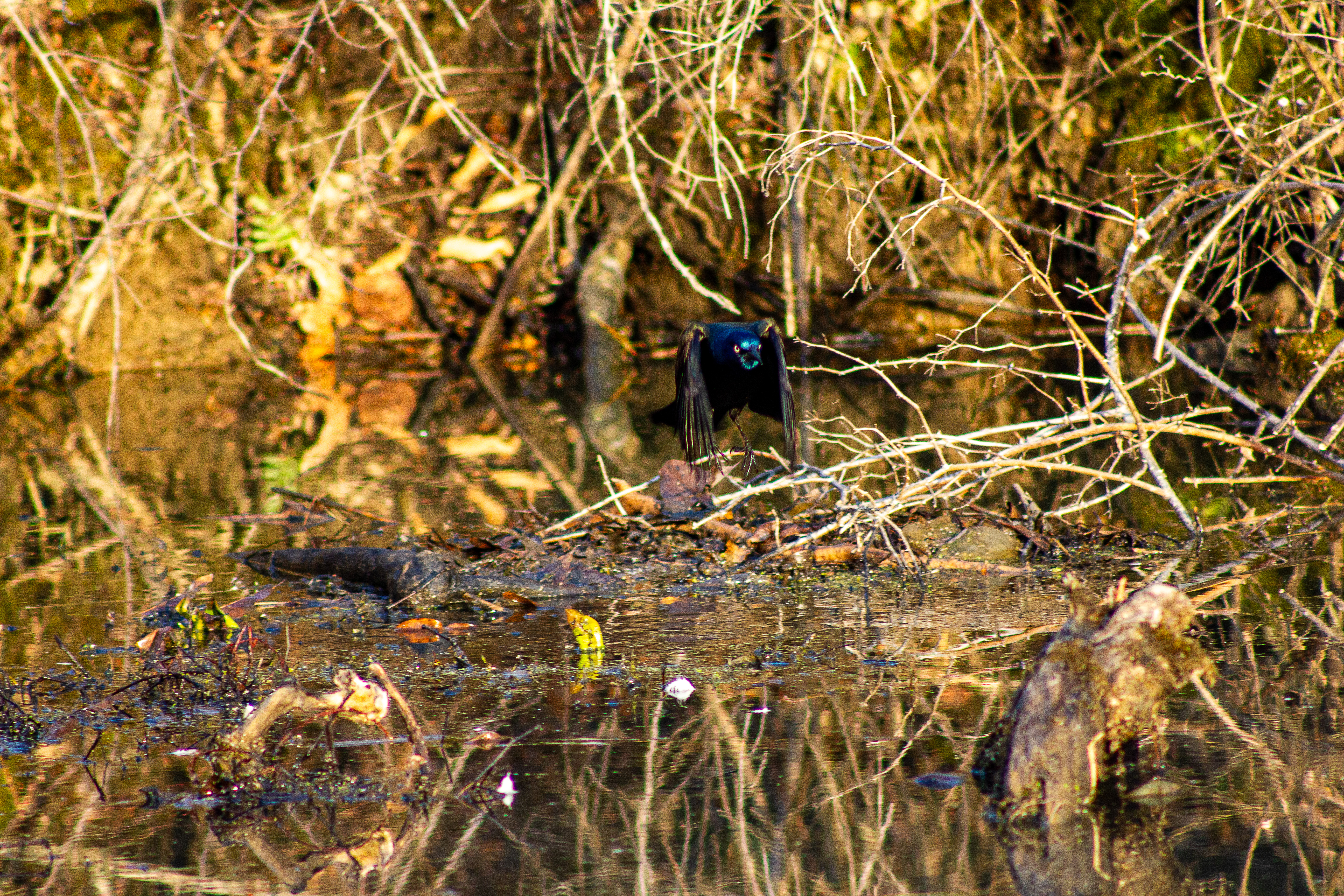
The Common Grackle (Quiscalus quiscula) is a large, blackbird species found across North America. These birds are known for their striking iridescent plumage, social behavior, and adaptability to various environments.
Physical Description
Size: 11–13 inches (28–33 cm) long with a wingspan of 14–18 inches (36–46 cm).
Weight: 2.6–5.0 oz (74–142 g).
Plumage: Glossy black with iridescent hues of blue, green, purple, and bronze. The colors are more prominent in males.
Eyes: Pale yellow or white, contrasting sharply with their dark feathers.
Bill: Long, slightly curved, and black.
Tail: Long and keel-shaped, appearing like a rudder in flight.
Range and Habitat
Native Range: Found across the United States, southern Canada, and parts of Mexico.
Preferred Habitats: Woodlands, Marshes, Fields and meadows. Urban and suburban areas (parks, backyards, parking lots)
They thrive in human-altered environments and are frequently seen in cities scavenging for food.
Diet and Feeding Behavior
Omnivorous and opportunistic, the Common Grackle eats:
Insects: Beetles, grasshoppers, caterpillar’s.
Seeds and Grains: Corn, wheat, acorn’s.
Fruits: Berries, cherries, apple’s.
Small Animals: Frogs, lizards, minnows, mice, even small bird’s.
Human Food Scraps: Bread, pet food, fast food remnants
Grackles are known for their foraging intelligence, using their strong bills to pry open food sources. They sometimes dunk food in water to soften it.
Behavior and Social Structure
Highly Social: Often form large flocks, sometimes mixing with other blackbirds and starlings.
Roosting: At night, they gather in massive communal roosts, sometimes numbering in the tens of thousands.
Aggressive: Can be dominant at bird feeders and may chase away smaller birds.
Mimicry: Some individuals can imitate other bird calls.
Breeding and Nesting
Breeding Season: Spring to early summer (March–July).
Mating Behavior: Males display their iridescent plumage and make harsh calls to attract females.
Nesting Sites: Trees, shrubs, reeds, and even human structures (barns, signs, rooftops).
Nest Composition: Twigs, grasses, and mud, sometimes lined with hair or feathers.
Eggs: Clutch size: 3–7 eggs. Pale blue or green with brown spots. Incubation: 12–15 days.
Parental Care: Both parents feed the young, which fledge after 12–17 days.
Vocalizations and Sounds
Common Grackles have a variety of calls, described as:
“Rusty gate” sound – a harsh, creaky, metallic call.
Sharp “chack” calls used for communication.
Whistles and croaks mixed into their vocalizations.
Predators and Threats
Natural Predators:
Hawks (Cooper’s Hawk, Red-tailed Hawk),Owls (Great Horned Owl), Snakes, Raccoons, and foxes
Human-Related Threats:
Habitat destructionPoisoning from pesticidesCollisions with buildings and vehicles
Despite these threats, their adaptability has allowed them to thrive.
Ecological Impact
Positive: Control insect populations.
Disperse seeds, contributing to plant growth.
Negative: Can damage crops (cornfields are a major target)Aggressive behavior at feeders and nesting sites.
Large flocks create noise and mess in urban areas
Due to their crop-raiding habits, they are sometimes considered a pest by farmers.
Fun Facts
Their iridescent feathers change color depending on the light and angle.
Unlike most birds, grackles can crack open hard grains with their powerful bills.
They sometimes drop hard-shelled food (like acorns) onto roads for cars to crack open.
They have been observed using tools, such as sticks, to access food.
Their roosts can sometimes reach over a million birds, creating an impressive (and noisy) sight.
Conservation Status
IUCN Status: Least Concern
Population Trends: While still abundant, numbers have declined by about 50% since the 1970s due to habitat loss and control measures by farmers.


 Wild Bird Journal
Leave a reply to Ilan M. Cancel reply