
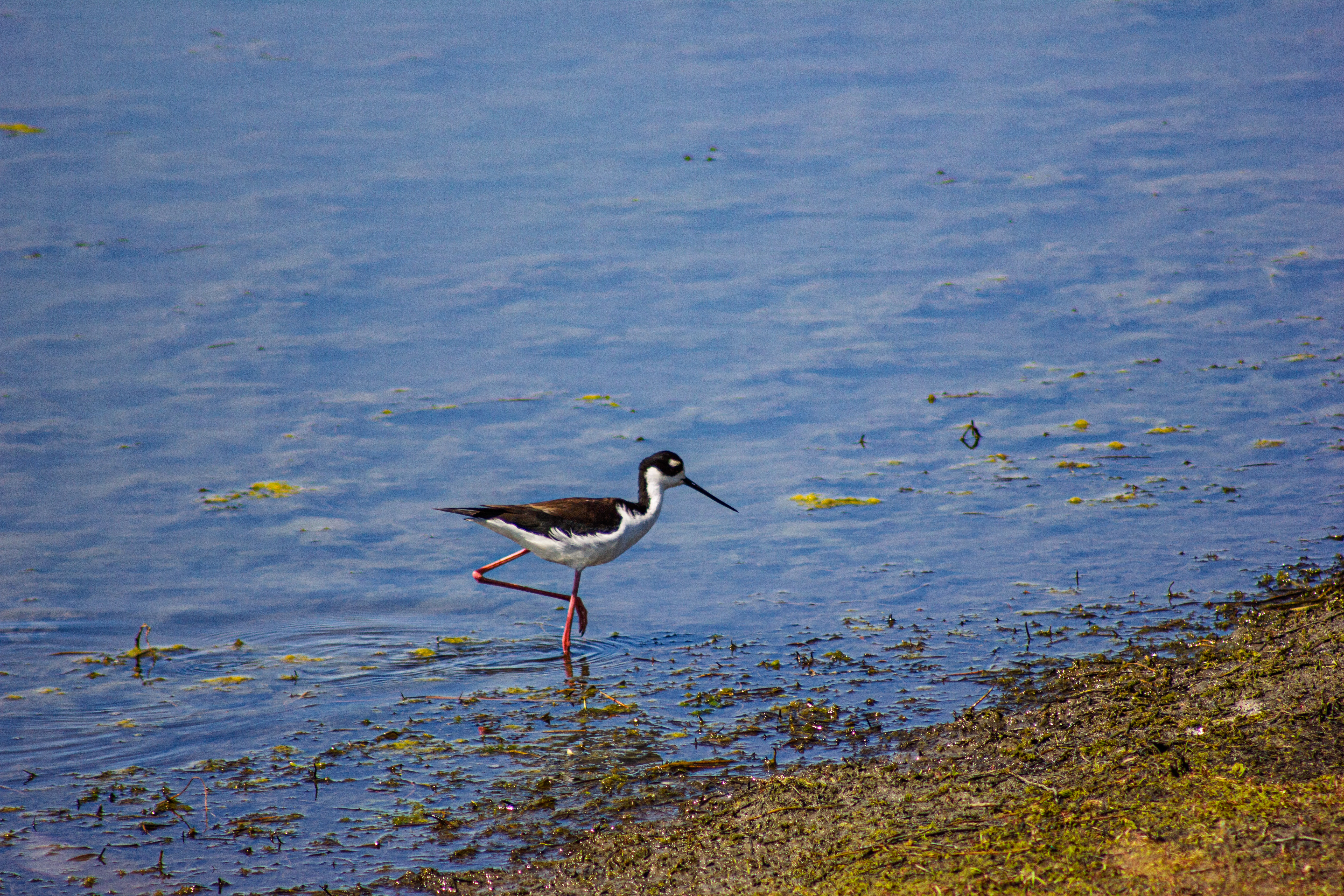
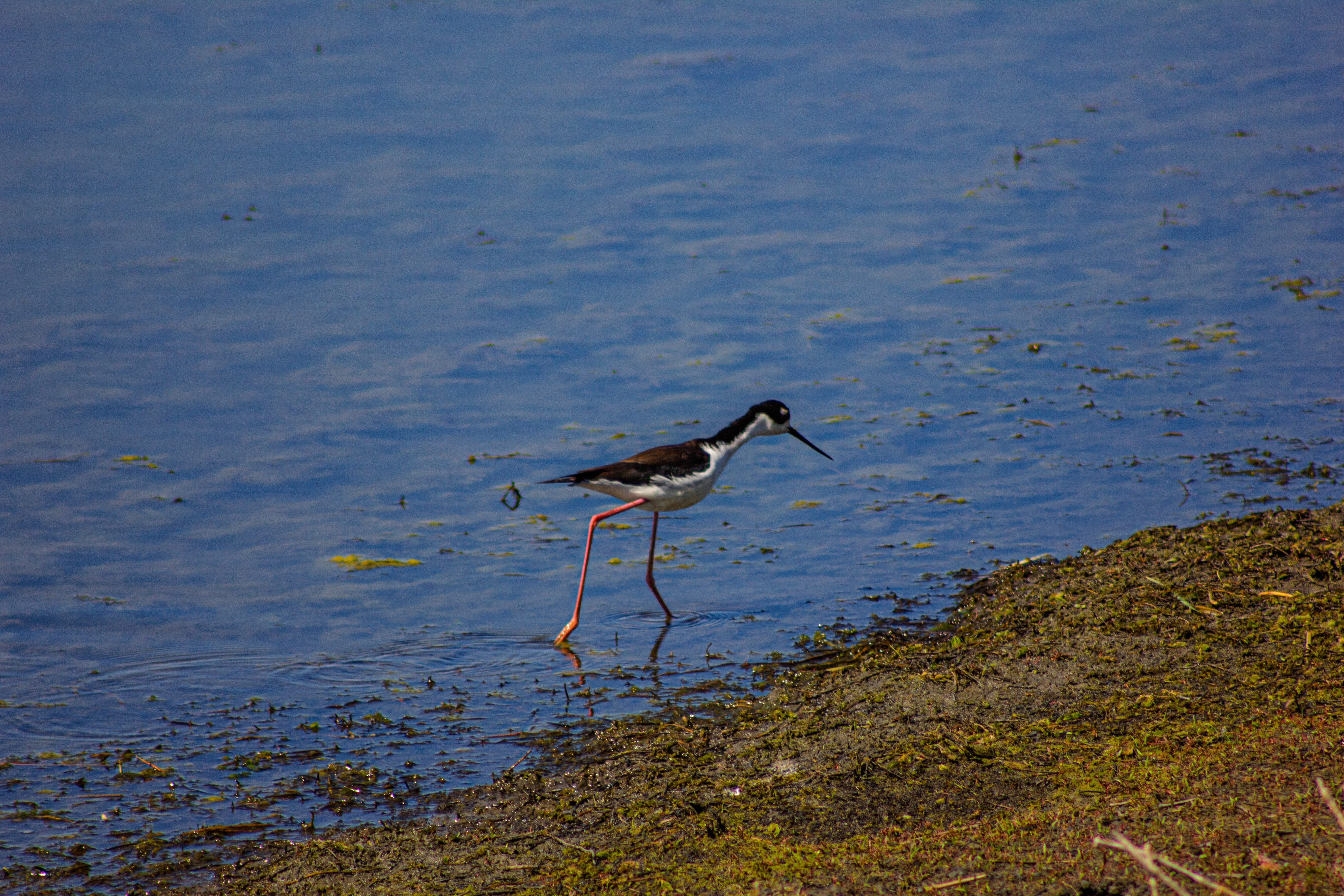

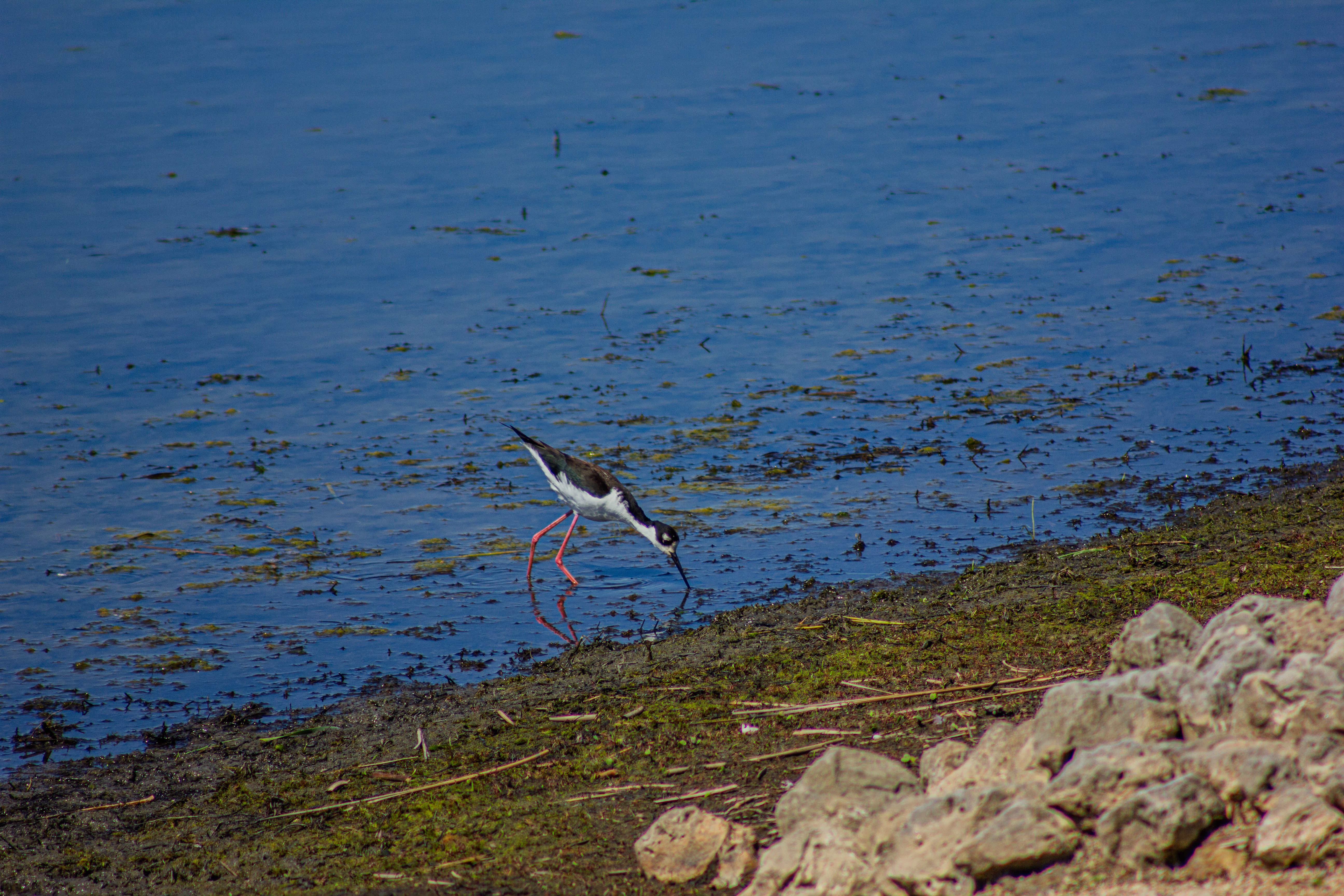
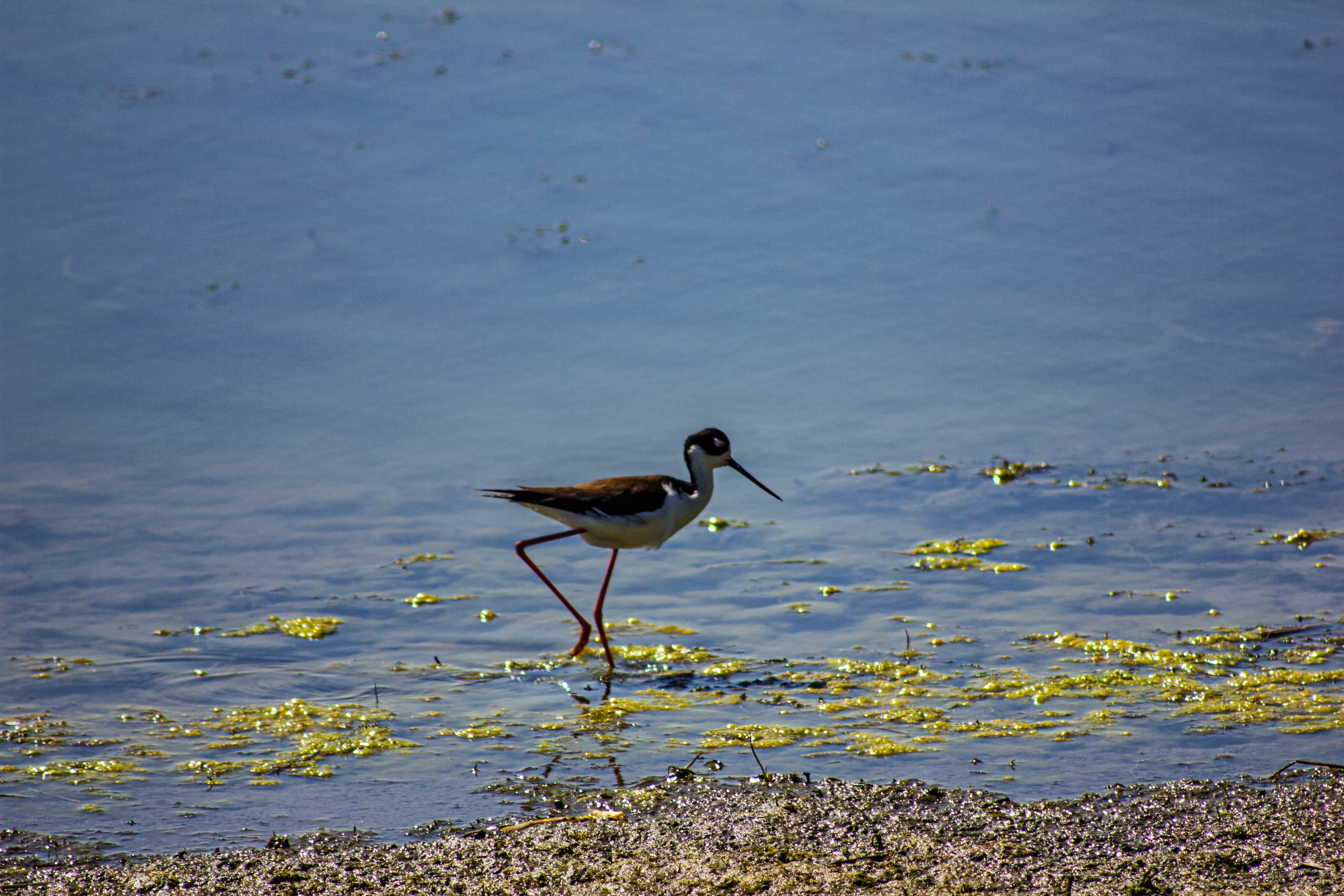
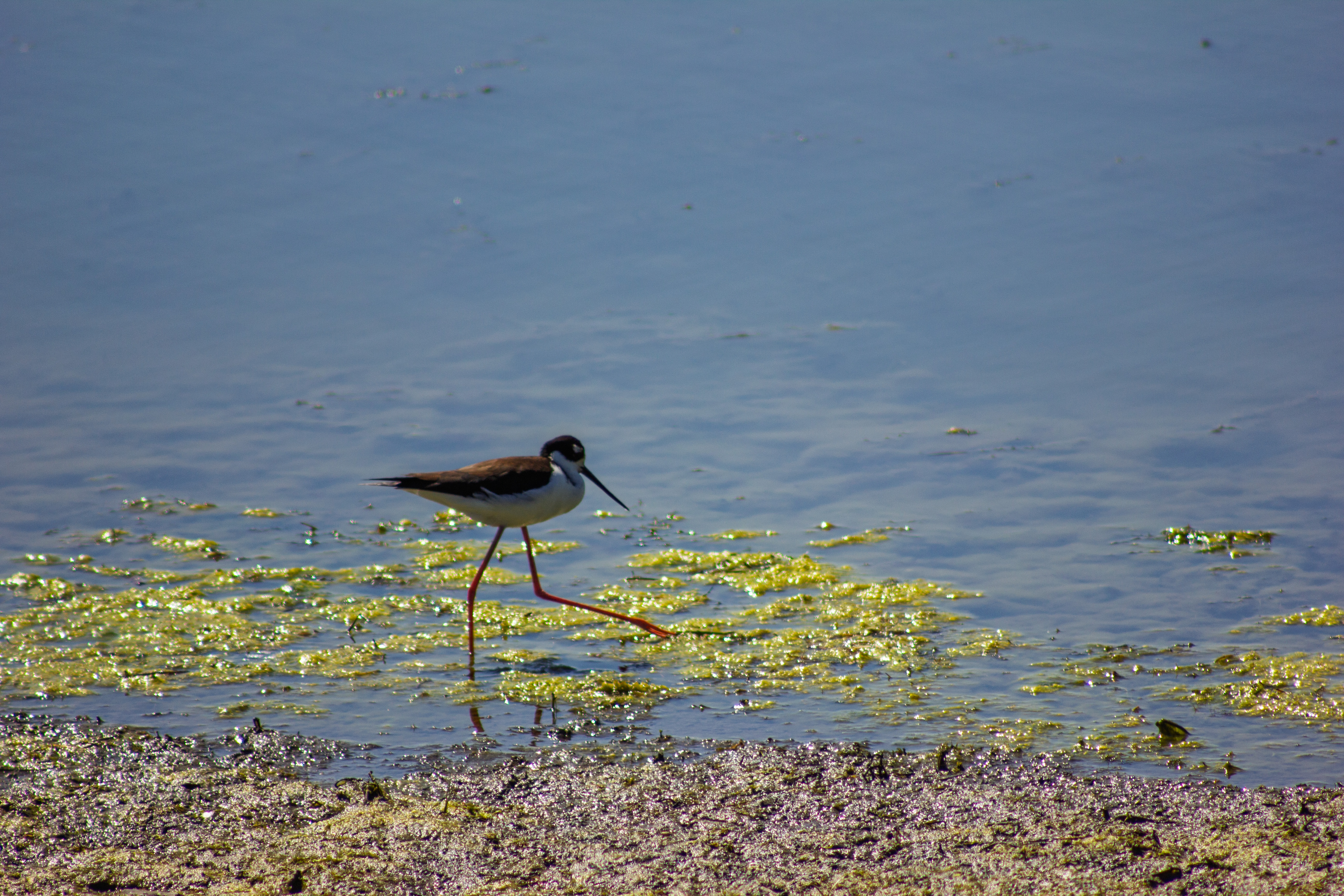
Here’s a comprehensive overview of the Black-necked Stilt (Himantopus mexicanus), covering physical characteristics, habitat, behavior, diet, breeding, conservation, and more:
Physical Characteristics
Size: 33–38 cm (13–15 in) in length.
Wingspan: Approximately 71 cm (28 in).
Weight: Around 140–200 g.
Coloration: Striking contrast of black and white plumage. Long, thin black bill. Long, slender pink legs, among the longest proportionally in the bird world. Males typically have a glossy black back and nape. Females may have a slightly browner tone to the black areas.
Eyes: Red with a white eye ring.
Distribution & Habitat
Range: Found throughout the Americas. Common in the southern United States, Mexico, Central America, the Caribbean, and parts of South America.
Habitat: Shallow wetlands, marshes, mudflats, ponds, salt pans, lagoon edges, and rice fields. Prefers open areas with shallow water for feeding and minimal vegetation for nesting.
Behavior
Foraging: Wades through shallow waters. Uses rapid pecking motions or sweeps its bill side-to-side.
Flight: Strong, straight flight with neck extended and legs trailing behind.
Social Behavior: Often found in flocks, sometimes mixed with other shorebirds. Very vocal, using sharp “kek-kek-kek” or “kip-kip” calls.
Territorial: Aggressive in defending nesting sites, even against much larger animals, including humans.
Diet
Primarily carnivorous: Feeds on insects, crustaceans, mollusks, worms, small fish, and larvae. Forages in shallow waters and along the shorelines.
Breeding & Reproduction
Breeding Season: Spring through summer, varying by region.
Mating: Monogamous during the breeding season. Pairs engage in elaborate courtship displays including synchronized preening and calls.
Nest: Shallow scrape in the ground, often on mudflats or islands, lined with grass, pebbles, or shells. Usually near water but on elevated ground to avoid flooding.
Eggs: Typically 3–5 buff-colored eggs with dark spots.
Incubation: Both parents incubate for ~22–26 days.
Chicks: Precocial (can walk and feed soon after hatching). Guarded by both parents. Fledge at around 4–5 weeks of age.
Conservation Status
IUCN Red List:
Least Concern Population Trend: Generally stable, though vulnerable to: Habitat destruction (especially wetland draining). Disturbance during nesting season. Pollution and water management practices.
Subspecies & Related Species
Himantopus mexicanus knudseni: Hawaiian subspecies known as the Ae‘o (endangered). Closely related to the Black-winged Stilt (Himantopus himantopus) and other Himantopus species in the Old World.
Interesting Facts
Their long legs allow them to wade deeper than many other shorebirds. Known for their “distraction displays” (e.g., feigning injury) to lure predators away from nests. Can hybridize with other Himantopus species where ranges overlap.
Cultural & Ecological Significance
Important bioindicator: Reflects the health of wetland ecosystems. Featured in various indigenous and Hawaiian traditions. Popular among birdwatchers due to their striking appearance and elegant movement.


 Wild Bird Journal
Leave a reply to Ilan M. Cancel reply