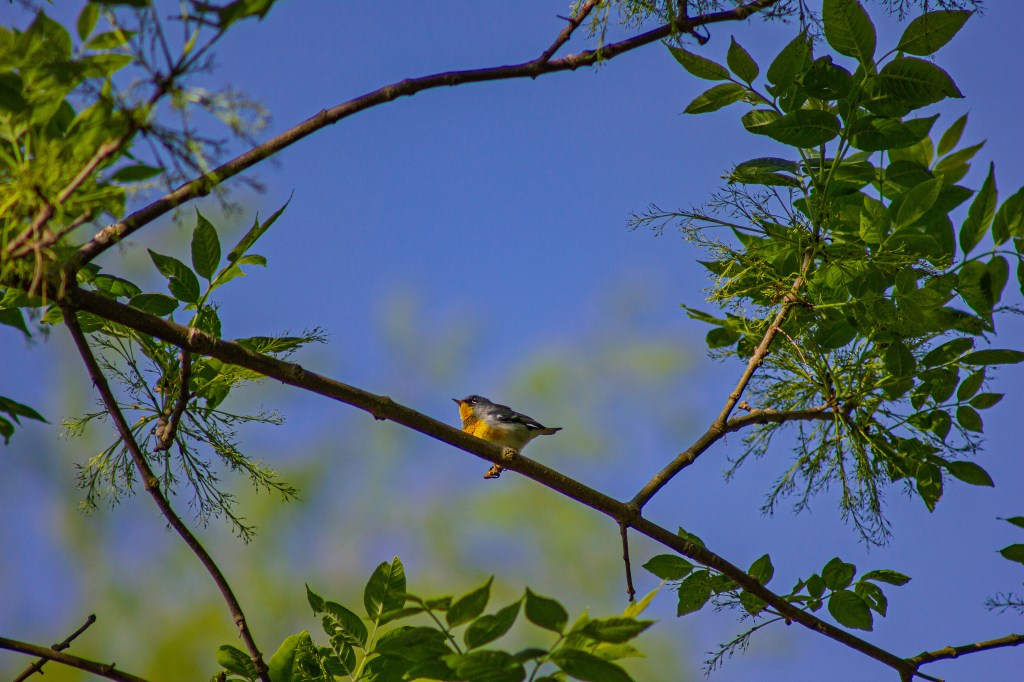
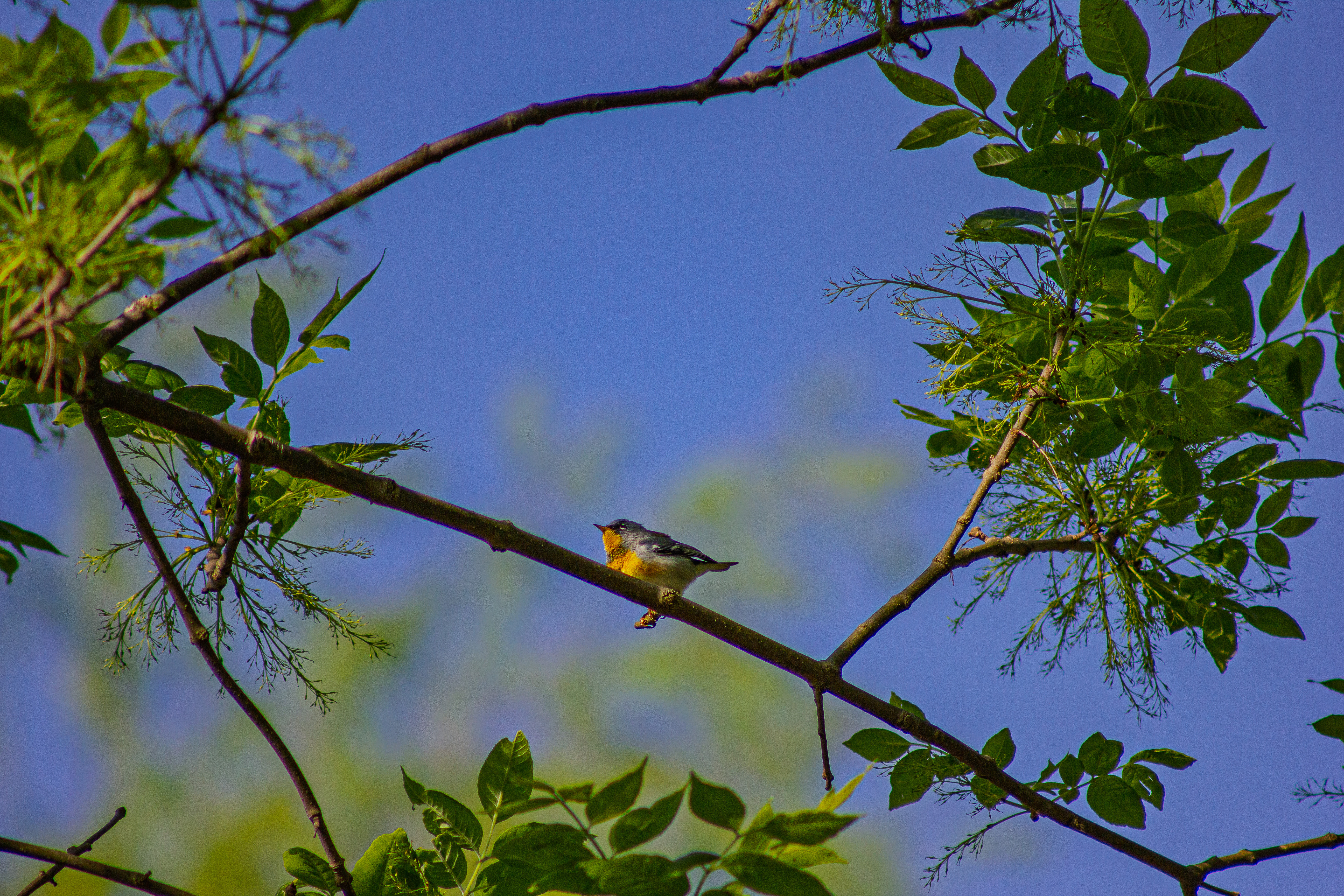
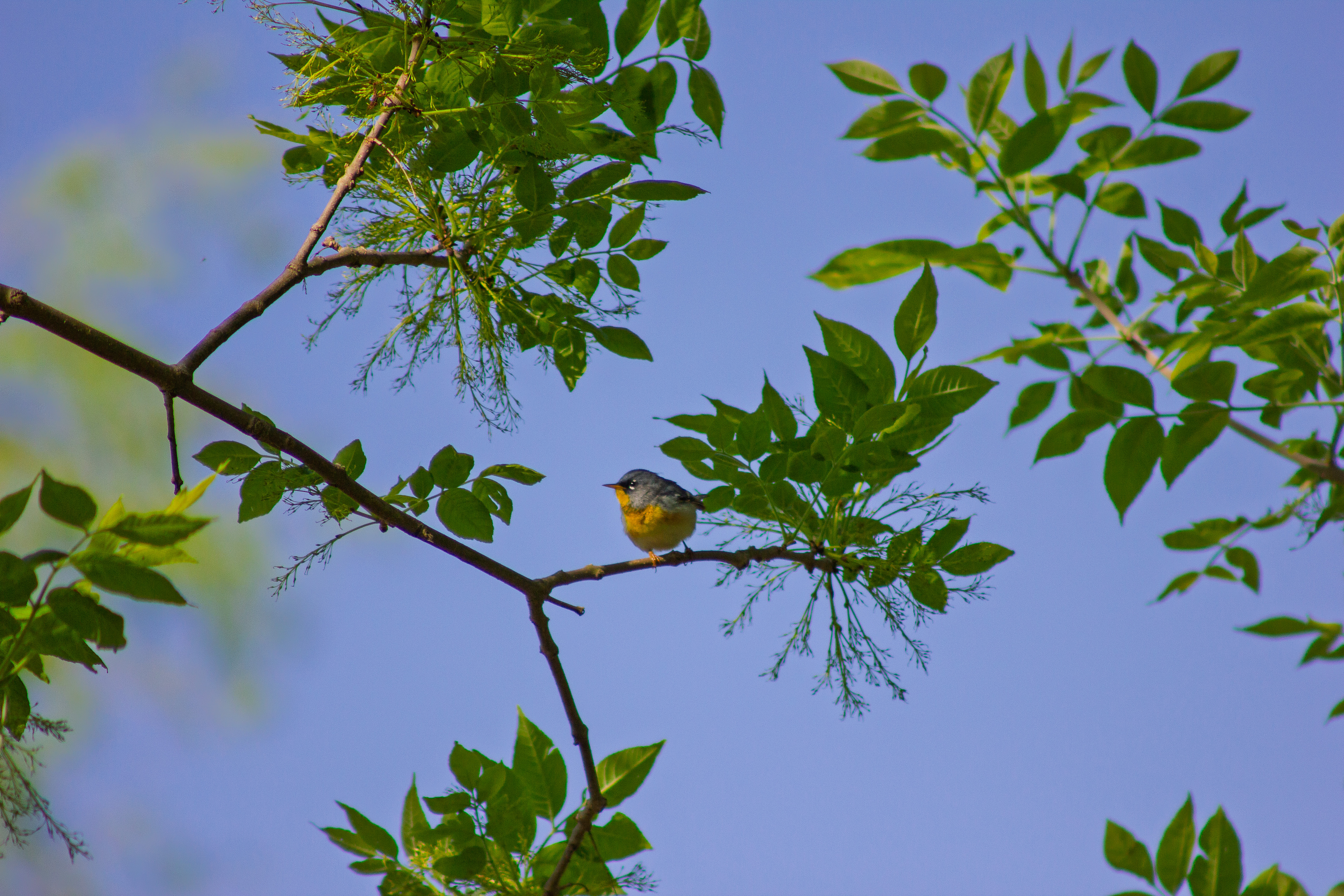
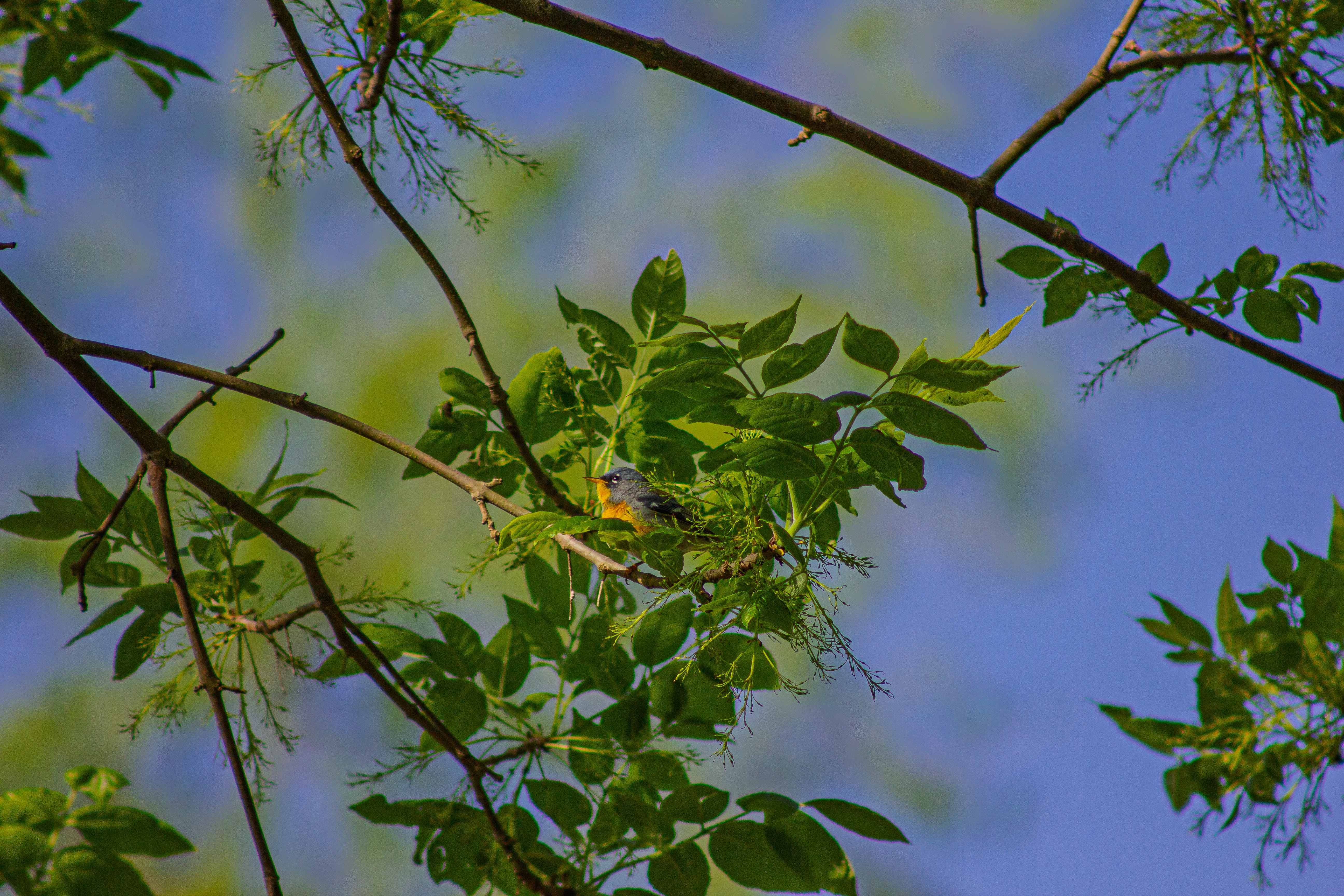

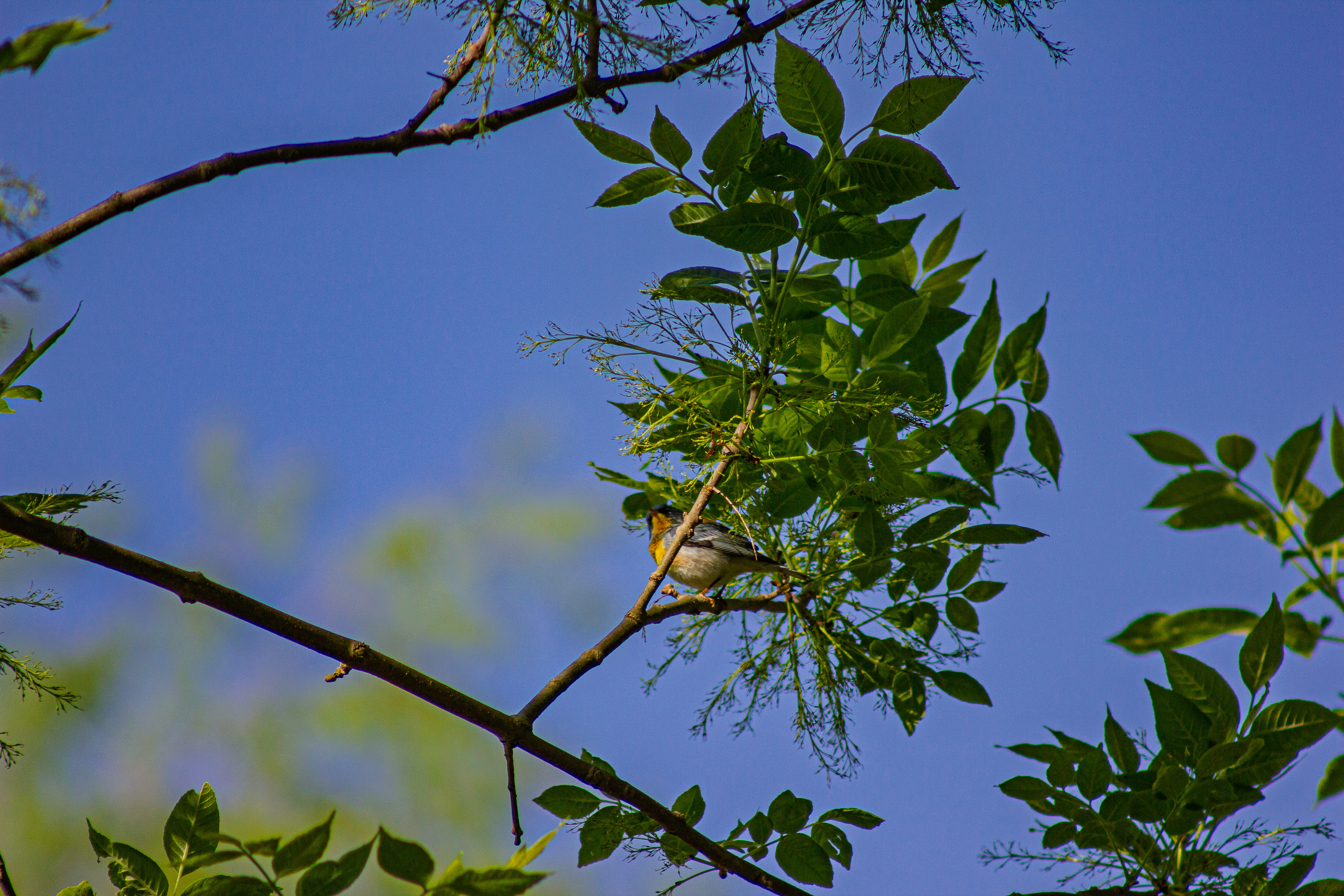
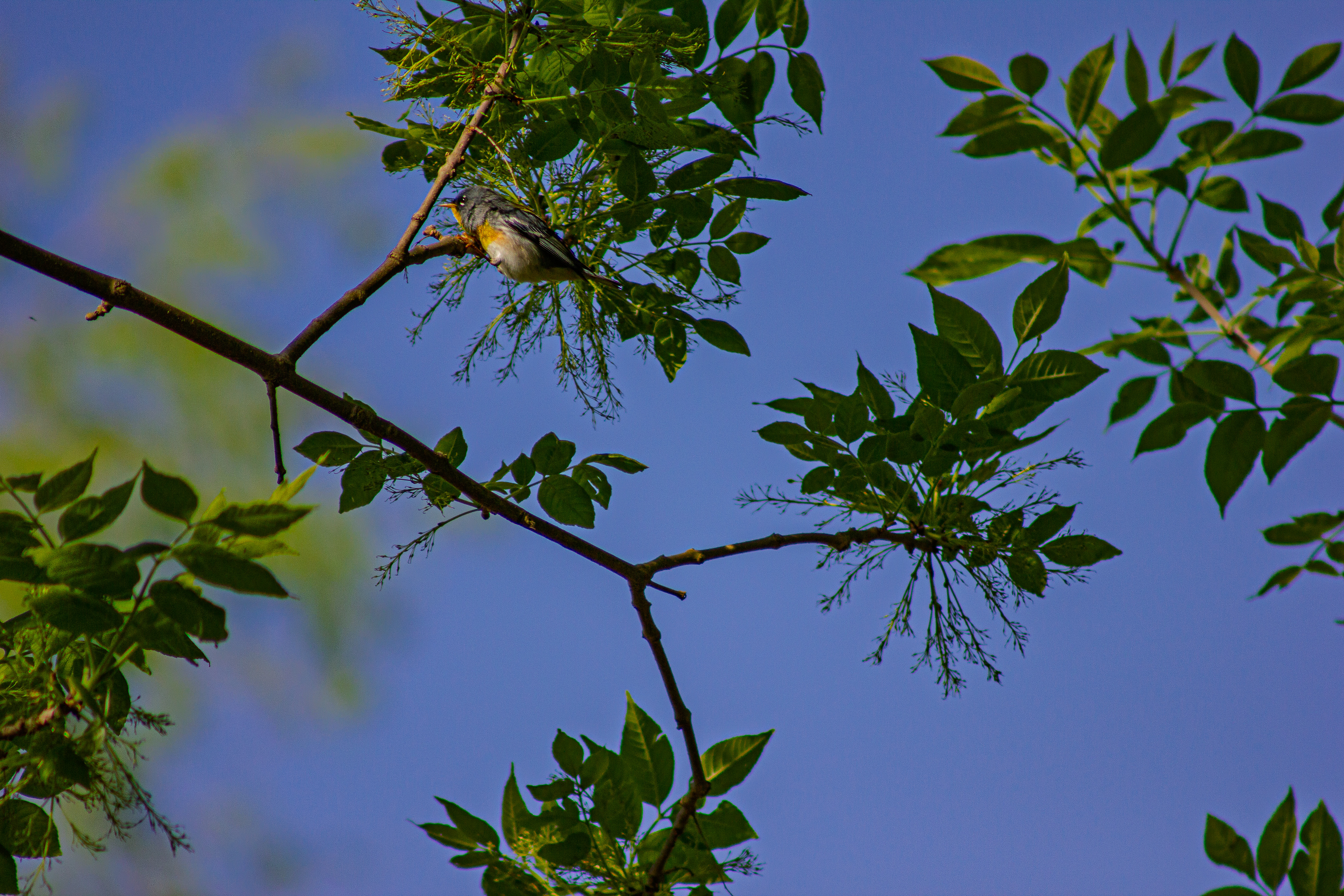
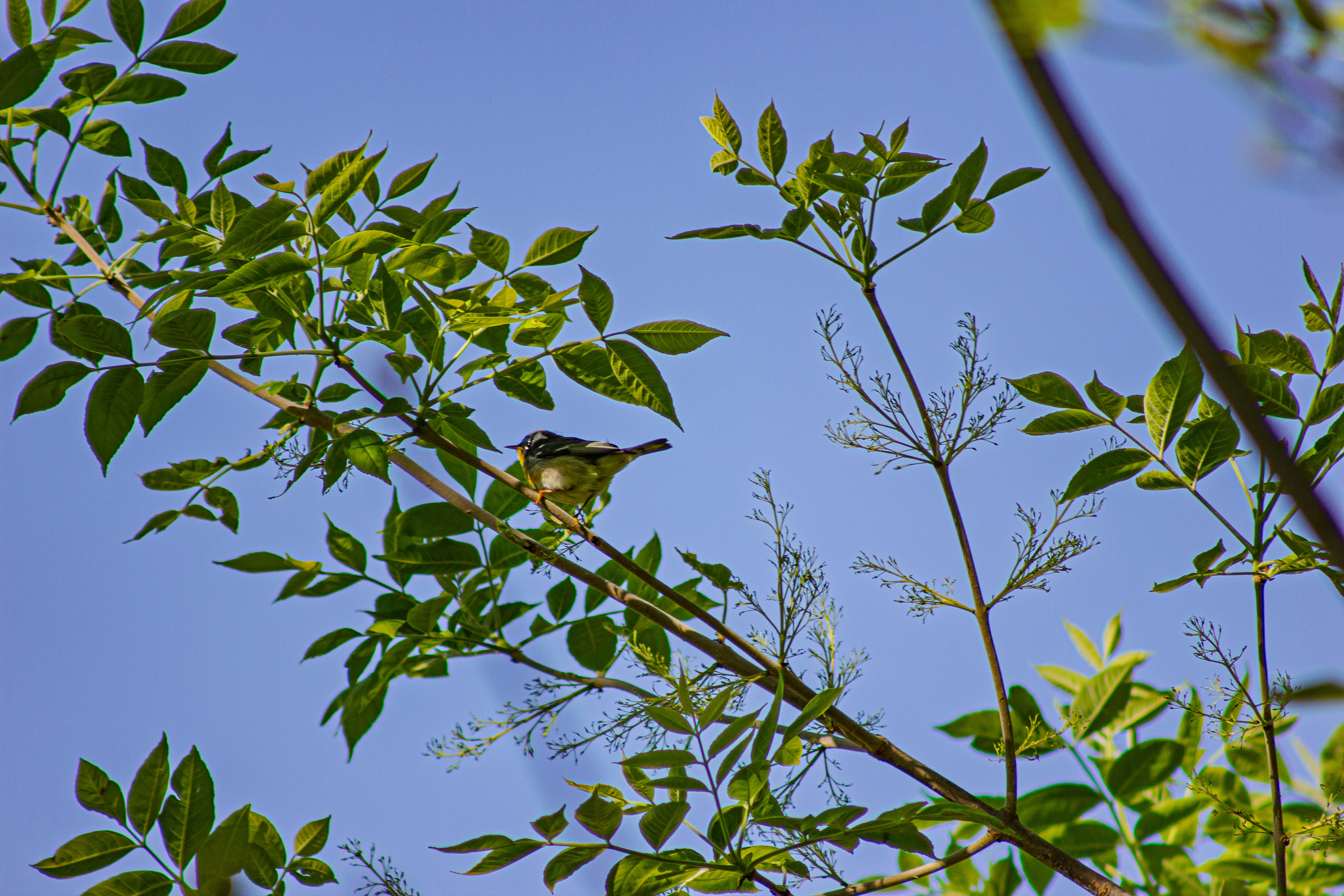
The Northern Parula (Setophaga americana) is a small, colorful warbler native to North and Central America. Below is a comprehensive overview, covering its taxonomy, physical traits, habitat, behavior, diet, migration, conservation status, and more.
Physical Description
Size: 4.3–4.7 inches (11–12 cm) in length.
Wingspan: 6.3–7.1 inches (16–18 cm).
Weight: 0.2–0.4 oz (5–11 g).
Plumage: Male: Blue-gray upperparts with greenish back patch, yellow throat and chest with a dark chest band, and white belly. White wing bars and eye arcs form a broken eye ring. Female: Similar but duller, often missing the dark breast band. Juveniles: Even duller, often lacking the complete color pattern.
Range & Habitat
Breeding Range: Eastern North America: From southern Canada to the southeastern U.S. Two disjunct populations:
Northern population: Northeast U.S., Great Lakes, southern Canada. Southern population: Along the Gulf Coast, especially in cypress and swamp forests.
Wintering Grounds: Caribbean, Central America, and parts of southern Florida.
Preferred Habitat: Moist forests with hanging epiphytes (like Spanish moss in the South or Usnea lichens in the North). Breeds in both coniferous and mixed deciduous forests depending on region.
Behavior & Ecology
Vocalizations
Song: A buzzy, rising trill ending abruptly (“zeeeeeeeee-yip”). Call: A sharp chip or tsip. Males sing from high perches during breeding season to establish territory and attract mates.
Nesting
Nests are typically suspended from branches in hanging moss or lichens. Nest type: Domed nest with side entrance. Clutch size: 3–7 eggs. Incubation: ~12 days, mostly by the female. Fledging: Young leave the nest about 10–11 days after hatching.
Diet
Primarily insectivorous. Eats caterpillars, spiders, beetles, flies, and other small invertebrates. Occasionally consumes berries, especially during migration.
Migration
Migratory behavior: Long-distance migrant.
Spring migration: March–May. Fall migration: August–October. Uses a variety of stopover habitats during migration, including parks, gardens, and woodlands.
Life Cycle
Lifespan: Typically 3–5 years, but individuals can live longer. Breeds once per year, though second broods may occur in the southern range.
Conservation Status
IUCN Red List: Least Concern.
Population trend: Stable or slightly increasing.
Threats: Habitat loss, especially in wintering and breeding grounds. Pesticides reducing insect prey. Collisions with buildings during migration.
Ecological Role
Helps control insect populations. Serves as prey for raptors and nest predators. Acts as an indicator species for forest health due to sensitivity to habitat changes.
Interesting Facts
One of the smallest warblers in North America. Known for being hard to spot despite its bright colors due to foraging high in the canopy.
The northern and southern populations were once considered separate species due to their disjunct range. Relies heavily on epiphytic plants like Spanish moss for nesting—decline in moss due to pollution affects its nesting success.

 Wild Bird Journal
Leave a comment