
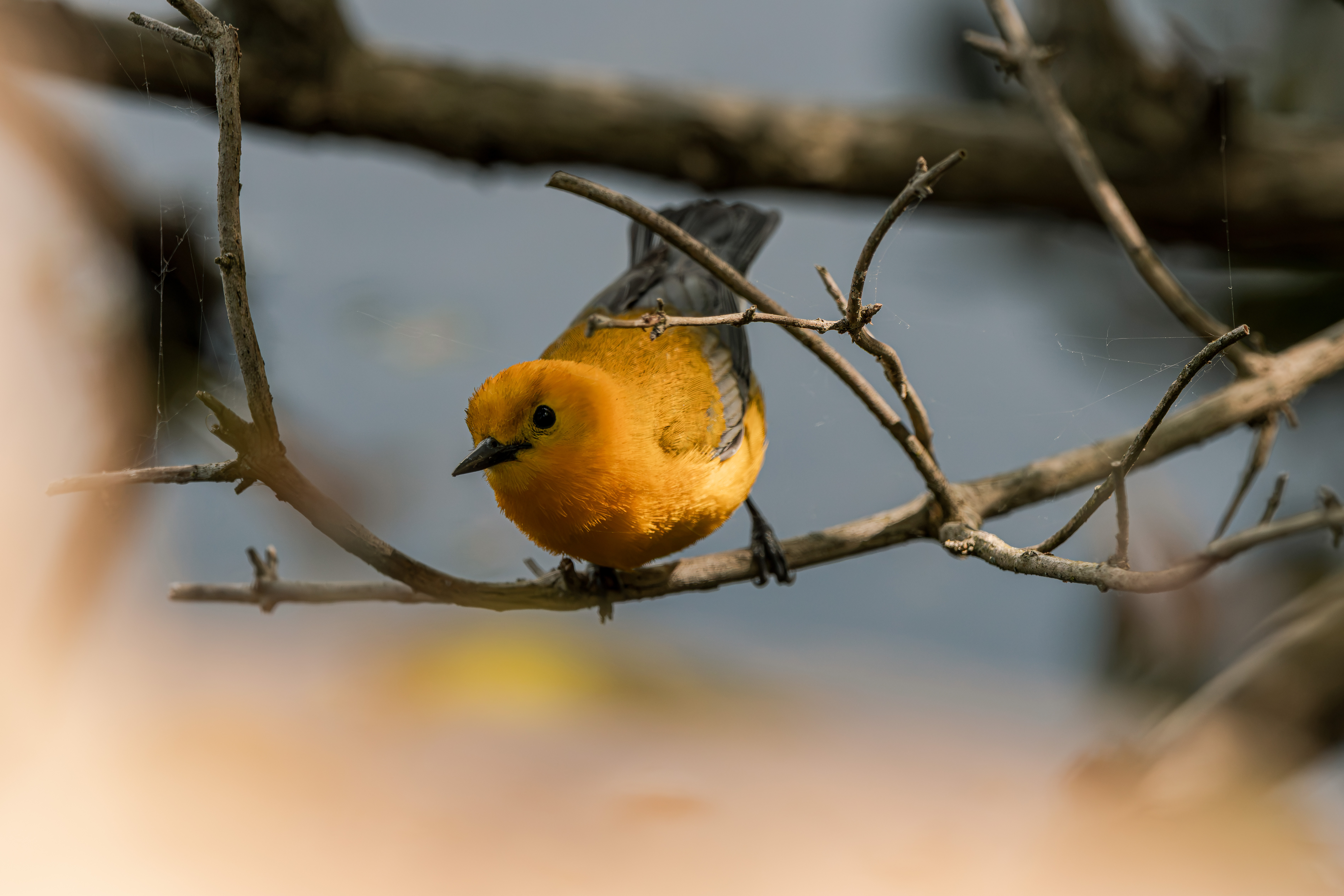


The Prothonotary Warbler (Protonotaria citrea) is a striking and charismatic songbird of eastern North America, easily recognized by its vivid plumage and unique nesting habits. Here’s everything you might want to know about this beautiful warbler:
Identification
Size: Small songbird, about 5.5 inches (14 cm) long with a wingspan of 8.75 inches (22 cm).
Weight: Around 0.44 oz (12.5 g).
Shape: Plump body, large head, relatively short tail, and a straight, pointed bill.
Plumage: Male: Bright golden-yellow head and chest; olive-green back; blue-gray wings; white under-tail coverts.
Female: Slightly duller yellow with similar patterning.
Juvenile: More muted yellow and olive overall.
Range and Distribution
Breeding Range: Southeastern U.S., especially swampy forested areas in states like Louisiana, Mississippi, and South Carolina, extending north to the Great Lakes region.
Migration: Migratory species; winters in Central America, northern South America, and the Caribbean, especially mangrove swamps.
Winter Range: Panama, Colombia, Venezuela, and sometimes coastal areas of Nicaragua and Honduras.
Habitat
Preferred Habitat: Hardwood swamps, bottomland forests, mangroves, wooded backwaters.
Key Habitat Features: Prefers areas with standing or slow-moving water and abundant cavities for nesting.
Nesting and Breeding
Nesting Type: Cavity nester (unusual among warblers).
Nesting Sites: Often in natural tree cavities or old woodpecker holes; also readily uses nest boxes.
Clutch Size: Typically 4–7 eggs.
Eggs: Creamy white to pale pink with brown speckles.
Incubation: Female incubates eggs for 12–14 days.
Fledging: Young leave the nest about 10–11 days after hatching.
Behavior
Foraging: Gleans insects and spiders from foliage and tree trunks; also catches flying insects in short sallying flights.
Vocalization: Male sings a loud, ringing “sweet-sweet-sweet-sweet-sweet” song, repeated in a clear, musical tone. Territorial: Males are strongly territorial during the breeding season.
Migration: Travels primarily at night during migration seasons.
Diet
Primary Food Sources: Insects (especially caterpillars, beetles, ants, and spiders), some snails, and occasionally seeds or fruits.
Feeding Method: Actively forages in low to mid-levels of forest, sometimes hopping along branches or probing bark.
Conservation Status
IUCN Red List: Least Concern, but populations are declining in parts of their range.
Threats: Habitat loss due to wetland drainage and deforestation. Nest competition with invasive species like House Wrens. Climate change impacting migratory timing and habitat availability.
Name Origins & Cultural Notes
Name Origin: Named after the “prothonotaries”, clerks in the Roman Catholic Church who wore golden-yellow robes.
Scientific Name:Protonotaria citrea “citrea” refers to the citrus-like color of the bird.
Unique Status: Only member of the genus Protonotaria.
Interesting Facts
Nest Boxes Help: Installation of nest boxes in flooded forests has helped some declining populations recover. Cavity Preference: Sometimes displaces Tree Swallows or chickadees to take over a cavity.
Rare Warbler Behavior: It’s one of the only eastern warblers that nests in tree cavities.
Birding Tips
Where to Find: Check flooded bottomland forests or swamps in southeastern U.S. from late April to July.
What to Listen For: Their clear, repetitive song, especially in the early morning.
Look For: A golden-yellow flash low in the foliage near water.

Leave a Reply