
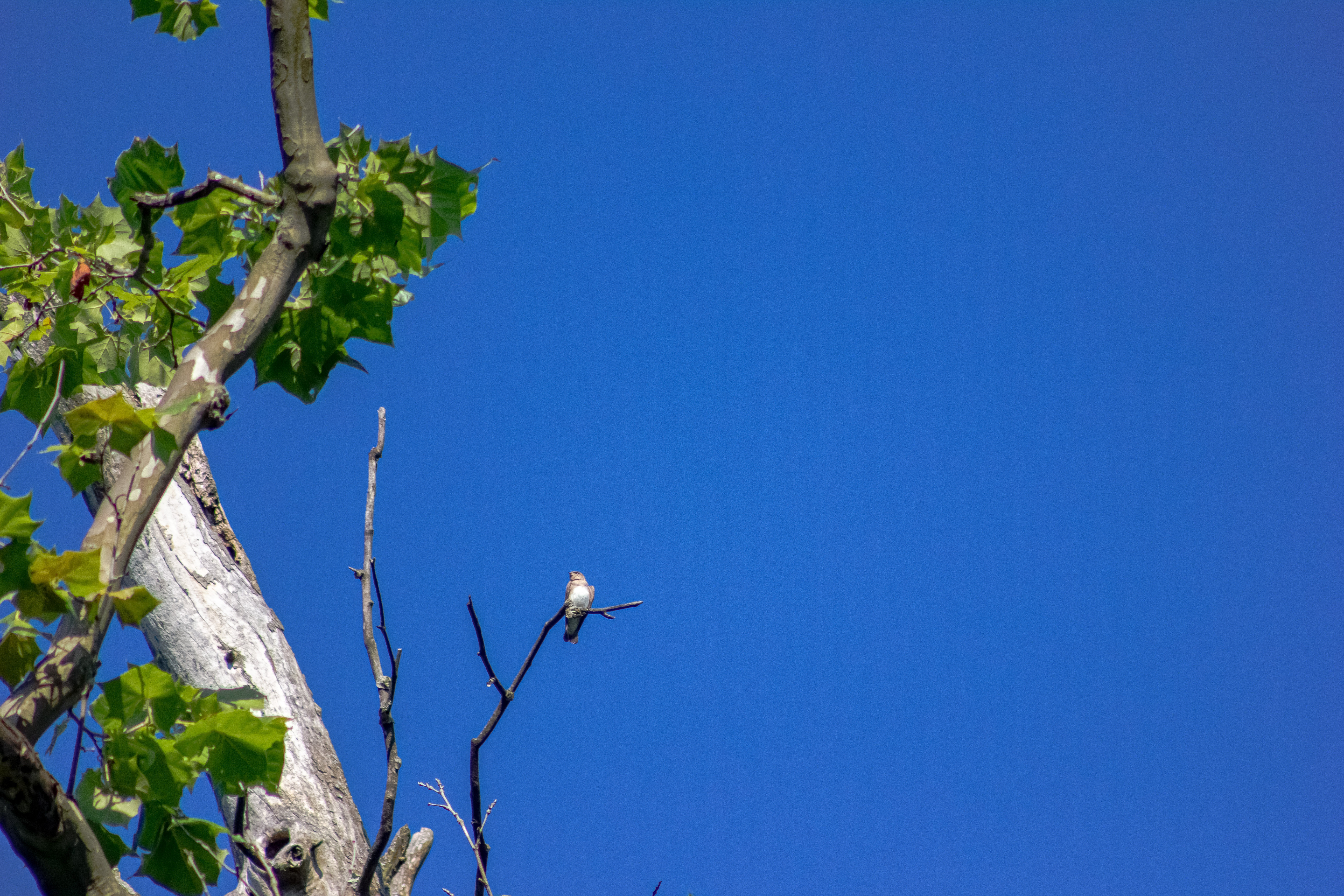


The Northern Rough-winged Swallow is a small, inconspicuous swallow native to North and Central America. It’s named for the tiny hook-like barbs on the outer edge of its primary feathers, especially noticeable in males, hence “rough-winged.” Unlike the flashy tree swallows or barn swallows, this bird has a more subdued brown appearance.
Physical Characteristics
Length: 4.7–5.9 inches (12–15 cm). Wingspan: 10.6–11.8 inches (27–30 cm) Weight: 0.4–0.6 oz (11–18 g)
Plumage: Upperparts: Dull brown overall, slightly paler on the rump. Underparts: Pale gray-brown on the throat and chest, fading to whitish belly. Tail: Slightly forked. Sexes: Males and females appear similar.
Juveniles resemble adults but are slightly fluffier and have a more muted tone.
Range and Migration
Breeding Range: Widespread across southern Canada, the continental U.S., and parts of northern Mexico.
Wintering Range: From the southern U.S. to Central America and northern South America (e.g., Colombia, Venezuela).
Migration: A medium-distance migrant. Arrives in the breeding range by March–May and departs by August–October.
Habitat
Prefers open areas near water such as rivers, streams, lakes, quarries, canals, and coastal cliffs.
Often nests in banks, crevices, or burrows, including those made by other animals or in man-made structures (e.g., drainpipes, culverts, bridge supports).
Diet and Foraging
Diet: Strictly insectivorous.
Foraging Behavior: Captures insects mid-air in swift, acrobatic flight. Flies low over water or open ground. Eats flies, ants, beetles, bees, wasps, and other flying insects.
Breeding and Nesting
Breeding Season: Late spring to early summer.
Nesting Sites: Chooses horizontal cavities in embankments, walls, cliffs, or drainage pipes. Sometimes uses burrows dug by kingfishers or bank swallows.
Nest: Constructed from grass, twigs, leaves, feathers, and other debris. Usually tucked into natural or artificial crevices.
Clutch Size: 4–8 eggs.
Incubation: 16–18 days, done by the female.
Fledgling: Young leave the nest about 18–22 days after hatching.
Parental Care: Both parents provide care for the young.
Vocalizations
Typically quiet. Call: A low, dry, unmusical brrrt or prrrt often heard during flight. Less vocal than most other swallows.
Behavior
Solitary or in small groups, rarely forms large flocks like other swallow species.
Territorial around nesting areas.
Flight: Direct and low, often skimming surfaces.
Conservation Status
IUCN Status: Least Concern.
Population Trend: Stable to slightly increasing.
Threats: Localized habitat disturbance (e.g., construction that removes nesting sites). Pesticide use is reducing insect populations.
Interesting Facts
The species name serripennis means “saw-winged,” referencing the serrated feathers. Unlike tree swallows, they don’t use nest boxes. They’re often mistaken for bank swallows or juvenile tree swallows due to their brown plumage. Can nest in surprising places, including inside PVC pipes and building drain holes.
Leave a Reply