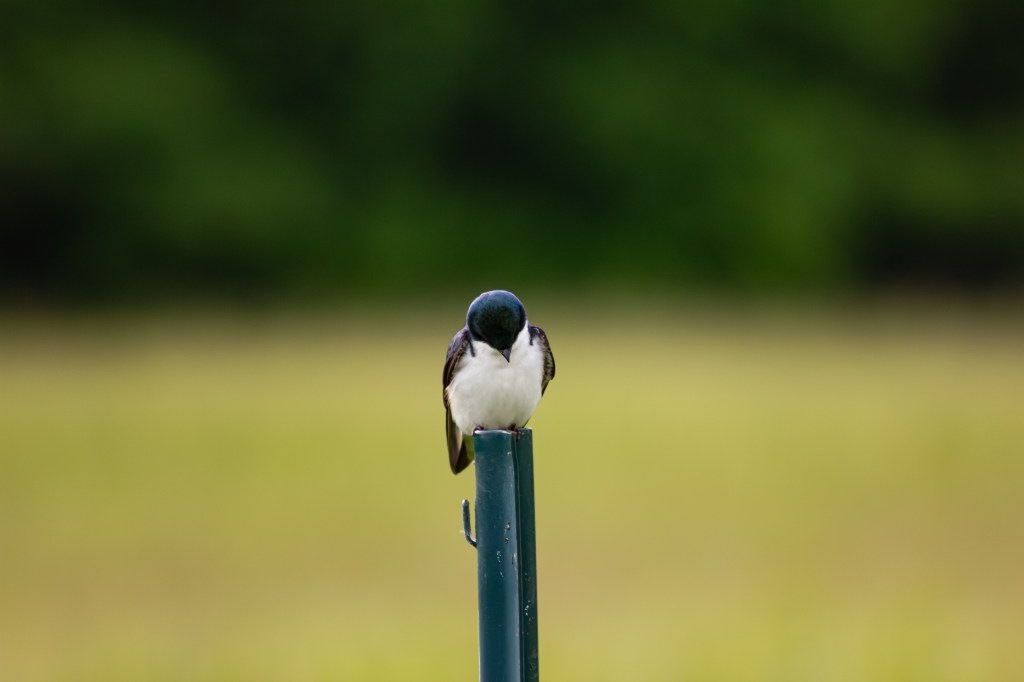
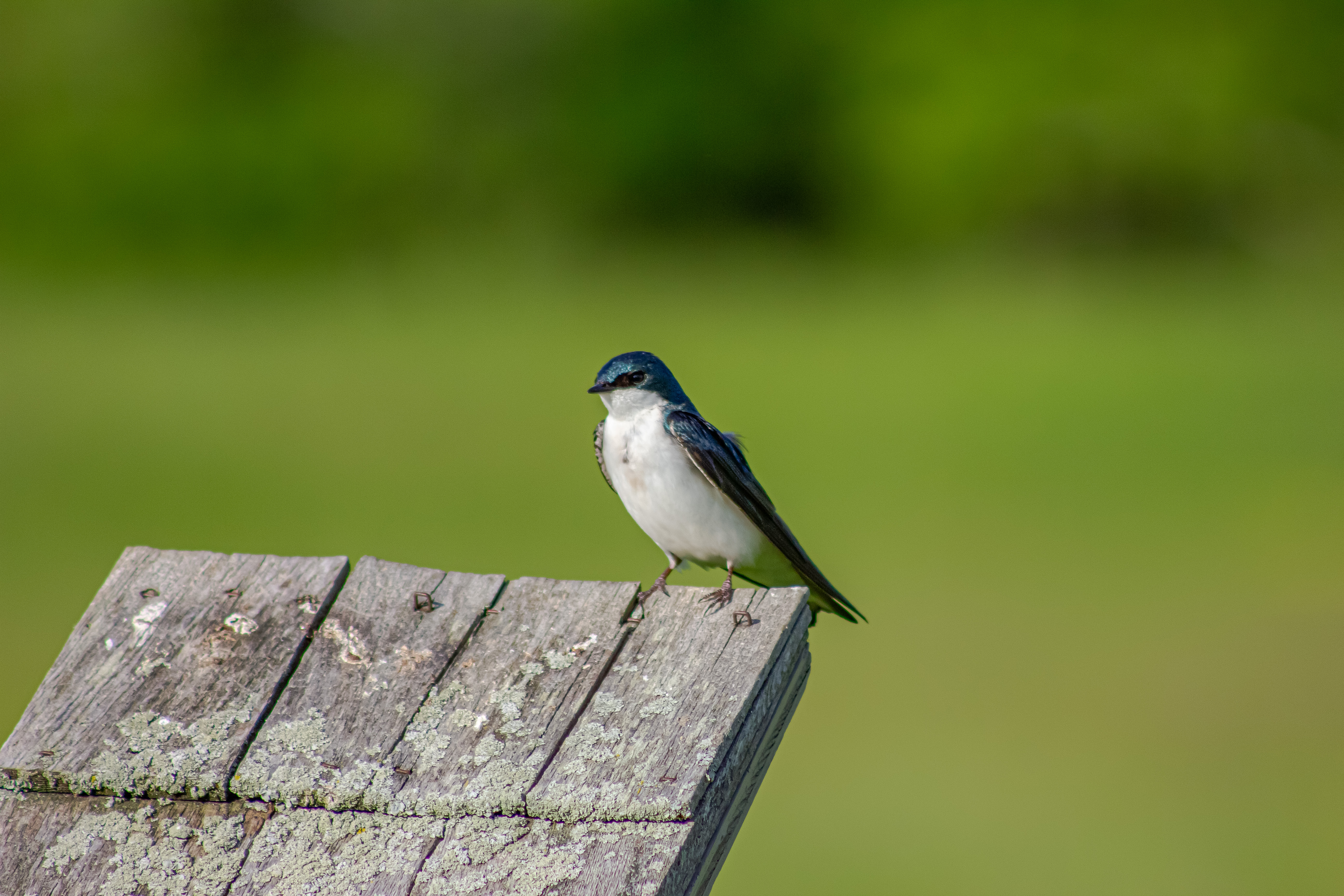
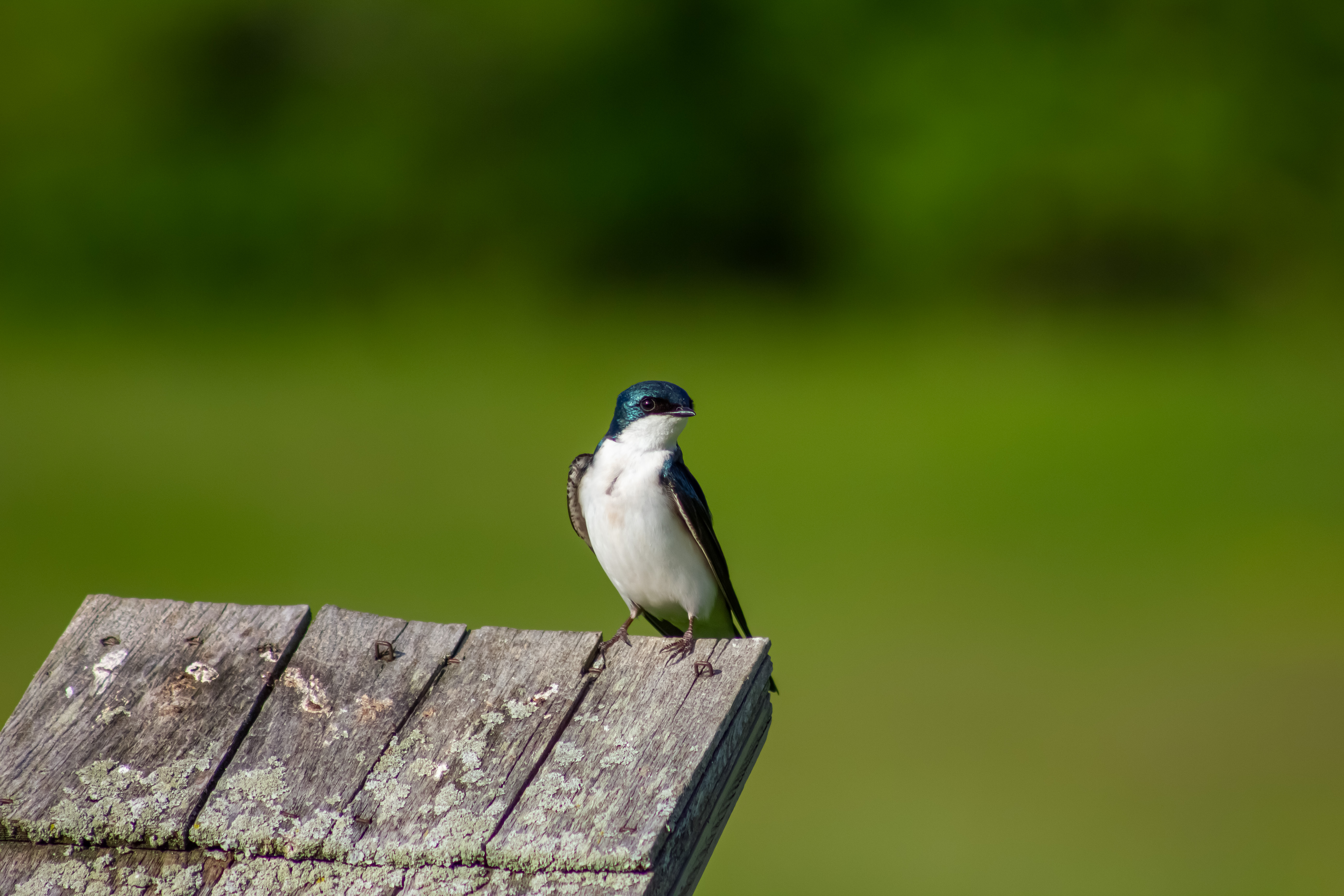
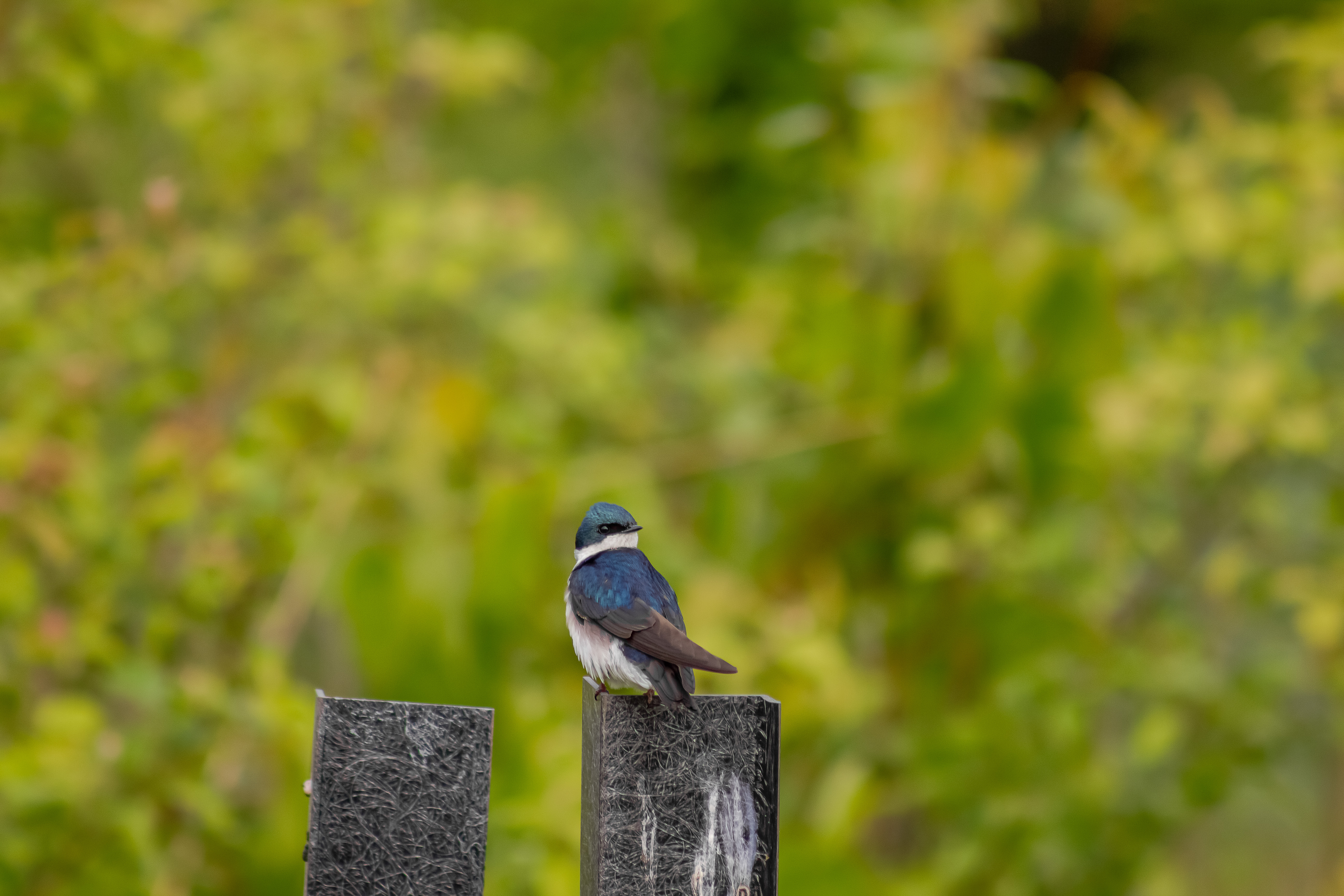
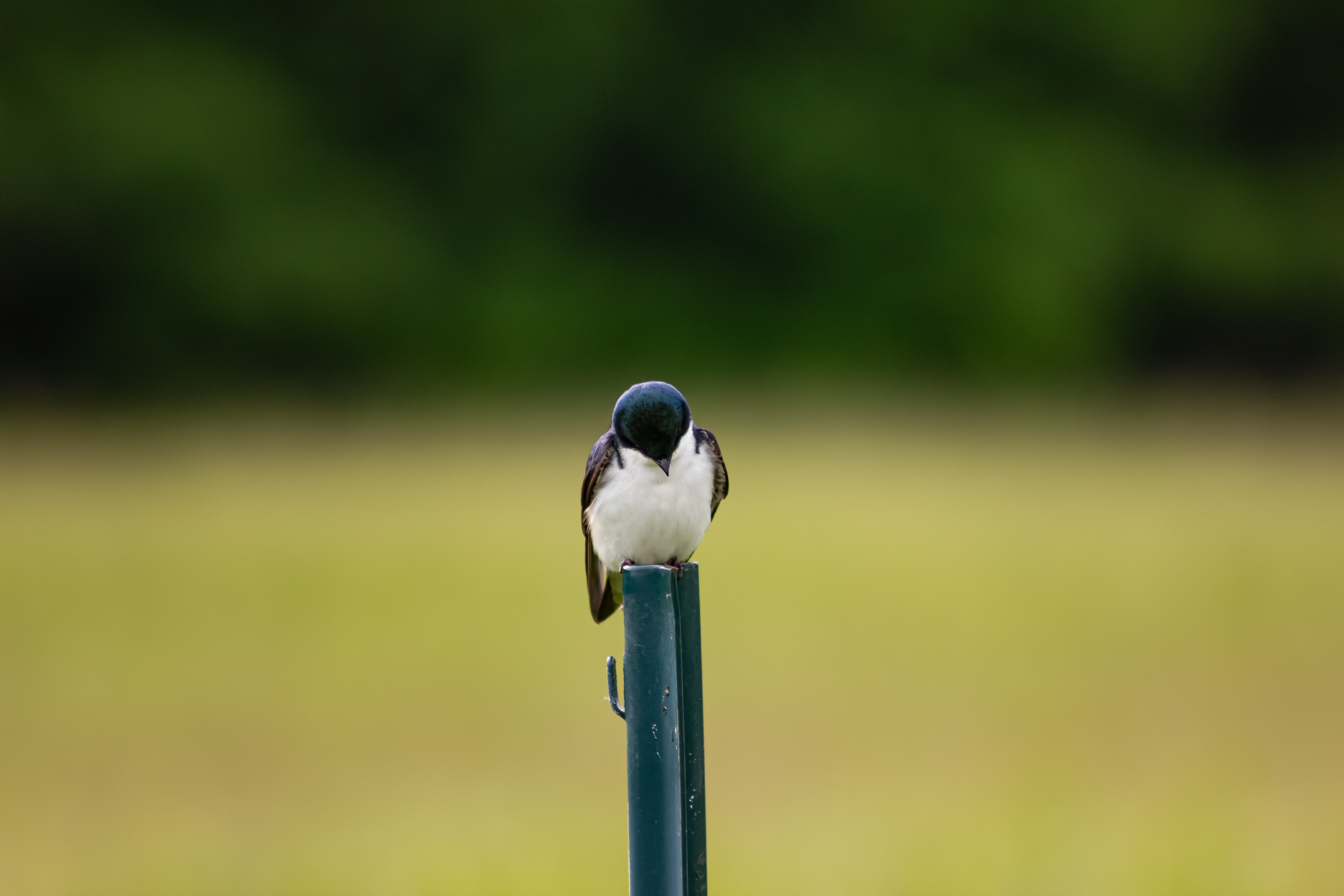
The tree swallow (Tachycineta bicolor) is a small, iridescent-blue songbird that becomes especially active during the summer breeding season across much of North America. These swallows are cavity-nesting birds, meaning they rely on natural tree hollows or artificial nest boxes to raise their young.
In summer, pairs establish territories around suitable nesting sites, often near open fields, wetlands, or bodies of water where insects are abundant. Tree swallows are highly social and may nest in loose colonies, with multiple pairs using cavities in close proximity.
A female usually lays 4–7 small white eggs inside a nest lined with grass, twigs, and, most distinctively, feathers from other birds. These feathers serve as insulation and protection for the eggs and chicks. The female incubates the eggs for about two weeks, while the male helps by defending the nest and feeding her occasionally.
Once hatched, the chicks remain in the nest for around 18–22 days, during which both parents are busy catching insects to feed them. Their diet consists almost entirely of flying insects such as flies, mosquitoes, and beetles, making them valuable for natural pest control.
By mid- to late summer, the young swallows fledge and begin practicing flight alongside their parents. Soon after, family groups gather into larger flocks in preparation for migration southward in the fall. The nesting season is thus a critical period for tree swallows, ensuring the survival of the next generation before their long journey.

 Wild Bird Journal
Leave a comment