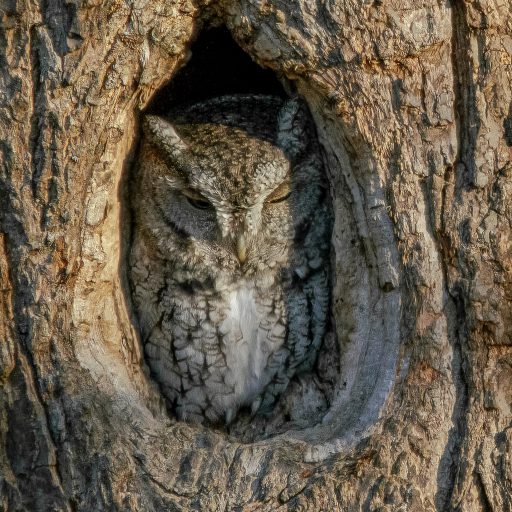
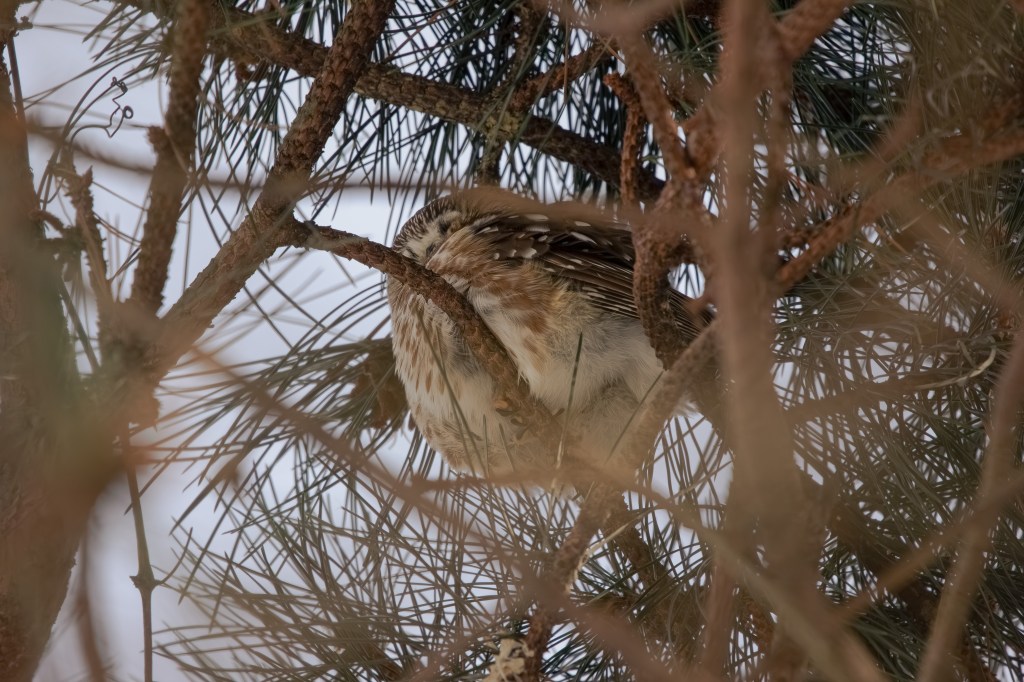
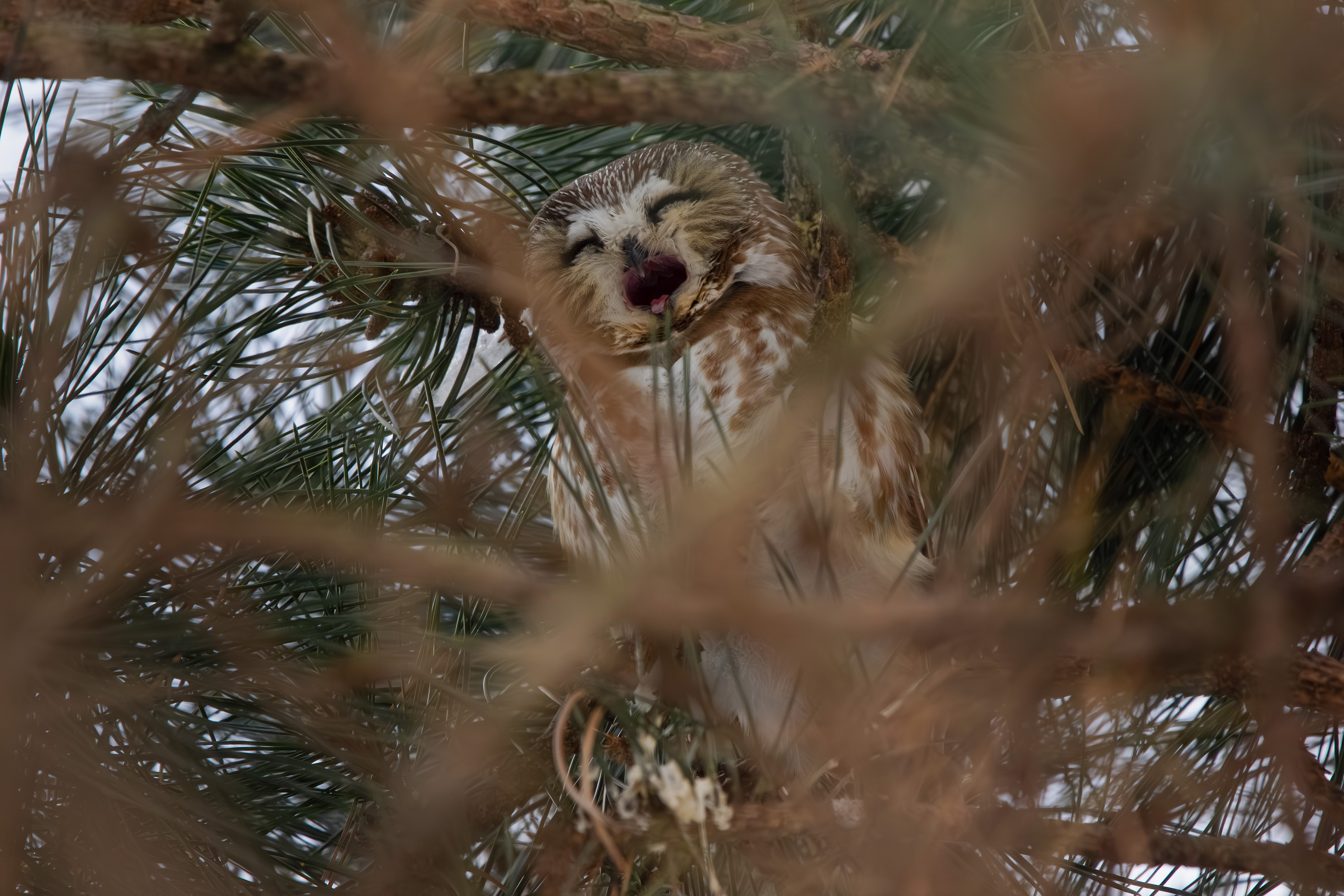
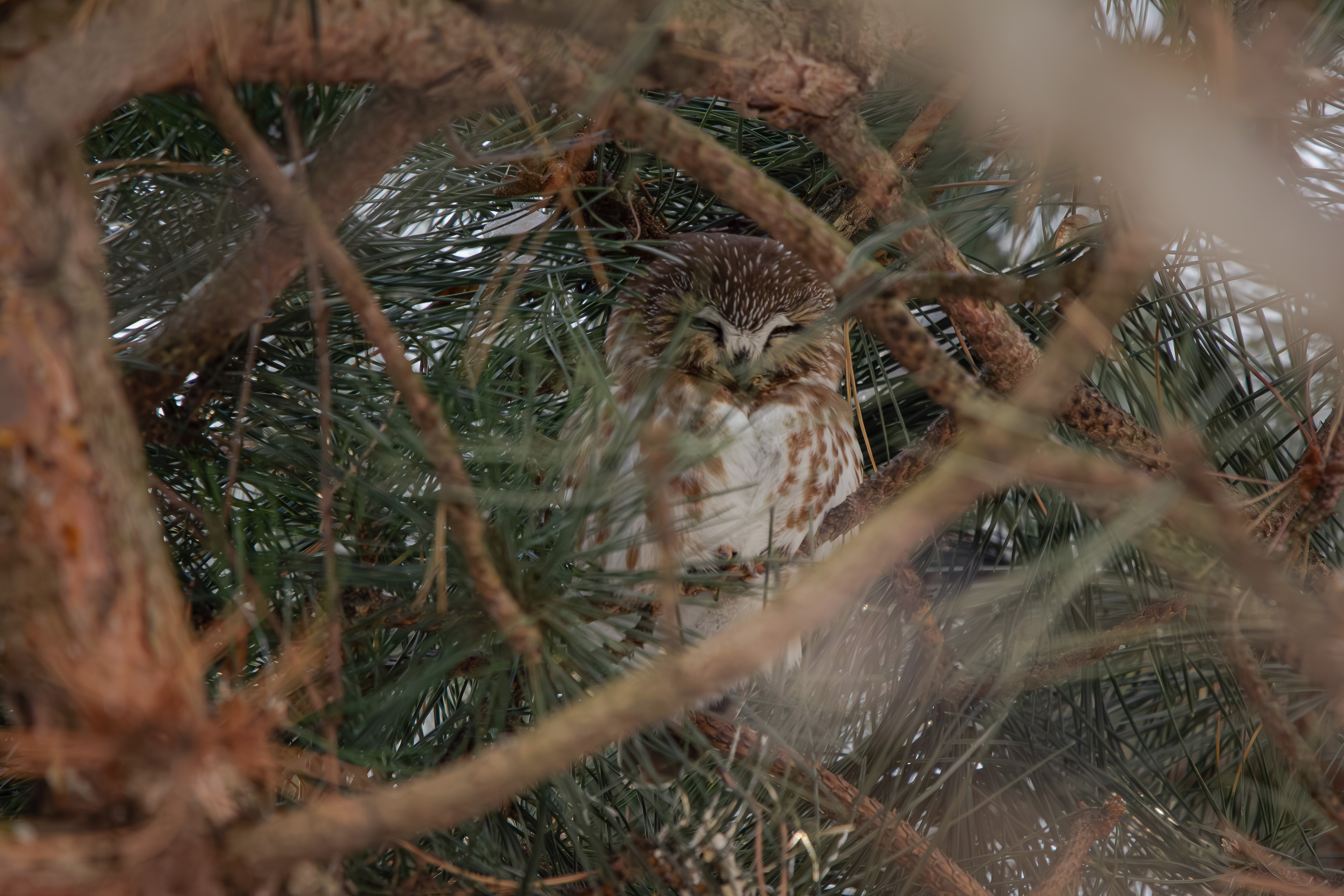
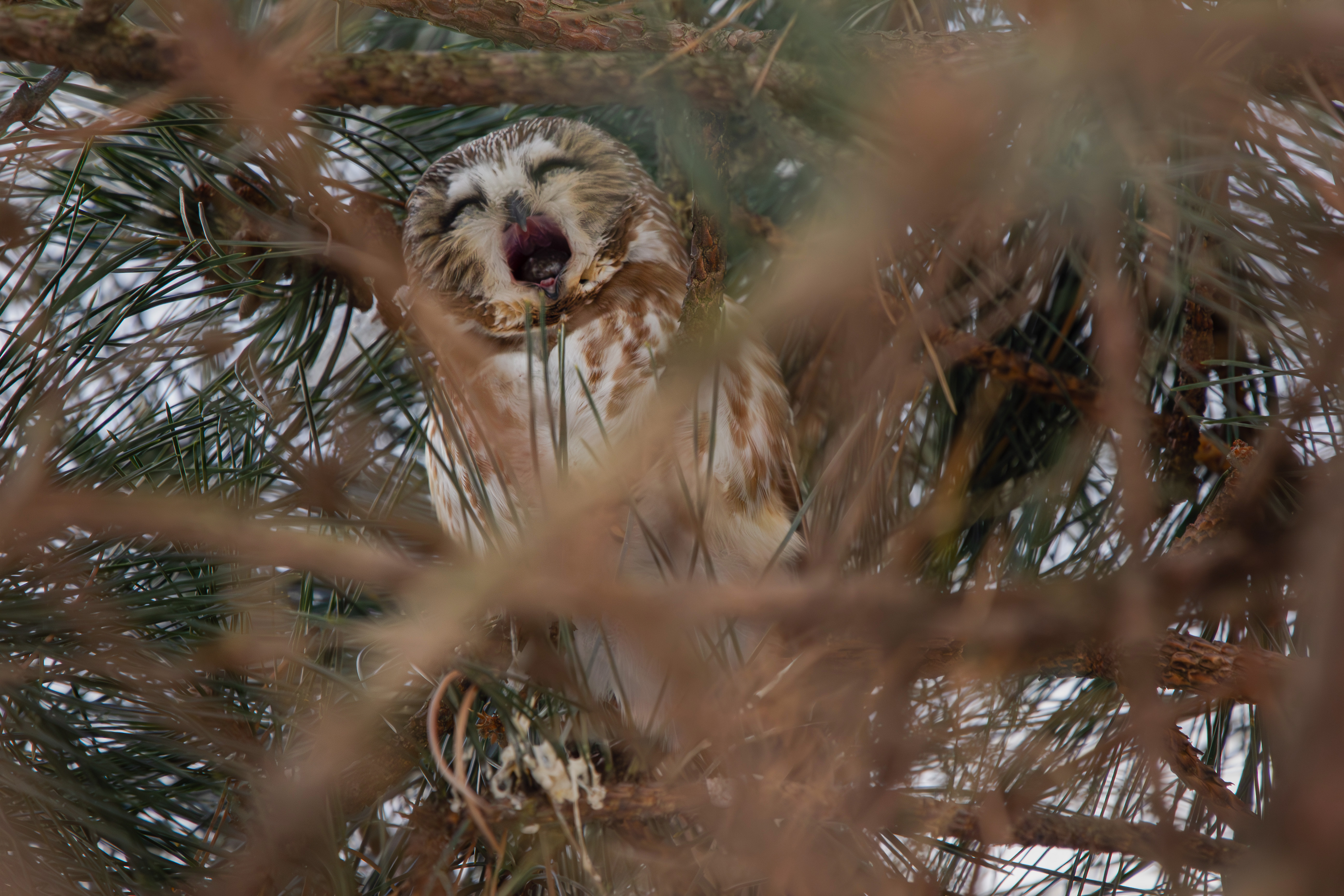
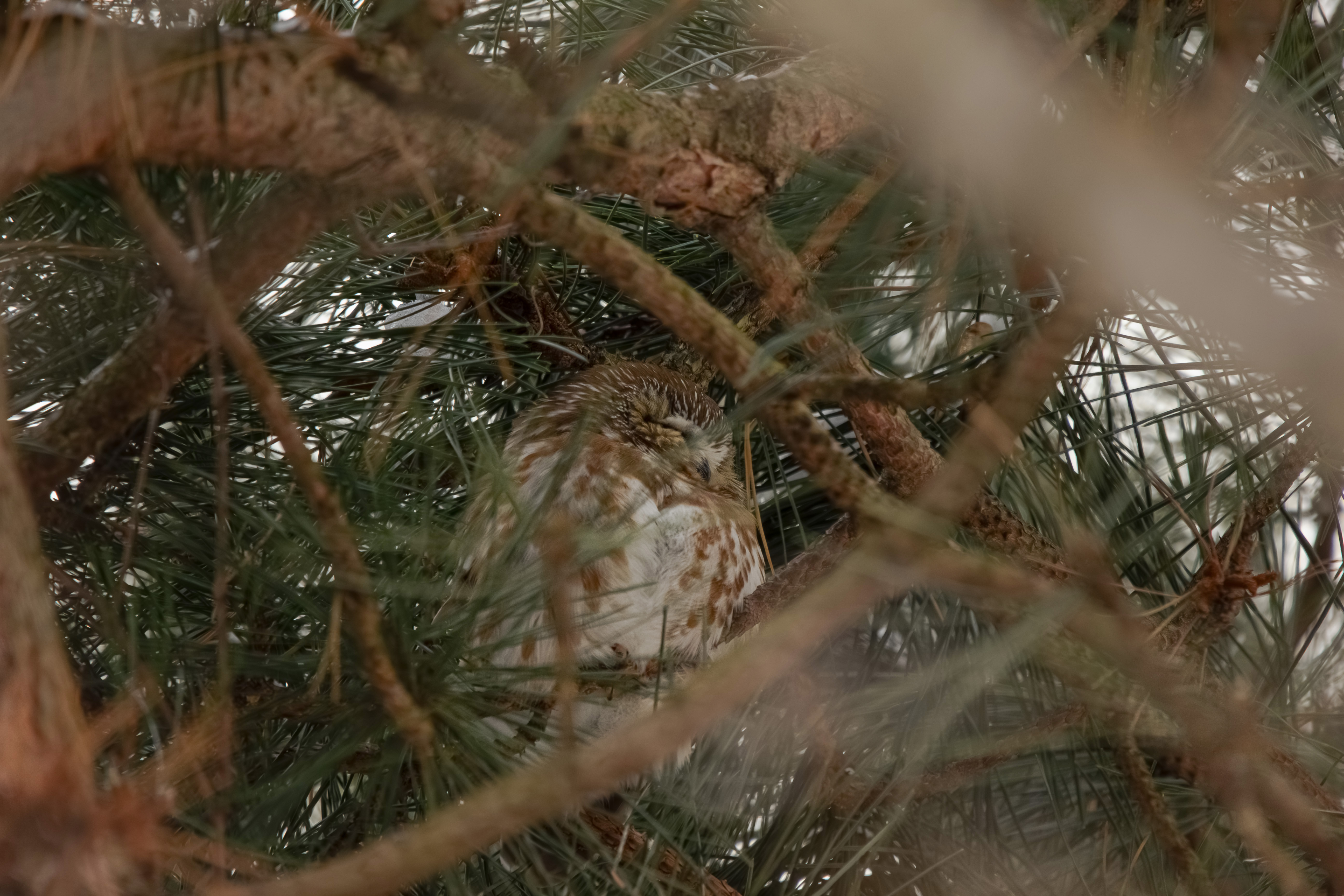
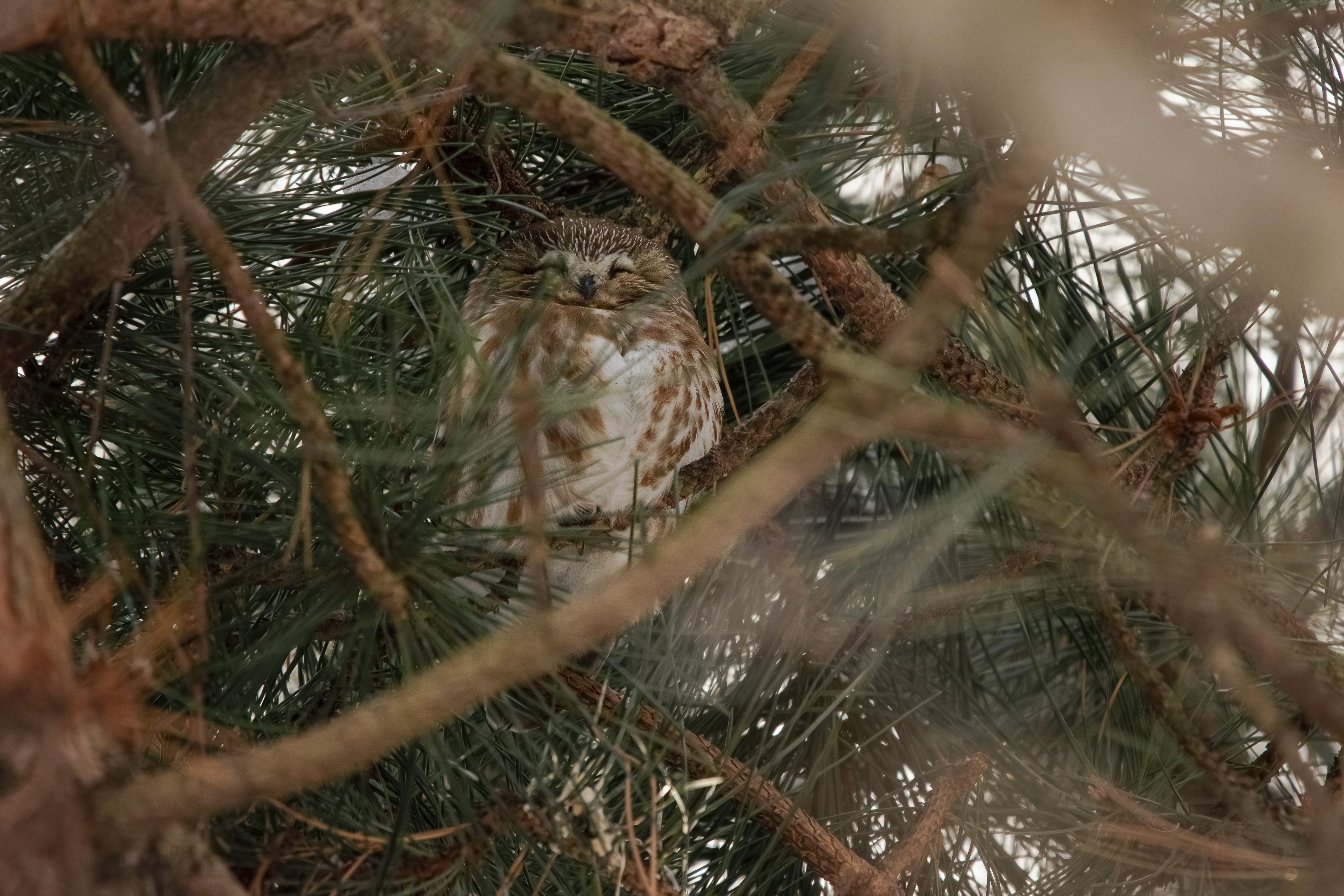
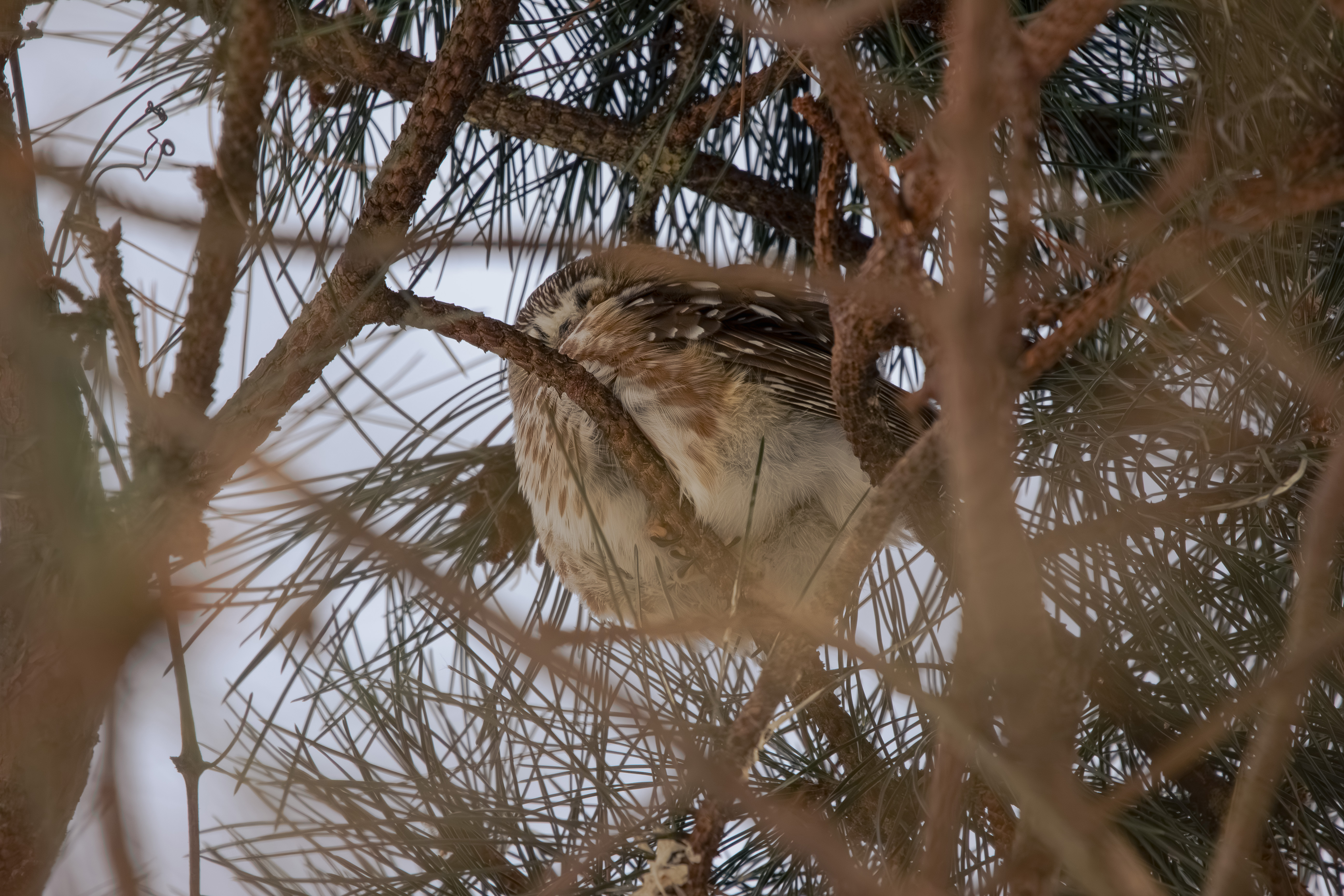
The Northern Saw-whet Owl (Aegolius acadicus) is a small species of owl in the family Strigidae native to North America. It’s among the tiniest owls on the continent and is named for its distinctive call that early observers thought sounded like a saw being sharpened (or “whetted”).
Physical Description
Size: Around 7–8 inches (18–21 cm) tall, roughly the size of a robin or sparrow. Weight: Typically ~65–100 g (2.3–3.5 oz), females are usually larger than males. Wingspan: ~45–60 cm (18–22 in). Plumage: Brownish above with white spots and streaked underparts. They have a round head, no ear tufts, and striking yellow eyes. Juveniles have a distinctive white triangle between their eyes. Facial Features: A pale facial disk framed in brown, which helps funnel sound to their ears.
Range & Habitat
Geographic Range
The Northern Saw-whet Owl’s range extends across much of North America: Breeding: Southern Alaska, across southern Canada, and throughout most of the U.S. (excluding only the southeastern coastal plain). Winter: Many stay in the breeding range; others migrate southward, with occasional sightings as far south as Arkansas and North Carolina. Some populations may move downhill in mountainous regions rather than migrate long distances.
Habitat
These owls favor wooded areas, especially: Coniferous forests (spruce, fir, pine), Mixed woodlands and riparian woodlands, Suburban and agricultural areas in winter or migration when dense cover is available. They require dense vegetation for daytime roosting and low perches for hunting.
Behavior & Ecology
Activity Pattern
Nocturnal: Most active at night. Secretive & Quiet: Usually very difficult to spot during daylight due to their camouflaged roosting and silent behavior.
Migration
Not all individuals migrate; some stay year-round, and others move south or to lower elevations in winter. Migration is irregular and not strictly patterned.
Territorial & Social Behavior
Solitary outside the breeding season. Pairs form during breeding; males may sing for long periods at night to attract mates and defend territory.
Vocalizations
The signature call is a monotonous, repetitive whistle often described as “too-too-too,” most common in late winter and spring during the breeding season. They also make alarm sounds like raspy calls, squeals, and even bill snaps. The name saw-whet reflects early observers’ impression of this call sounding like a saw being sharpened.
Diet & Hunting
Feeding Habits
Sit-and-wait hunters: perch on low branches at night and swoop down on prey. They have excellent hearing and vision, and their asymmetrical ears allow them to pinpoint prey in total darkness.
Diet
Mostly small mammals: deer mice, voles, shrews. Occasionally, small birds, juvenile squirrels, insects, and large invertebrates. They may cache food or eat parts over time if the prey is large.
Reproduction & Life Cycle
Breeding Season: Generally March–July. Nest Sites: Use natural tree cavities (often abandoned woodpecker holes) or nest boxes. Eggs: Typically 4–7 white eggs with incubation by the female lasting ~27-29 days; fledging at about 4–5 weeks. Males often bring food to females and nestlings. Some males may mate with more than one female in a season (sequential polyandry) when food is abundant.
Lifespan & Survival
Wild Lifespan: Average ~4–7 years; the longest recorded in the wild was ~7–8+ years. Captive Lifespan: Can live up to ~16 years with care. Threats include predation by larger owls and hawks, vehicle collisions, habitat loss, and nest competition.
Conservation Status
IUCN Red List: Least Concern, widespread with an estimated ~2 million individuals. Protected: U.S. Migratory Bird Act and CITES Appendix II. Populations may decline locally due to habitat loss and fragmentation.
Fun Facts
Despite being tiny, Northern Saw-whet Owls are formidable night hunters. They are often tame and may allow close human approach when roosting. Their call can go on for hours and is more often heard than the bird is seen.

 Wild Bird Journal
Leave a reply to Annabelle Montgomery Cancel reply