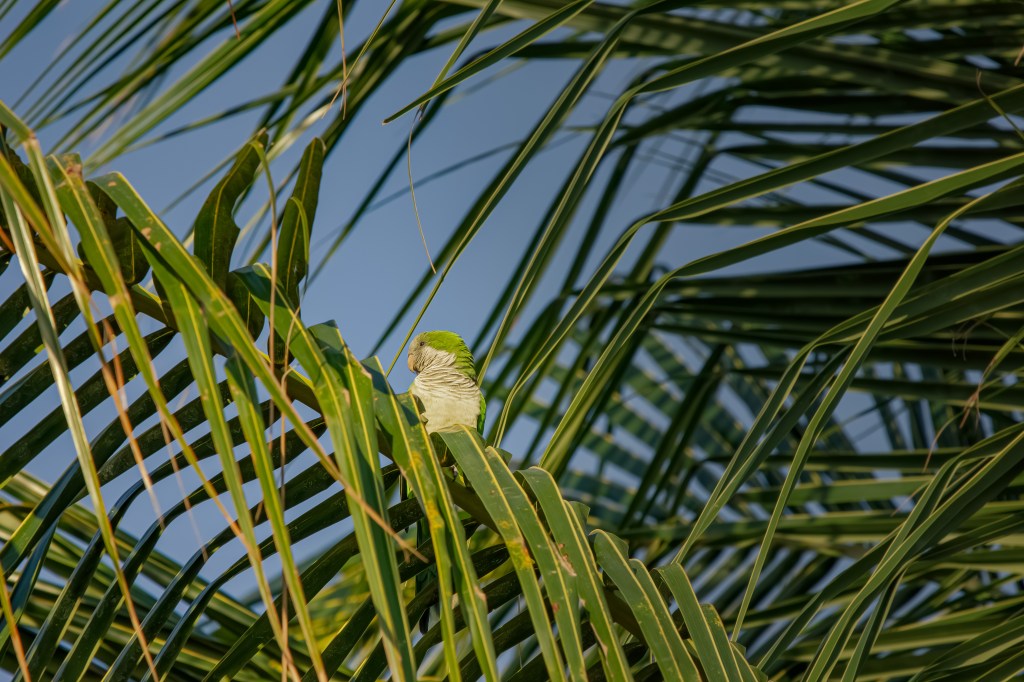
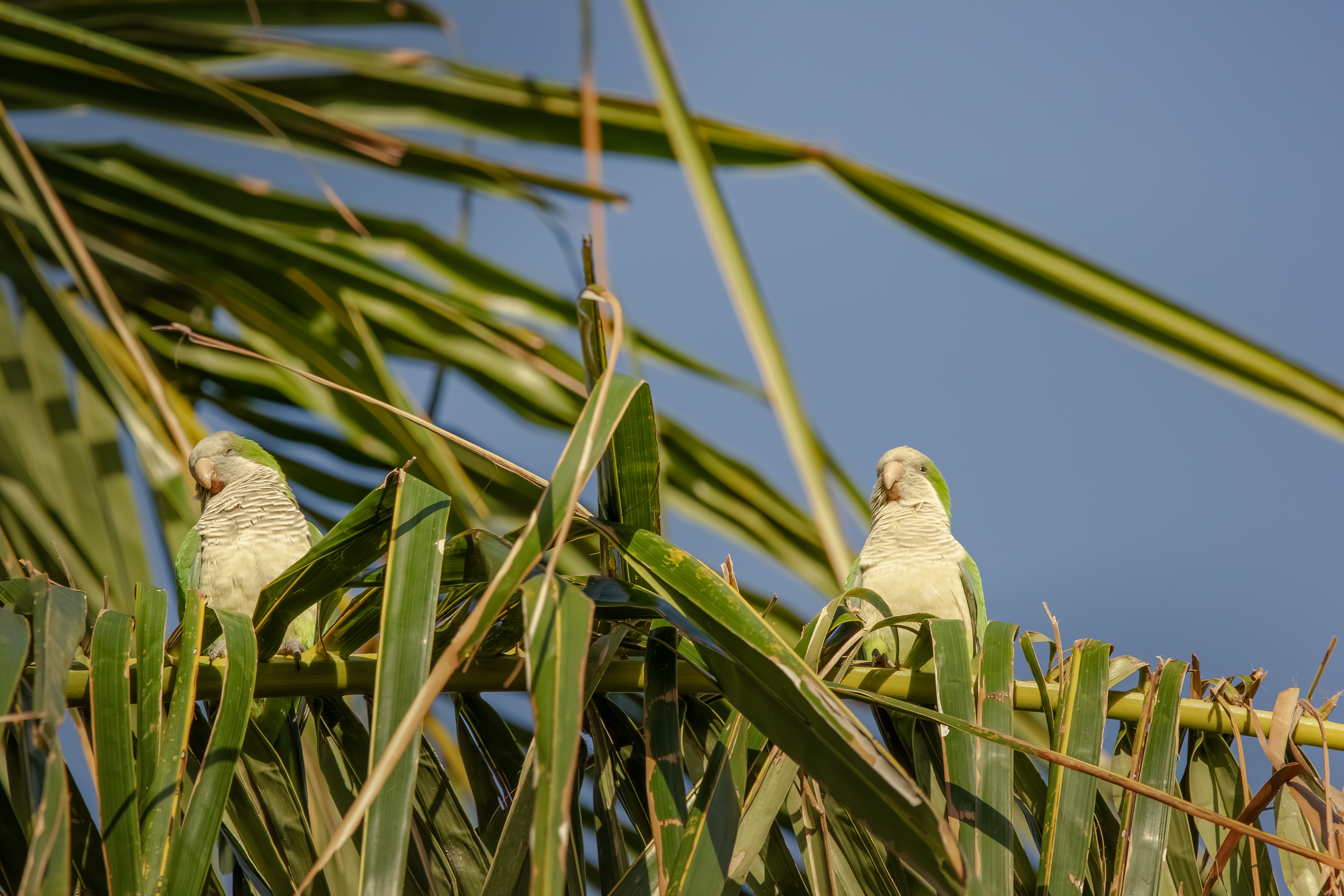
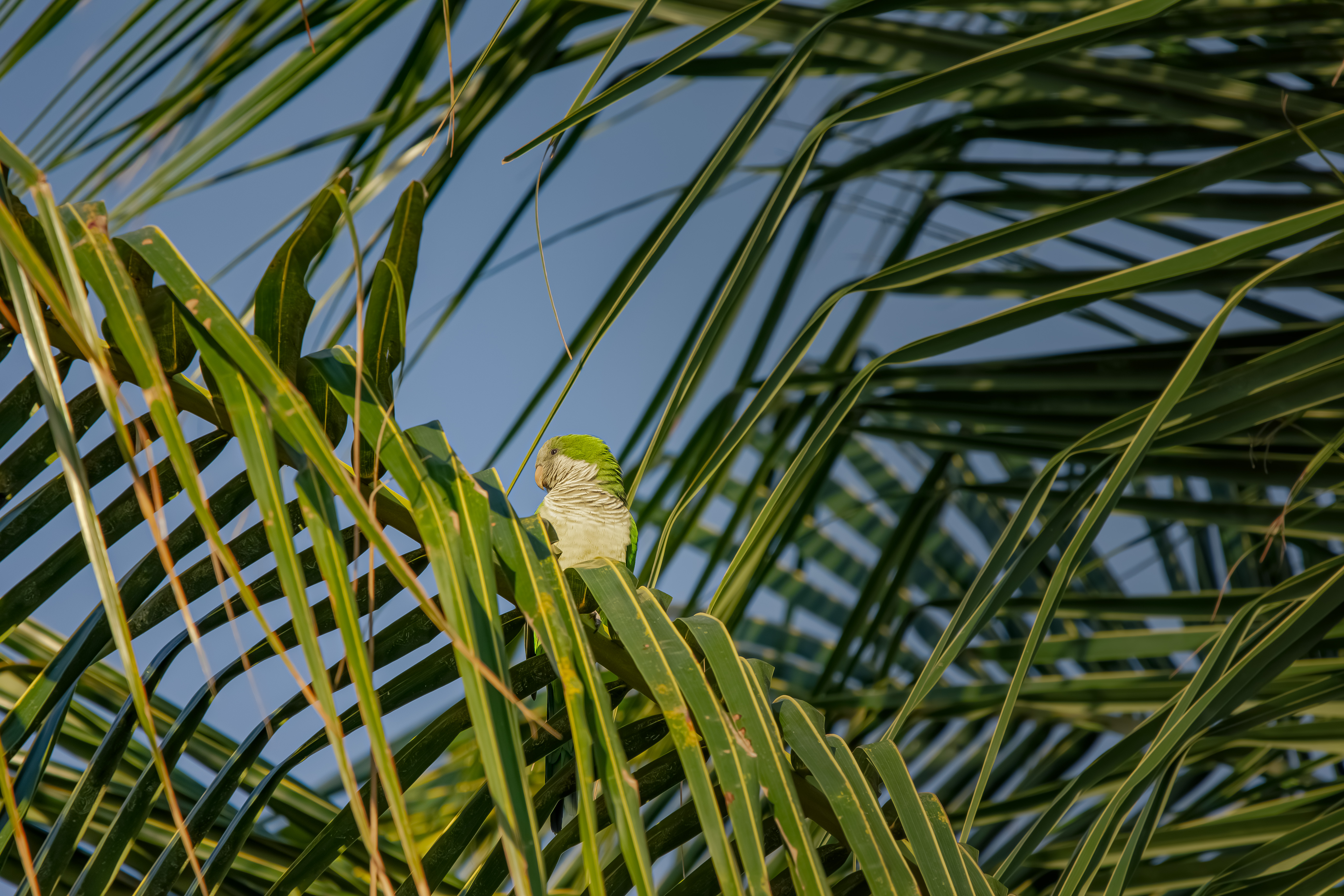
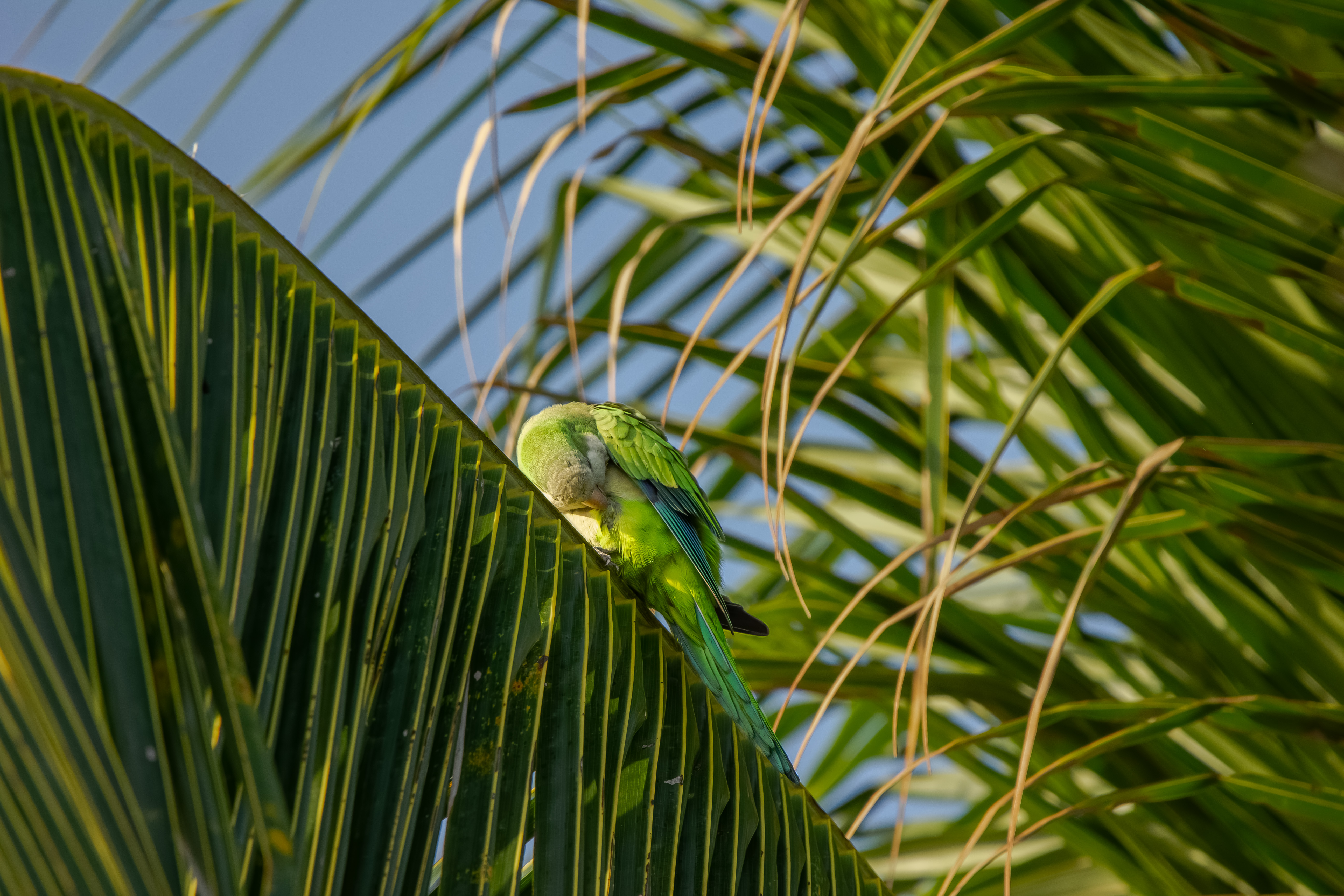
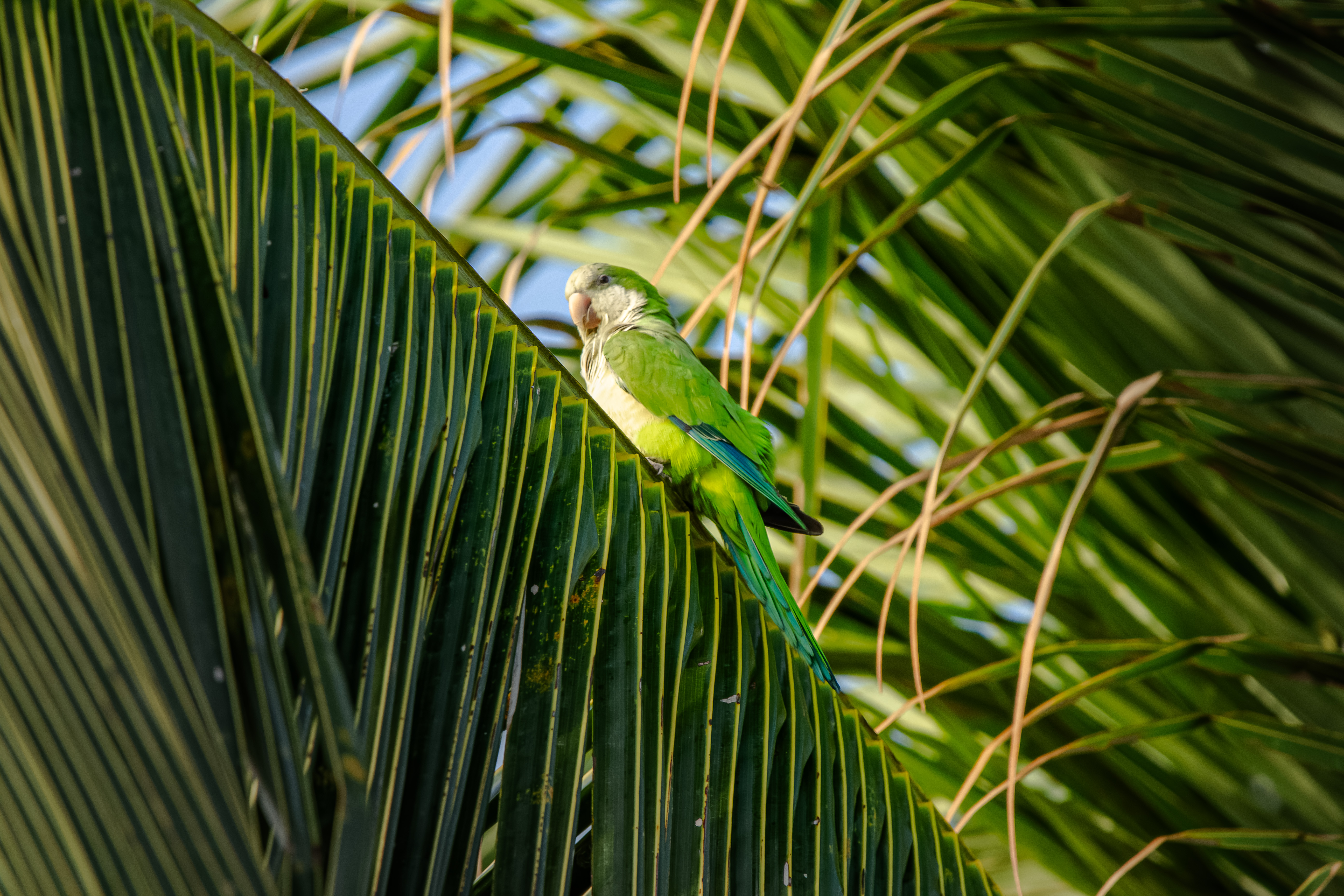
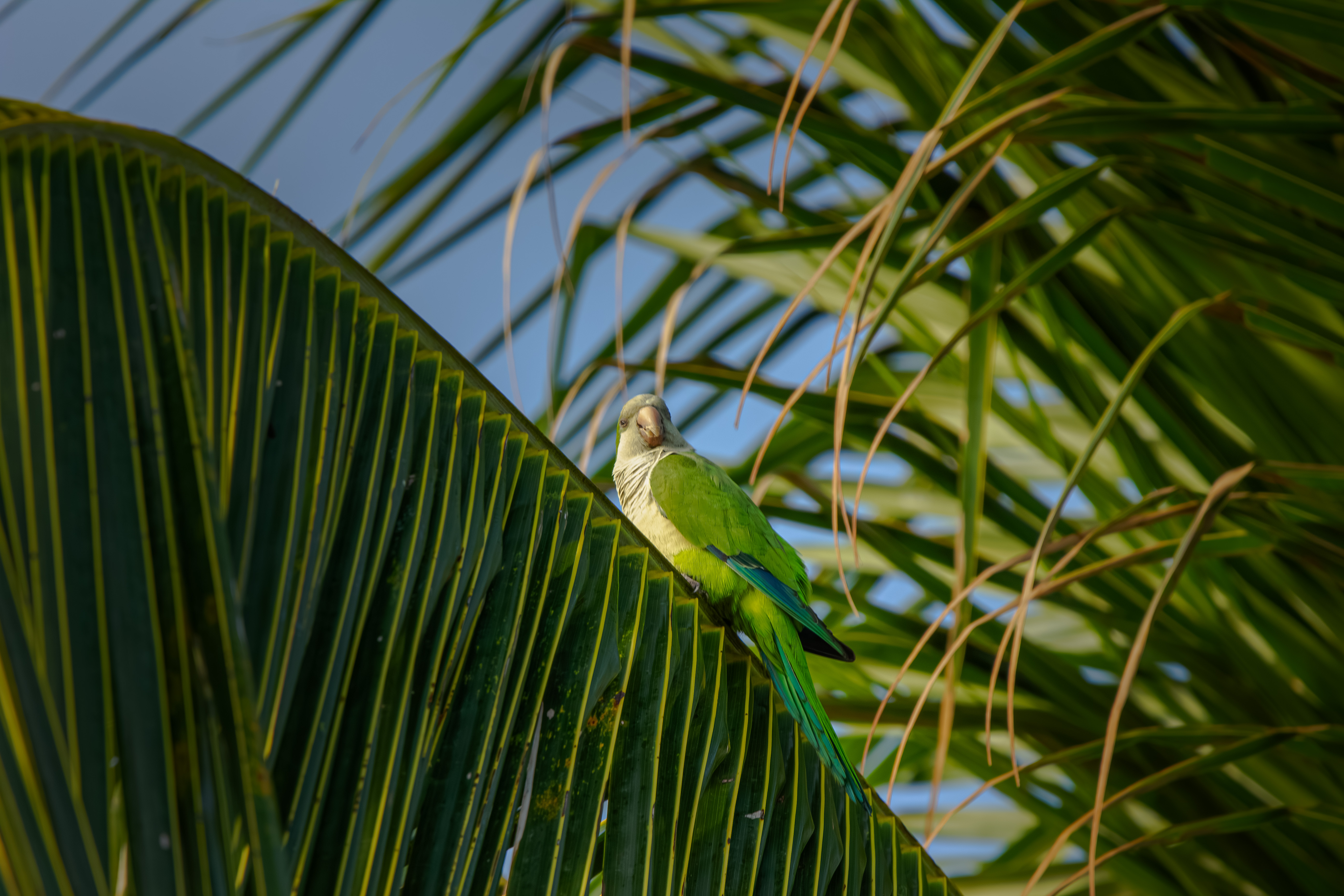
The Monk Parakeet, also known as the Quaker Parrot, is one of the most recognizable and charismatic parrot species in the world. Native to South America, especially Argentina, Brazil, and Uruguay, this parrot has become popular globally due to its adaptability, intelligence, and playful personality.
Appearance
Monk Parakeets are small to medium-sized parrots, typically 11–12 inches (28–30 cm) long. They have:
Bright green plumage on the back and wings, Grayish chest and face, Blue flight feathers that become noticeable in flight, A strong, curved beak, perfect for cracking seeds and nuts.
This combination of vibrant green and soft gray makes them highly recognizable and photogenic, which is great for bird watchers and pet enthusiasts alike.
Behavior
Monk Parakeets are highly social and intelligent birds, known for: Forming large communal colonies in the wild, Building elaborate stick nests, sometimes several feet wide, Mimicking human speech and sounds with remarkable accuracy, Engaging in playful antics that make them entertaining pets.
Unlike many parrots, Monk Parakeets are exceptionally adaptable, able to thrive in urban areas, parks, and farmlands.
Habitat
Originally from subtropical and temperate regions of South America, Monk Parakeets have successfully established populations in North America, Europe, and parts of Asia. They often live near:
City parks and urban areas. Farmlands and orchards. Suburban neighborhoods, where they nest on trees or man-made structures.
Their ability to survive in diverse climates makes them a highly resilient species.
Diet
Monk Parakeets are omnivorous, with a diet that includes:
Seeds (sunflower, millet, safflower). Fruits (apples, pears, berries). Vegetables (leafy greens, corn, peas). Occasionally insects and other small invertebrates.
In captivity, providing a balanced diet rich in fresh fruits and vegetables is essential for health and longevity.
Reproduction
Monk Parakeets are unique among parrots because they build large communal nests, sometimes housing multiple pairs. Key breeding facts:
Clutch size: 4–7 eggs per pair. Incubation period: 23–24 days. Fledging period: 5–6 weeks.
Their social nesting behavior helps protect chicks from predators and allows them to form strong community bonds.
Lifespan
Monk Parakeets can live 20–30 years in captivity with proper care. In the wild, their lifespan is slightly shorter, around 15–20 years, due to natural predators and environmental challenges.
Conservation Status
Monk Parakeets are currently not endangered and are classified as Least Concern (IUCN). However, in some countries, they are considered invasive because they can damage crops and infrastructure, especially in urban environments.
Monk Parakeets are fascinating birds that blend charm, intelligence, and resilience. Whether you’re a bird watcher, a pet owner, or a nature enthusiast, these vibrant green parrots never fail to capture attention. Their ability to thrive in both wild and urban environments makes them one of the most adaptable parrot species worldwide.


 Wild Bird Journal
Leave a reply to festivalwildly0565641a15 Cancel reply