
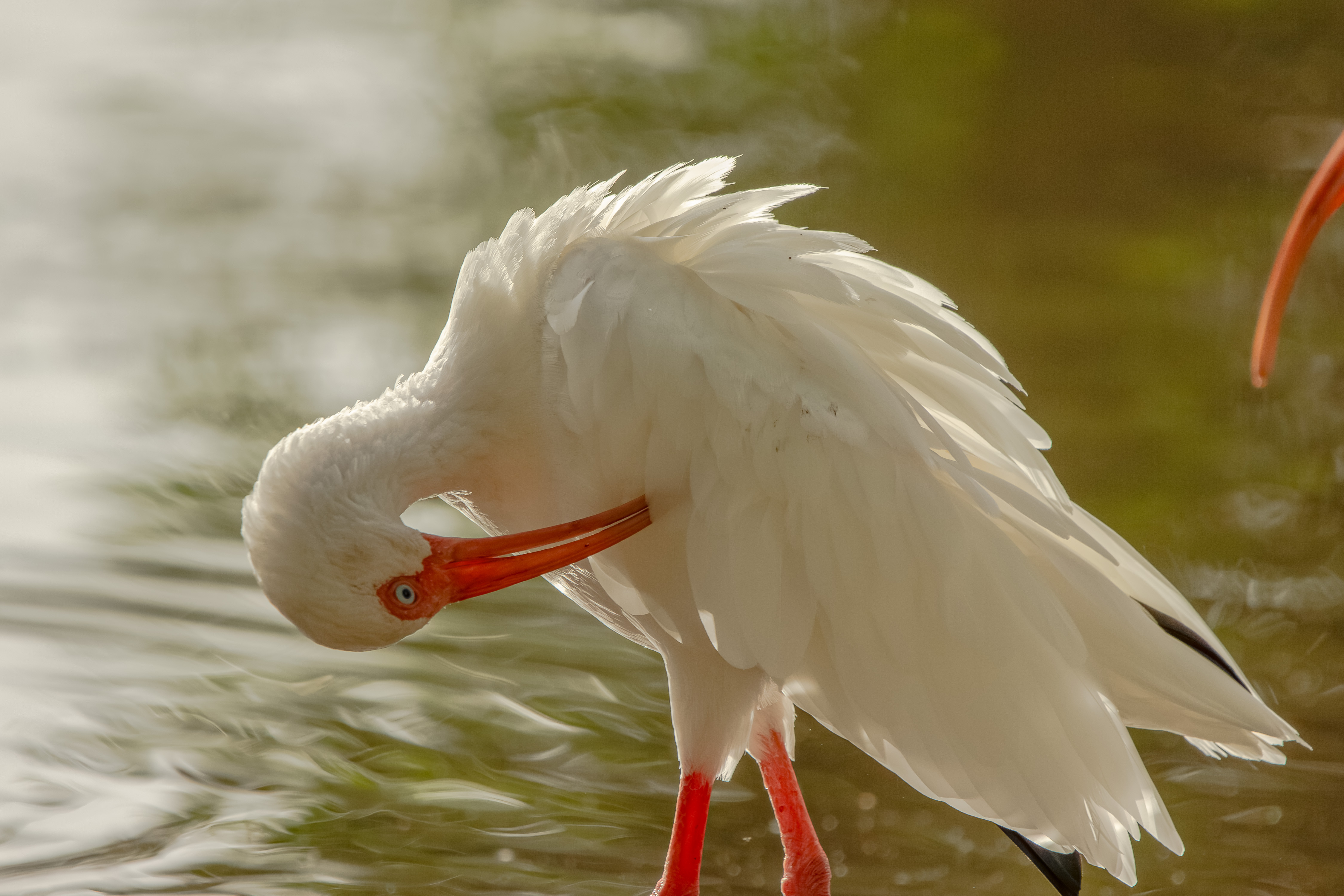


The White Ibis (Eudocimus albus) is one of the most recognizable wading birds in North America. Known for its brilliant white plumage, long curved red bill, and bright red legs, the White Ibis is a coastal icon of the southeastern United States. Whether you’re a birder, wildlife photographer, or nature enthusiast, this comprehensive guide covers everything about the White Ibis, identification, habitat, behavior, diet, nesting, migration, conservation, and more.
White Ibis Identification Guide
Adult White Ibis
Bright white body, Long, downward-curved red bill, Red facial skin and legs, Black wingtips visible in flight.
Juvenile White Ibis
Brown and white mottled plumage. Pinkish bill (turns red with maturity). Gradually whitens over first year.
In Flight
Strong, steady wingbeats, Black primary feathers contrast with white body, Flies in lines or V-formations.
SEO Tip for Birders: The combination of white body + red curved bill + black wingtips makes the White Ibis unmistakable among North American wading birds.
White Ibis Habitat
The White Ibis thrives in:
Coastal marshes, Mangroves, Freshwater wetlands, Estuaries,Swamps, Urban ponds and golf courses.
Geographic Range
Southeastern United States (Florida, Louisiana, Georgia, South Carolina), Gulf Coast, Caribbean, Central America, Northern South America.
Florida is considered a stronghold for the species, especially in wetlands like the Everglades.
White Ibis Diet & Feeding Behavior
White Ibises are tactile feeders. They forage by probing their curved bills into shallow water or mud.
Main Diet:
Crayfish (primary food source), Crabs, Shrimp, Insects, Small fish, Frogs.
Their sensitive bill tips detect prey underwater, they often feed in groups, sweeping their bills side to side.
White Ibis Behavior
Highly social birds, Feed and roost in large flocks, Often seen walking in synchronized lines, Nest colonially in trees over water.
They are surprisingly adaptable and frequently forage in suburban neighborhoods.
White Ibis Breeding & Nesting
Breeding Season:
Spring through summer
Nesting Habits:
Build stick nests in trees or shrubs, Nest in colonies with herons and egrets, Lay 2–4 eggs.
Both parents share incubation and feeding duties.
White Ibis vs Similar Species
White Ibis vs Snowy Egret
Snowy Egret has black bill and yellow feet, White Ibis has red bill and red legs.
White Ibis vs American White Pelican
Pelican is much larger with massive bill, Ibis is slender and wading.
White Ibis vs Glossy Ibis
Glossy Ibis is dark brown, White Ibis is entirely white (adult).
Migration Patterns
White Ibises are partially migratory: Northern populations move south in winter, Florida populations are mostly resident, Post-breeding dispersal is common.
White Ibis in Urban Areas
In recent decades, White Ibises have adapted to: Parking lots, Lawns, Retention ponds, City parks.
Urban foraging has changed some feeding behavior, but wetlands remain essential for breeding.
Conservation Status
The White Ibis is currently listed as Least Concern, but threats include: Wetland destruction, Coastal development, Pollution, Climate change, Habitat fragmentation.
Wetland conservation is critical for long-term population stability.
Ecological Importance
White Ibises help: Control crustacean populations. Maintain wetland ecosystem balance. Serve as indicators of environmental health.
Fun Facts About the White Ibis
Juveniles take up to 2 years to fully turn white. Their curved bill contains sensory receptors. They often roost in massive communal flocks. They can be surprisingly tame in urban settings.
Frequently Asked Questions (FAQ)
Are White Ibises rare?
No, they are common in the southeastern United States.
Why is the White Ibis bill curved?
The curved bill helps them probe mud and shallow water for crustaceans.
Do White Ibises migrate?
Some populations migrate south, while Florida birds are mostly year-round residents.
Are White Ibises protected?
Yes. They are protected under the Migratory Bird Treaty Act.
Leave a Reply