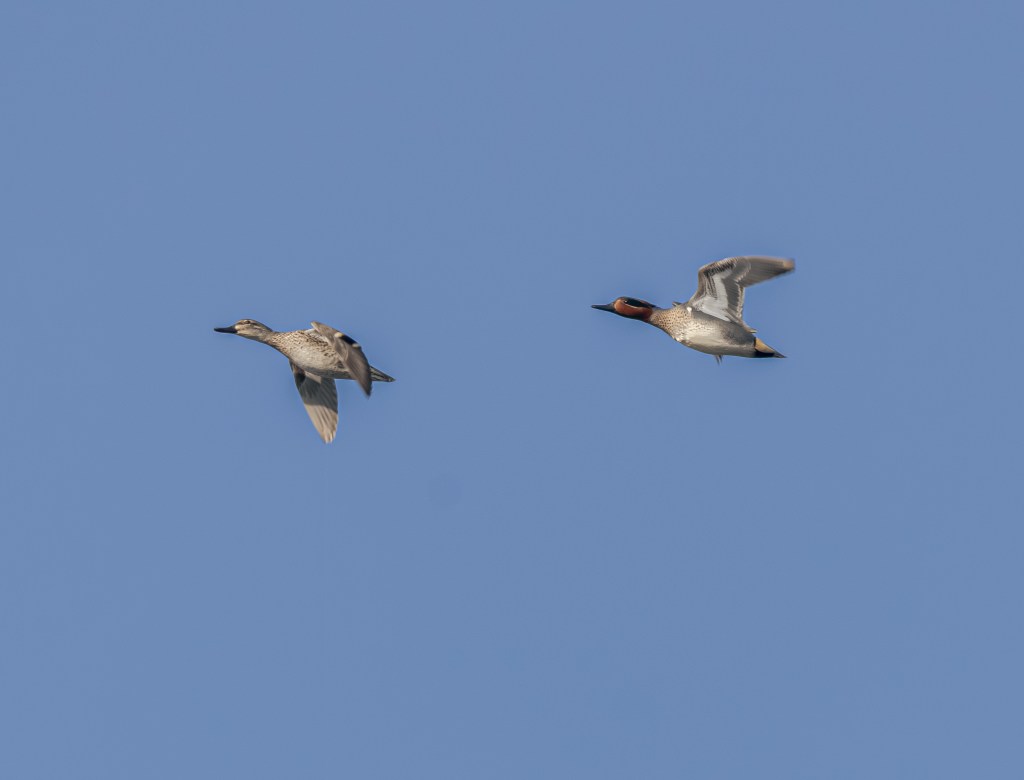
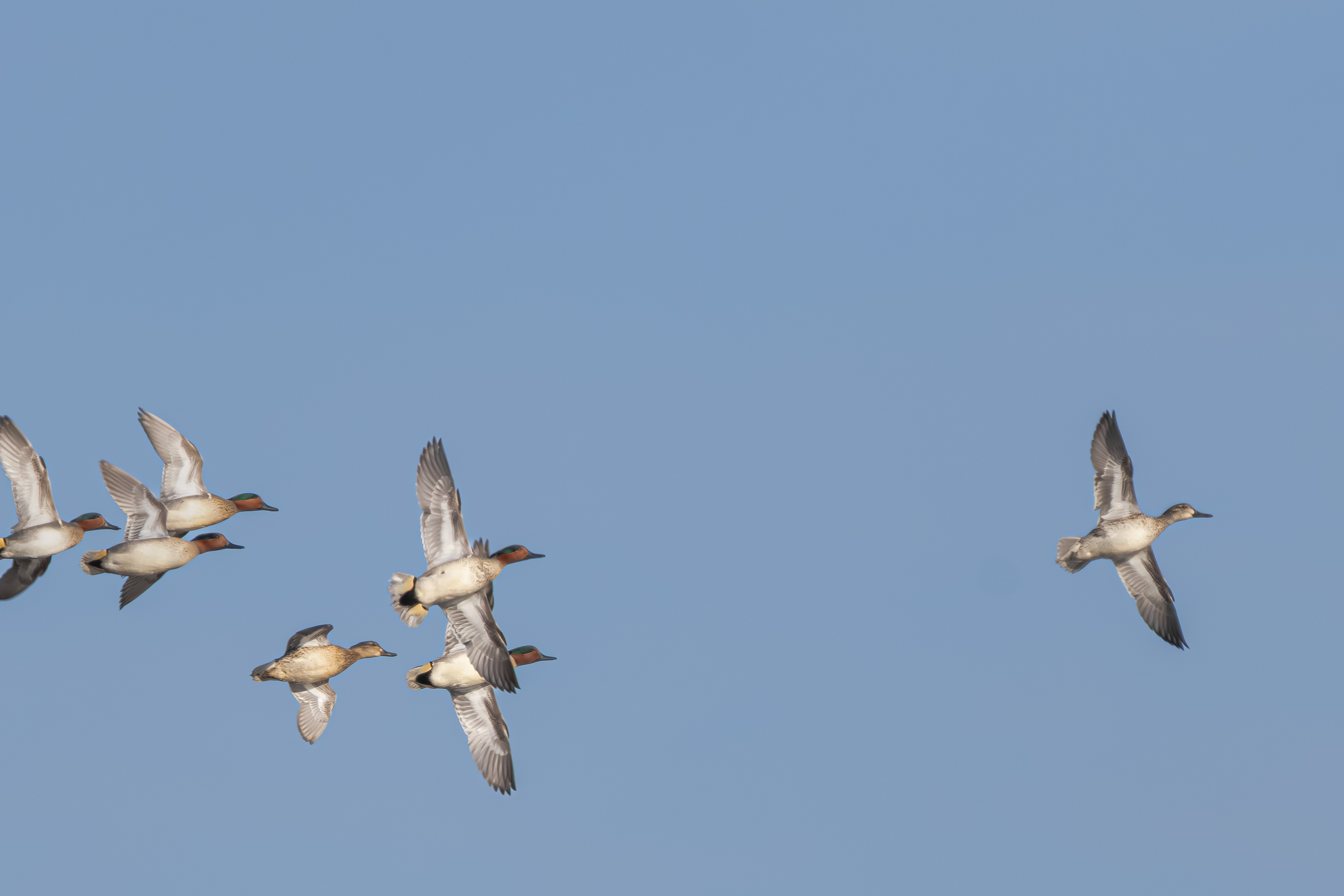
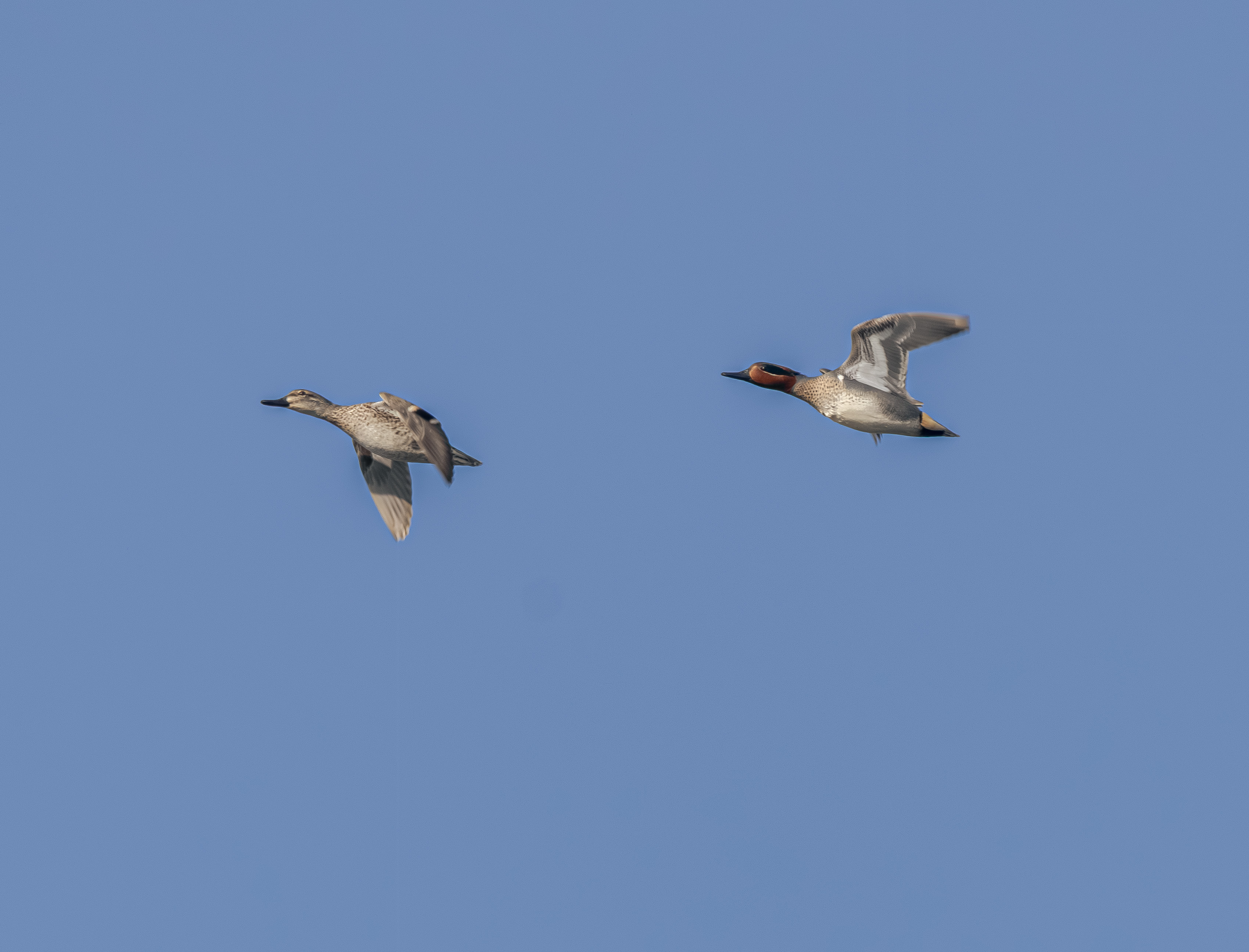
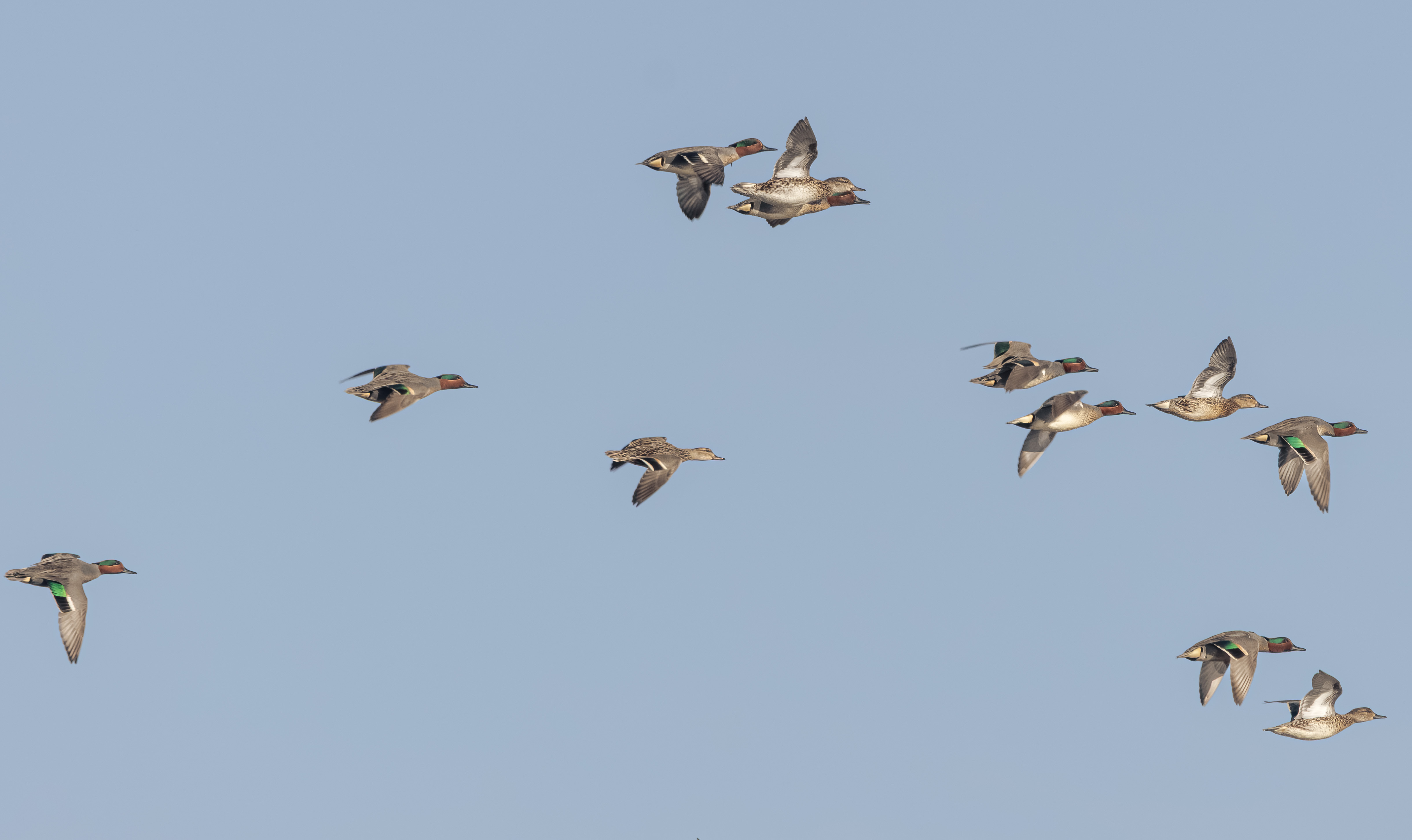
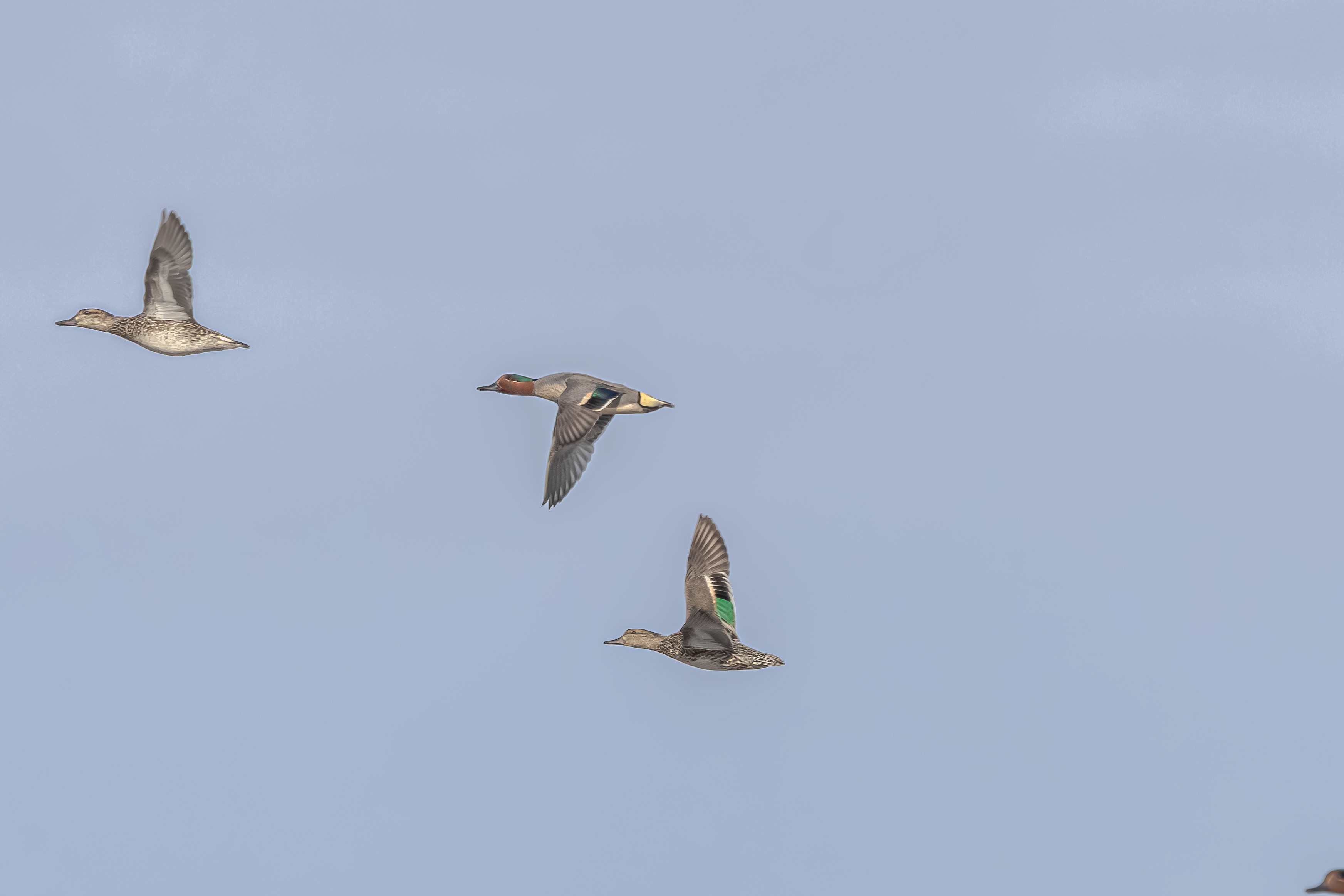
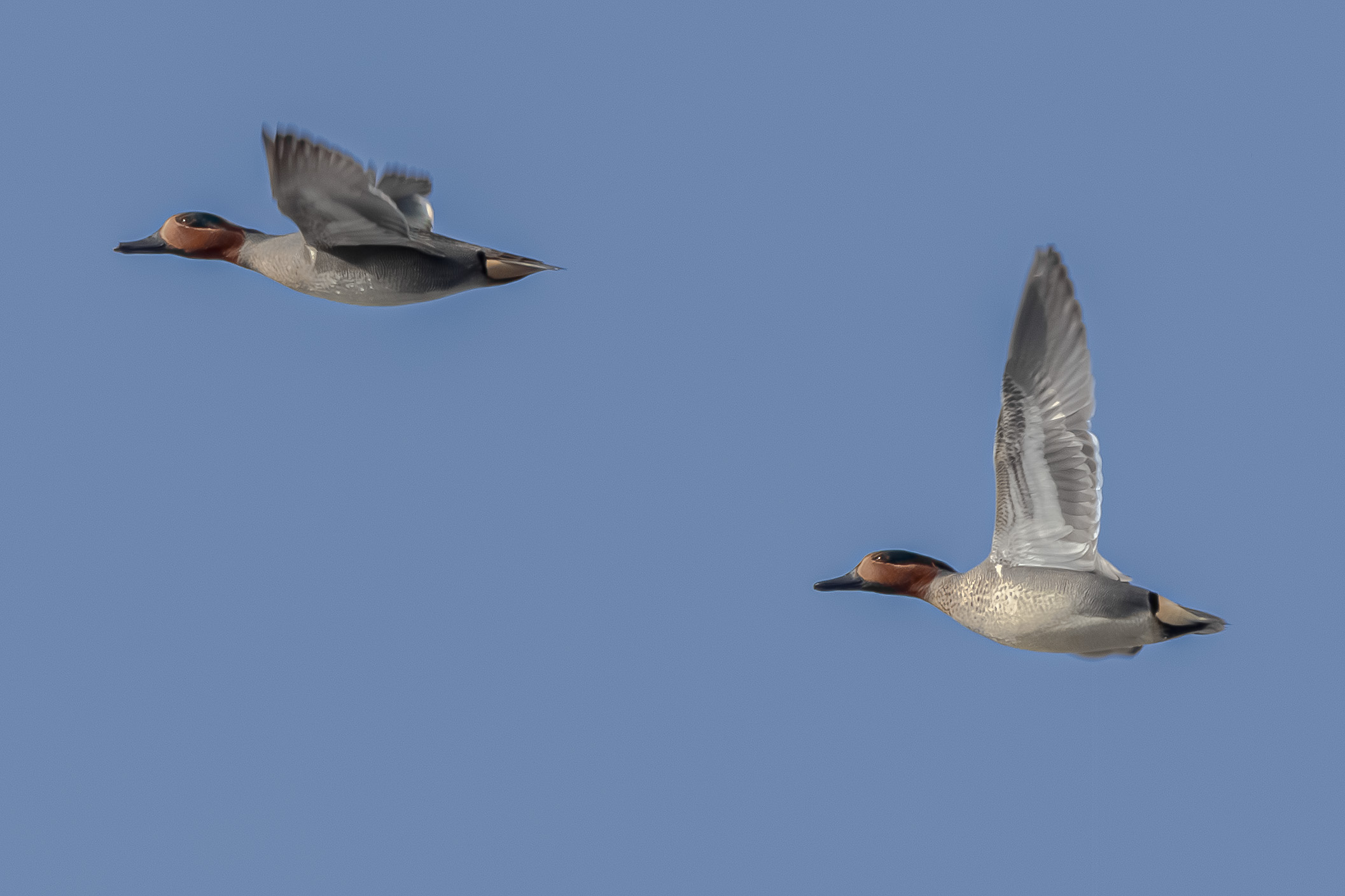
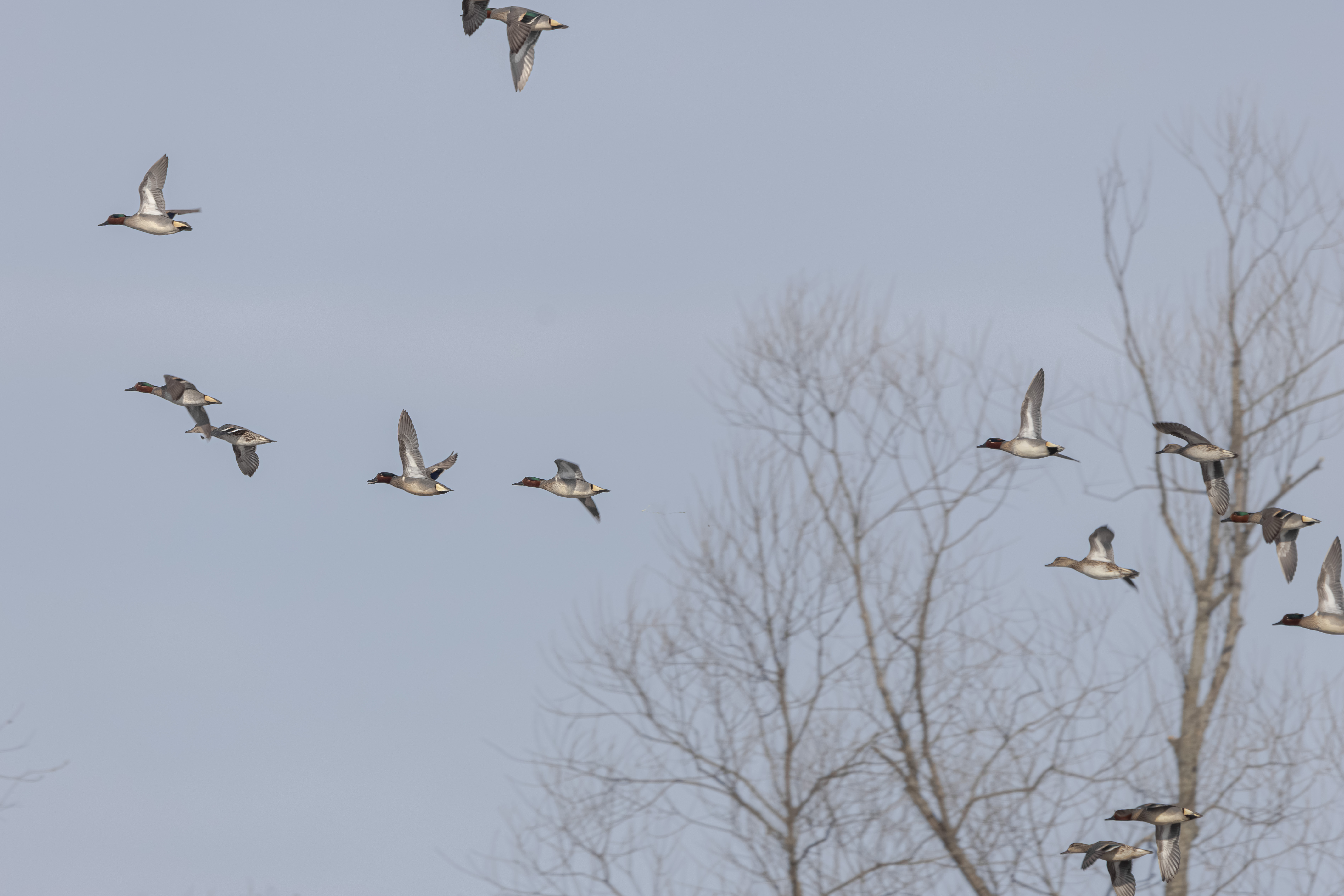
The Green-winged Teal (Anas crecca) is the smallest dabbling duck in North America and one of the most widespread waterfowl species in the Northern Hemisphere. Known for its compact size, rapid flight, and striking green eye patch on males, this species is a favorite among birdwatchers, wildlife photographers, and hunters alike.
Identification Guide
Male
Rich chestnut head with a bold iridescent green eye patch, Cream vertical stripe on the side of the breast, Gray body with fine vermiculations, Green speculum (wing patch) visible in flight.
Female
Mottled brown overall for camouflage, Subtle green speculum (less vibrant than male), Smaller and more compact than most ducks.
Size & Shape
Length: 12–15 inches, Wingspan: 20–24 inches, Weight: 5–14 ounces, Notably small, round-bodied, and quick in flight.
Habitat & Range

The Green-winged Teal thrives in shallow freshwater wetlands, including: Marshes, Flooded fields, Pond edges, Mudflats.
Range
Breeding: Northern U.S., Canada, Alaska, Wintering: Southern U.S., Mexico, Central America, Global presence: Europe and Asia.
They are one of the earliest migrants, often appearing in large flocks during fall and spring migration.
Diet & Feeding Behavior
Green-winged Teal are dabbling ducks, meaning they feed by tipping forward in shallow water rather than diving.
Diet Includes:
Seeds of aquatic plants, Sedges and grasses, Insects and larvae, Small crustaceans.
Feeding Style:
Skimming water surface, Grazing on mudflats, Often feeding in tight groups, creating synchronized movement.
Behavior & Flight
Extremely fast and agile flyers, Known for tight, twisting flock formations, Wings produce a distinctive whistling sound, Frequently flush suddenly when disturbed.
Their flight style is often compared to shorebirds due to their speed and coordination.
Breeding & Nesting
Nest on the ground near water, hidden in dense vegetation, Clutch size: 6–10 eggs, Incubation: ~21–23 days, Females handle all nesting duties.
Ducklings leave the nest shortly after hatching and begin feeding themselves almost immediately.
Birding Tips
Look for them in shallow wetlands and marsh edges, Best times: early morning and late afternoon, Listen for soft whistles and rapid wingbeats, Scan mixed duck flocks carefully they’re easy to overlook due to size.
Conservation Status
The Green-winged Teal is currently listed as Least Concern, with stable and abundant populations.
Threats:
Wetland habitat loss, Climate change affecting migration patterns, Hunting pressure (regulated in most regions).
Conservation Efforts:
Wetland restoration projects, Migratory bird protections, Sustainable hunting regulations.
Interesting Facts
One of the smallest ducks in the world, Can take off almost vertically from water, Often mixes with other teal species like the Blue-winged Teal, Their compact size helps them evade predators quickly.
 Wild Bird Journal
Leave a comment