
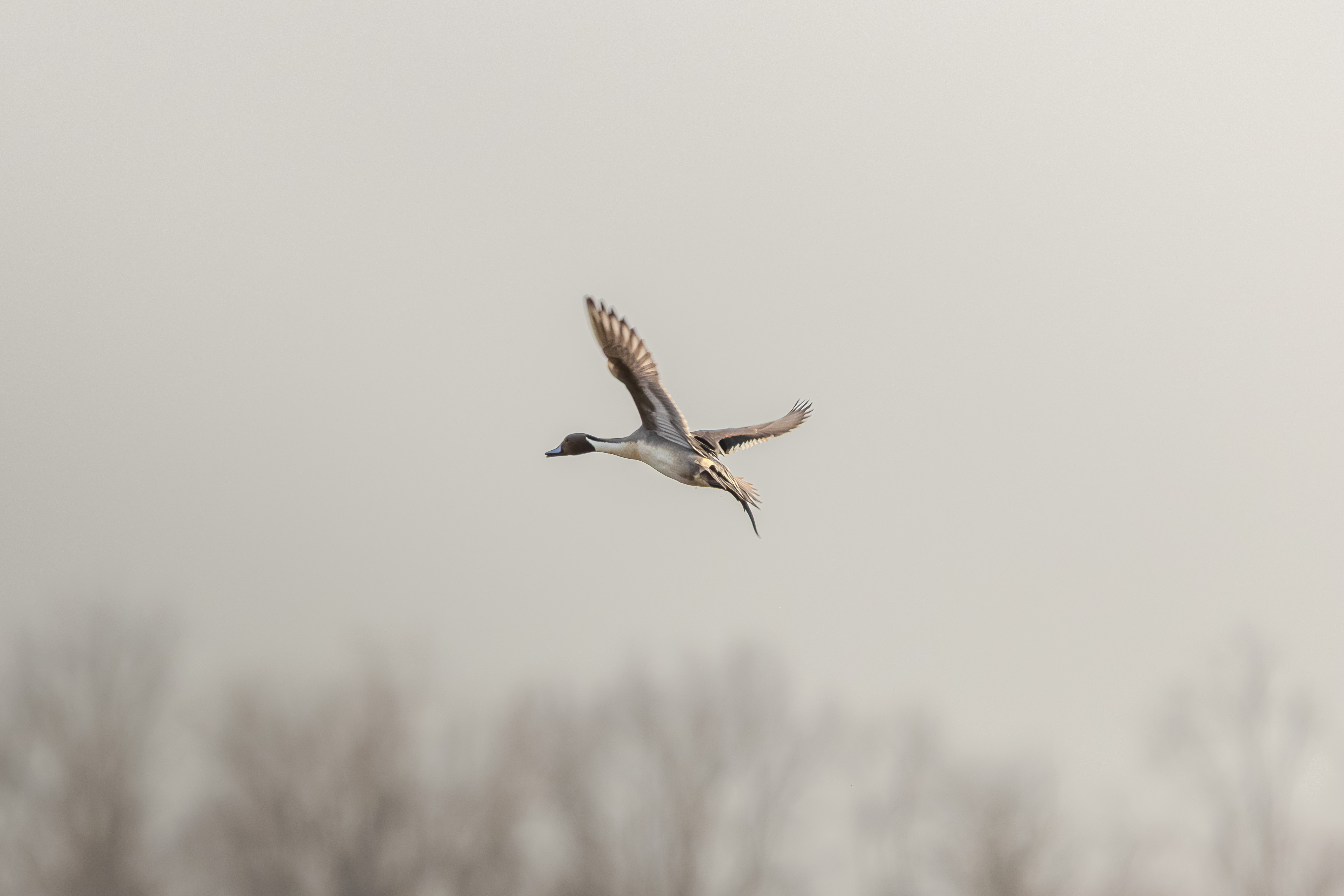


The Northern Pintail (Anas acuta) is one of the most elegant and recognizable dabbling ducks in the world, known for its slender body, long neck, and sharply pointed tail. Widely distributed across North America, Europe, and Asia, this species is a favorite among birders, wildlife photographers, and conservationists due to its graceful flight and striking plumage.
Identification
Male (Drake): Chocolate-brown head with a crisp white stripe running up the neck. White breast and gray body. Long, needle-like black tail feathers (signature feature)
Female (Hen): Mottled brown with subtle patterning, More slender than most female dabbling ducks, Longer neck and tail than species like Mallards.
Size: Length: 20–30 in (51–76 cm), Wingspan: 31–37 in (79–94 cm).
Habitat & Range
Northern Pintails thrive in: Freshwater wetlands, Marshes and shallow lakes,Flooded agricultural fields, Coastal estuaries during winter.
Range: Breeds across northern regions (Alaska, Canada, northern U.S.). Winters across the southern U.S., Mexico, Central America, and parts of Asia and Europe.
Migration Patterns
The Northern Pintail is a long-distance migrant, often traveling thousands of miles between breeding and wintering grounds.
One of the earliest ducks to migrate south in fall, Returns north early in spring, often before ice fully melts, Frequently spotted in major flyways, including the Mississippi Flyway.
Diet & Feeding Behavior
Northern Pintails are dabbling ducks, meaning they feed by tipping forward in shallow water.
Diet includes: Aquatic plants and seeds, Grains (rice, corn, barley in agricultural areas), Invertebrates (insects, snails, crustaceans).
Their slender neck gives them an advantage, allowing access to deeper food sources than other dabbling ducks.
Breeding & Nesting
Nest on the ground, often in open fields or grasslands far from water, Clutch size: 6–9 eggs, Female incubates eggs for ~22–24 days, Ducklings leave the nest shortly after hatching.
Unique trait: Pintails often nest in agricultural areas, which can expose them to habitat loss and farming risks.
Behavior & Flight
Extremely fast and agile fliers, Known for graceful, almost “floating” flight patterns,Often form loose flocks rather than tight groups, Quiet compared to other ducks, with soft whistles from males
Conservation Status
Listed as Least Concern, but populations have declined in parts of North America. Threats include: Wetland loss, Agricultural changes, Climate impacts on breeding grounds.
Conservation efforts focus heavily on wetland restoration and protection.
Birding Tips
Best time to spot: Fall and spring migration, Look in shallow wetlands, flooded fields, and marsh edges, Early morning and golden hour provide the best lighting for photography, Watch for their distinct long neck and tail silhouette in flight.

Leave a Reply