
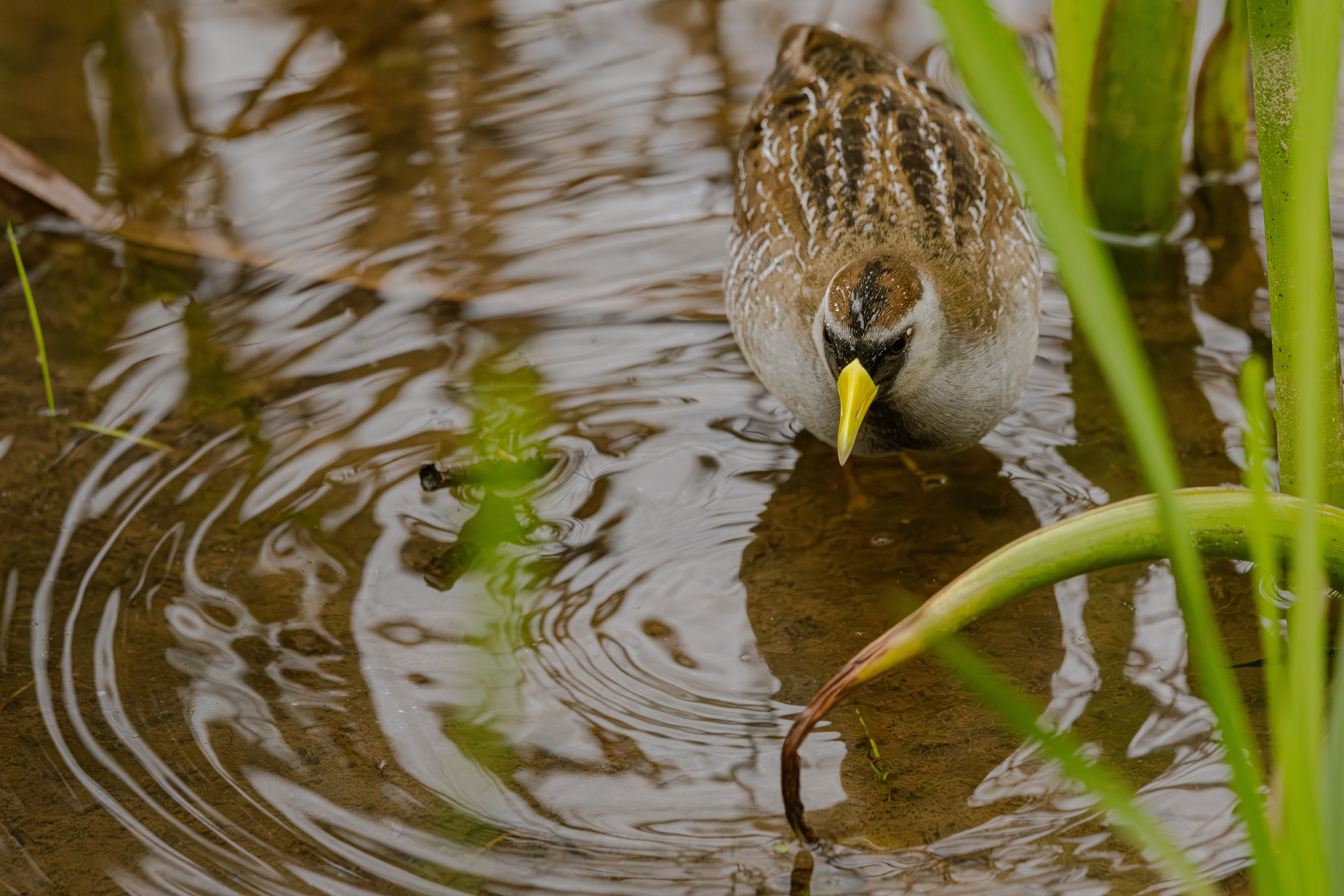


The Sora (Porzana carolina) is one of North America’s most fascinating and elusive marsh birds. Known by birders as the “ghost of the wetlands,” the Sora is often heard long before it is ever seen. Hidden deep within cattails, sedges, rushes, and marsh grasses, this small rail moves with surprising agility through some of the thickest wetland habitat in the world.
Despite its secretive nature, the Sora is actually the most widespread and abundant rail in North America. It breeds across much of Canada and the United States, then migrates thousands of miles south to wintering grounds in Mexico, the Caribbean, Costa Rica, and even northern parts of South America.
If you’re searching for Sora bird identification, habitat, call, migration patterns, behavior, diet, breeding, conservation, and bird photography tips, this guide covers everything.
Sora Identification
The Sora has a unique appearance that makes it one of the easier rails to identify—if you can actually see one.
Size
Length: 8–10 inches (20–25 cm), Wingspan: 13–15 inches, Weight: 49–112 grams.
Key Field Marks
Adult Breeding Plumage
A breeding Sora shows, Gray face and chest, Distinct black facial mask and throat, Short, thick yellow bill, Brown and black mottled upperparts, Black-and-white barred flanks, Short tail often flicked upward, revealing white undertail feathers.
Young birds appear duller and lack the bold black facial markings.
Sora Habitat
The Sora is strongly tied to wetlands.
Preferred Habitat
You can find Soras in: Freshwater marshes, Cattail marshes, Wet meadows, Shallow ponds, Flooded agricultural fields, Rice fields, Brackish marshes during migration/winter.
They particularly love marshes dominated by: Cattails, Sedges, Rushes, Bulrushes, Dense aquatic vegetation.
Soras usually stay hidden in thick vegetation near shallow water.
Sora Bird Range and Migration
One of the most remarkable facts about the Sora is its migration. Though they look round-bodied and weak-flying, Soras migrate hundreds to thousands of miles each year.
Breeding Range
During spring and summer, Soras breed across: Southern and central Canada, Northern and central United States, Parts of the western U.S.
Winter Range
In fall, they move south into: Southern United States, Mexico,Belize, Panama, Caribbean islands, Northern Colombia and other parts of South America.
Migration is mostly at night, which helps avoid predators.
Sora Calls and Sounds
Most birders identify Soras by sound.
Main Calls
Descending Whinny
Their signature call sounds like a horse-like whinny. “Ker-weeeeeee…”
Two-note whistle
A sharp: “Ker-wee!”
These calls often come from deep inside cattail marshes where the bird remains hidden.
What Does a Sora Eat?
Soras are omnivores.
Plant Foods
They eat: Smartweed seeds, Sedges, Grasses,Aquatic plants, Bulrush seeds.
Animal Foods
They also feed on: Beetles, Dragonfly larvae, Snails,Small crustaceans, Spiders, Aquatic insects.
Soras forage by walking through mud, shallow water, and floating vegetation while probing with their bill.
Breeding and Nesting
During breeding season:
Nest Construction
Soras build nests: Over shallow water, Hidden among cattails, Woven from reeds and marsh grasses.
A typical clutch contains: 6–16 eggs, Average of about 10 eggs.
Both parents help incubate eggs for roughly 18–20 days.
Behavior and Interesting Facts
Here are some amazing Sora facts:
They are better walkers than flyers
Their long toes help them walk on floating vegetation.
They are incredibly secretive
Most people hear them but never see them.
They flick their tail constantly
This often reveals bright white undertail feathers.
They can swim
Though rarely seen swimming, they are capable water birds.
They migrate at night
This reduces predation risk.
Best Time to Find a Sora in Ohio
Since you’re in Ohio, Soras are best found:
Spring Migration
April–May
Fall Migration
August–October
Great places include: Magee Marsh Wildlife Area, Ottawa National Wildlife Refuge, Mentor Marsh State Nature Preserve.
Dense marsh edges at dawn or dusk usually give the best chance.
Leave a Reply