
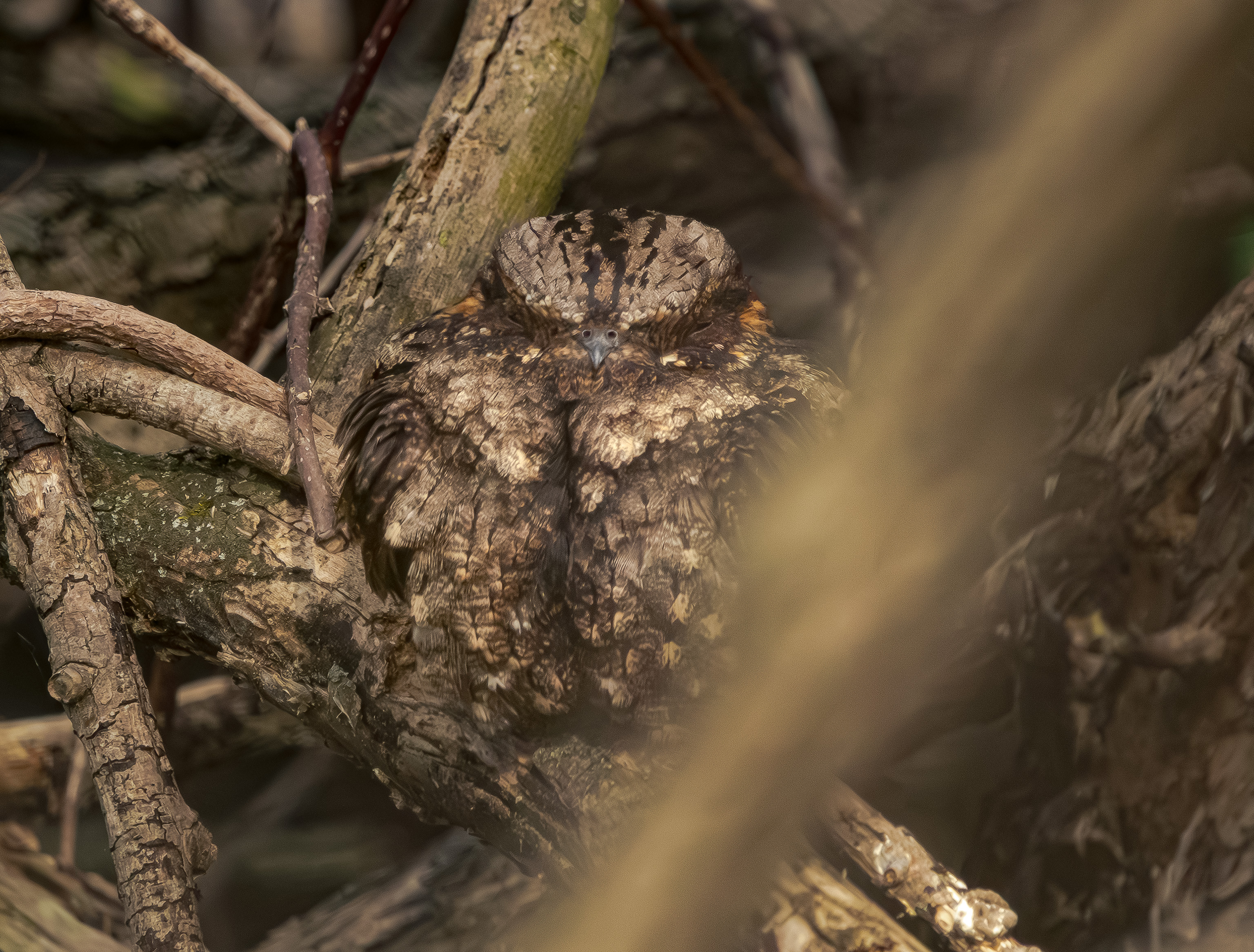


The Eastern Whip-poor-will (Antrostomus vociferus) is one of North America’s most mysterious nocturnal birds. Famous for its haunting “whip-poor-will” call echoing through forests at dusk and dawn, this secretive nightjar is a master of camouflage and an iconic species of eastern woodlands. Birders, wildlife photographers, and nature enthusiasts search for this elusive bird every spring and summer due to its unique vocalizations, cryptic plumage, and fascinating nocturnal behavior.
The Eastern Whip-poor-will belongs to the nightjar family, a group of birds specially adapted for nighttime hunting. Their silent flight, wide mouths, and excellent low-light vision make them highly effective insect predators.
Eastern Whip-poor-will Identification
Size and Appearance
Length: 8–10 inches, Wingspan: 17–20 inches,Weight: 1.5–2 ounces.
The Eastern Whip-poor-will has: Mottled gray, brown, and black plumage, Exceptional camouflage against leaf litter and tree bark, Large dark eyes adapted for nighttime vision, Short legs and long pointed wings, A small bill but extremely wide mouth for catching insects.
Males typically show white patches on the tail and wings, while females have buff-colored markings.
Eastern Whip-poor-will Call
The bird’s unmistakable repetitive song sounds exactly like: “Whip-poor-will! Whip-poor-will!”
Males may repeat this call hundreds of times during the night, especially during spring breeding season. Their vocal activity is strongest: At dusk, Before sunrise, During moonlit nights.
The Eastern Whip-poor-will is often easier to hear than see.
Eastern Whip-poor-will Habitat
Eastern Whip-poor-wills prefer: Open deciduous forests, Pine woodlands, Forest edges, Scrubby clearings, Rural wooded habitats.
They require habitats with: Sparse understory, Open ground for nesting, High insect abundance.
In the United States, they are commonly found throughout: Ohio, Pennsylvania, Michigan, New York, West Virginia, Tennessee, New England forests, Appalachian regions.
Eastern Whip-poor-will Range Map
Summer Breeding Range
The Eastern Whip-poor-will breeds across eastern North America, including: Northeastern United States, Midwest,Great Lakes region, Southeastern Canada.
Winter Range
During winter, they migrate to: Central America, Southern Mexico, Caribbean regions.
Eastern Whip-poor-will Migration
Eastern Whip-poor-wills are long-distance migrants. They migrate primarily at night and often travel unnoticed due to their secretive nature.
Spring Migration
March to May
Fall Migration
August to October
Peak migration activity often aligns with: Warm nighttime temperatures, High insect activity, Favorable moon phases.
Eastern Whip-poor-will Behavior
Nocturnal Lifestyle
Eastern Whip-poor-wills are crepuscular and nocturnal birds, meaning they are most active: At dusk, During nighttime, Before sunrise.
During the day, they remain motionless on the forest floor or low branches where their camouflage makes them nearly invisible.
Feeding Behavior
Eastern Whip-poor-wills primarily feed on: Moths, Beetles, Flying ants, Mosquitoes, Other nocturnal insects.
They hunt by: Flying silently through forest openings, Sallying from perches, Catching insects mid-air.
Their wide mouths function like nets while feeding.
Eastern Whip-poor-will Nesting
Unlike many birds, Eastern Whip-poor-wills do not build traditional nests.
Nesting Facts
Eggs are laid directly on leaf litter, Usually 2 eggs per clutch, Eggs are heavily camouflaged, Both parents participate in care.
The female relies heavily on camouflage to protect eggs and chicks from predators.
Eastern Whip-poor-will Conservation Status
The Eastern Whip-poor-will population has declined significantly in recent decades.
Main Threats
Habitat loss, Declining insect populations, Pesticide use, Light pollution, Forest fragmentation.
The species is considered a conservation concern in many regions.
Organizations and bird conservation groups continue monitoring populations through: Nocturnal bird surveys, Breeding bird atlases, Acoustic monitoring programs.
Best Time to See an Eastern Whip-poor-will
The best months are: May, June, Early July.
The best times of day: 30 minutes after sunset, Before sunrise.
Ideal conditions: Warm humid nights, Calm weather, Forest edges with open clearings.
Eastern Whip-poor-will Photography Tips
Photographing an Eastern Whip-poor-will is extremely rewarding but challenging.
Best Camera Settings
High ISO (1600–6400), Fast aperture (f/2.8–f/5.6), Shutter speed above 1/250, Silent shooting mode.
Best Techniques
Search near calling locations at dusk, Use red-light flashlights carefully, Stay on trails, Avoid disturbing nesting birds.
Because of their camouflage, scanning forest floors slowly is critical.
Interesting Facts About Eastern Whip-poor-wills
They can enter torpor to conserve energy during cold weather. Their eyes reflect strongly in flashlight beams at night. They are part of the nightjar family. Native folklore often associates their calls with mystery and wilderness. Their populations are declining throughout much of their range. Moon phases influence their singing activity.
Eastern Whip-poor-will vs Common Nighthawk
Eastern Whip-poor-will
Forest habitats, Repetitive vocal calls, Ground nesting, Strong camouflage.
Common Nighthawk
Open urban areas, Nasal “peent” calls, Aerial acrobatics, White wing bars visible in flight.


Leave a Reply