
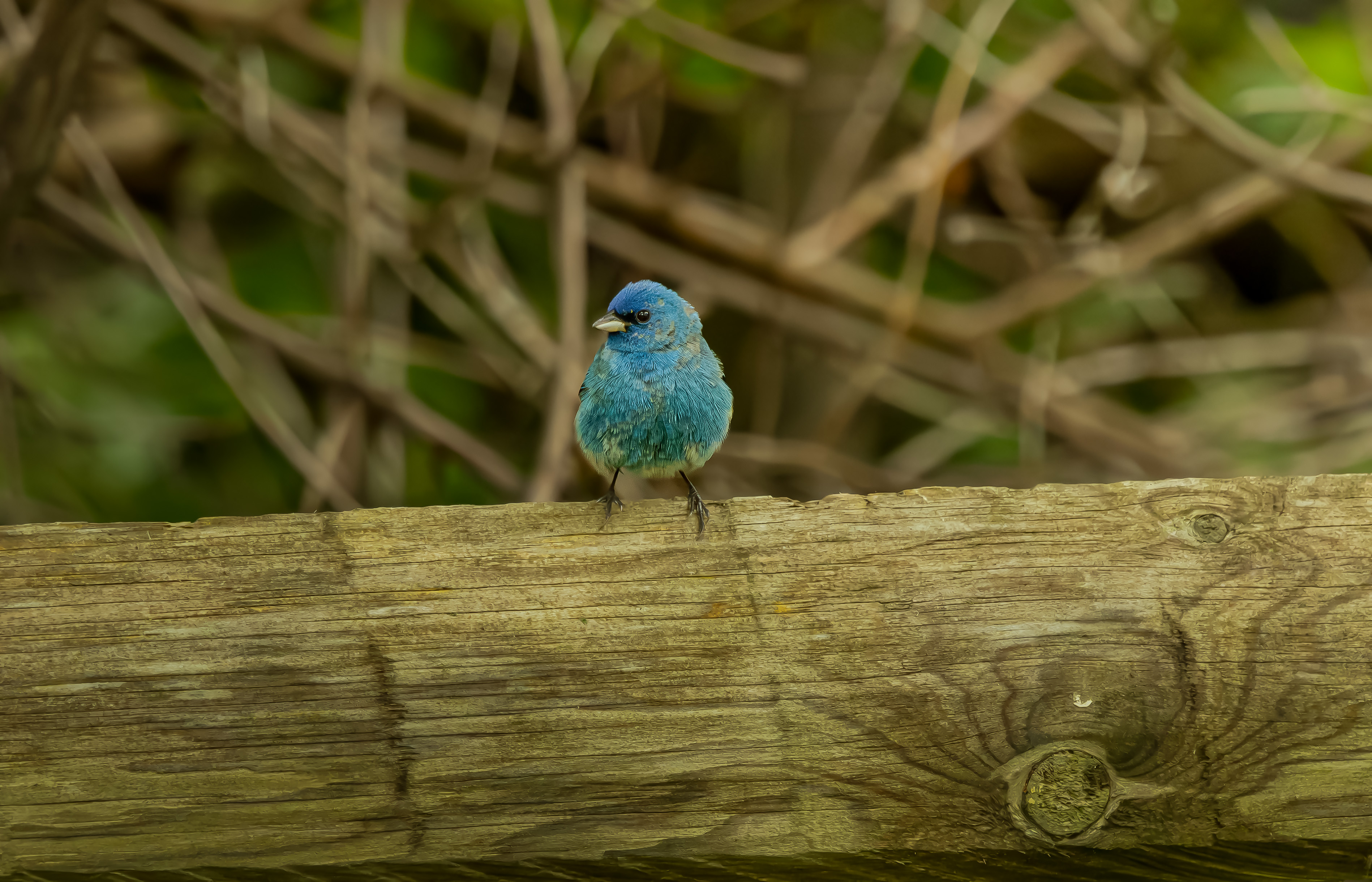


Learn everything about the Indigo Bunting, including identification, habitat, migration, nesting behavior, diet, range maps, conservation status, and expert birding tips for finding this brilliant blue songbird.
The Indigo Bunting (Passerina cyanea) is one of North America’s most stunning songbirds. Known for the male’s brilliant electric-blue plumage, the Indigo Bunting is a favorite among birdwatchers, photographers, and backyard bird enthusiasts. These small migratory birds are commonly found across the eastern and central United States during the breeding season before traveling thousands of miles to wintering grounds in Mexico, Central America, and the Caribbean.
The Indigo Bunting belongs to the cardinal family (Cardinalidae) and is closely related to buntings, grosbeaks, and cardinals. Their vibrant coloration and cheerful songs make them one of the most sought-after species during spring migration.
Indigo Bunting Identification
Male Indigo Bunting
Adult breeding males are unmistakable. Key Features: Brilliant all-over blue plumage, Slightly darker wings and tail, Small, thick silver-gray bill, Blackish eyes, Length: 4.5-5 inches (11.5-13 cm), Wingspan: 7.5-8.7 inches (19-22 cm).
One fascinating fact is that Indigo Buntings are not actually blue. Their feathers contain no blue pigment. Instead, microscopic feather structures scatter light, producing the vibrant blue appearance.
Female Indigo Bunting
Female Indigo Buntings are much more subtle. Key Features: Warm brown overall coloration, Light streaking on the breast, Pale throat, Faint wing bars, Similar conical seed-eating bill.
Females can sometimes be confused with sparrows or finches, but their bill shape and habitat preferences help separate them.
Juvenile Indigo Bunting
Young Indigo Buntings resemble females. Young males gradually acquire patches of blue plumage during their first year.
Indigo Bunting Range and Distribution
Breeding Range
Indigo Buntings breed throughout: Eastern United States, Midwest, Southern Canada, Great Plains regions.
They are especially common in: Ohio, Pennsylvania, Michigan, New York, Indiana, Illinois, Kentucky, Tennessee, Virginia.
Winter Range
During winter, Indigo Buntings migrate to: Southern Mexico, Central America, Northern South America, Caribbean islands.
Migration
Indigo Buntings are long-distance migrants.
One of the most remarkable facts about this species is their navigation ability. Research shows they use: Star patterns, Celestial navigation, Earth’s magnetic field, Sunset positioning.
Young birds learn migration routes using both instinct and environmental cues.
Indigo Bunting Habitat
Indigo Buntings thrive in areas where forests meet open spaces. Preferred Habitats: Woodland edges, Brushy fields, Overgrown pastures, Powerline corridors, Roadsides, Shrubby meadows, Forest clearings, Young secondary forests.
Unlike deep-forest birds, Indigo Buntings prefer transitional habitats with abundant sunlight and vegetation.
Indigo Bunting Diet
Indigo Buntings are omnivorous and change their diet throughout the year.
Spring and Summer Diet
During breeding season they consume: Caterpillars, Beetles, Grasshoppers, Spiders, Ants, Moths, Small insects. Protein-rich insects are especially important for raising chicks.
Fall and Winter Diet
During migration and winter: Grass seeds, Weed seeds, Wild berries, Small fruits, Grain crops.
Favorite plants include: Goldenrod,Dandelion, Ragweed, Blackberry, Elderberry.
Indigo Bunting Nesting Behavior
Nest Construction
Female Indigo Buntings build the nest alone. Nest Characteristics: Cup-shaped design, Constructed from leaves and grasses, Lined with soft materials, Hidden within dense shrubs.
Nests are usually located: 1-10 feet above ground, In shrubs, Along woodland edges, In young saplings.
Eggs
Typical clutch size: 3-4 eggs
Egg appearance: Pale blue, White to bluish-white
Incubation lasts approximately: 11-14 days
Nestlings
Young remain in the nest: 8-12 days
Parents continue feeding fledglings after they leave the nest. Many pairs successfully raise two broods each breeding season.
Indigo Bunting Song and Calls
The Indigo Bunting’s song is one of the signature sounds of summer.
Song Description
The male sings: “Sweet-sweet, chew-chew, sweet-sweet”
Characteristics include: Fast delivery, Paired notes, High-pitched whistles, Continuous singing.
Males often sing from: Fence posts, Utility wires, Tree tops, Shrub tops.
Birders frequently locate Indigo Buntings by sound before seeing them.
Indigo Bunting Migration Facts
Indigo Buntings are among the most fascinating migratory songbirds in North America.
Amazing Migration FactsL: Travel thousands of miles annually, Migrate mostly at night, Navigate using stars, Use Earth’s magnetic field, Cross the Gulf of Mexico during migration.
Scientists discovered that Indigo Buntings can recognize the rotational patterns of stars surrounding Polaris, helping them maintain direction during migration.
When to See Indigo Buntings
Spring Arrival
Most birds return between: Late April to early May. Peak migration occurs during May.
Summer
Best viewing period: May through August
This is when males display their brightest blue plumage.
Fall Migration
Migration begins: August or September.
Many birds depart northern breeding grounds by October.
Where to Find Indigo Buntings in Ohio
Ohio is one of the best states to observe Indigo Buntings.
Excellent locations include: Magee Marsh Wildlife Area, Ottawa National Wildlife Refuge, Cuyahoga Valley National Park, Mohican State Park, Brushy roadsides throughout Northeast Ohio, Young forest habitats near agricultural fields.
Look for singing males perched high in shrubs or on utility wires.
Backyard Birding Tips for Indigo Buntings
Although not as common at feeders as finches, Indigo Buntings can occasionally visit backyards. Attract Indigo Buntings With: Nyjer seed, White millet, Native shrubs, Berry-producing plants, Brush piles, Natural field edges.
Native landscaping greatly increases your chances of attracting Indigo Buntings.
Indigo Bunting Photography Tips
Bird photographers love Indigo Buntings because of their vivid coloration. Best Photography Practices Shoot during golden hour, Use a fast shutter speed, Focus on the eye, Expose carefully to preserve blue feather detail, Watch fence lines and shrub tops.
A focal length of 400mm-600mm works exceptionally well.
Indigo Bunting Conservation Status
The Indigo Bunting is currently classified as a species of Least Concern. However, populations face challenges from: Habitat loss, Urban development, Window collisions, Pesticide use.
Conservation efforts that preserve brushy edge habitat benefit Indigo Buntings throughout their range.
Fun Facts About Indigo Buntings
Males are blue because of feather structure, not pigment. They can navigate using stars. They migrate primarily at night. Their scientific name is Passerina cyanea. Females build nests without assistance. Young males appear patchy blue and brown during molt. They belong to the cardinal family. Their song is a classic sound of eastern North American summers.Males may defend territories throughout the breeding season. Some individuals travel over 1,200 miles during migration.
Leave a Reply