
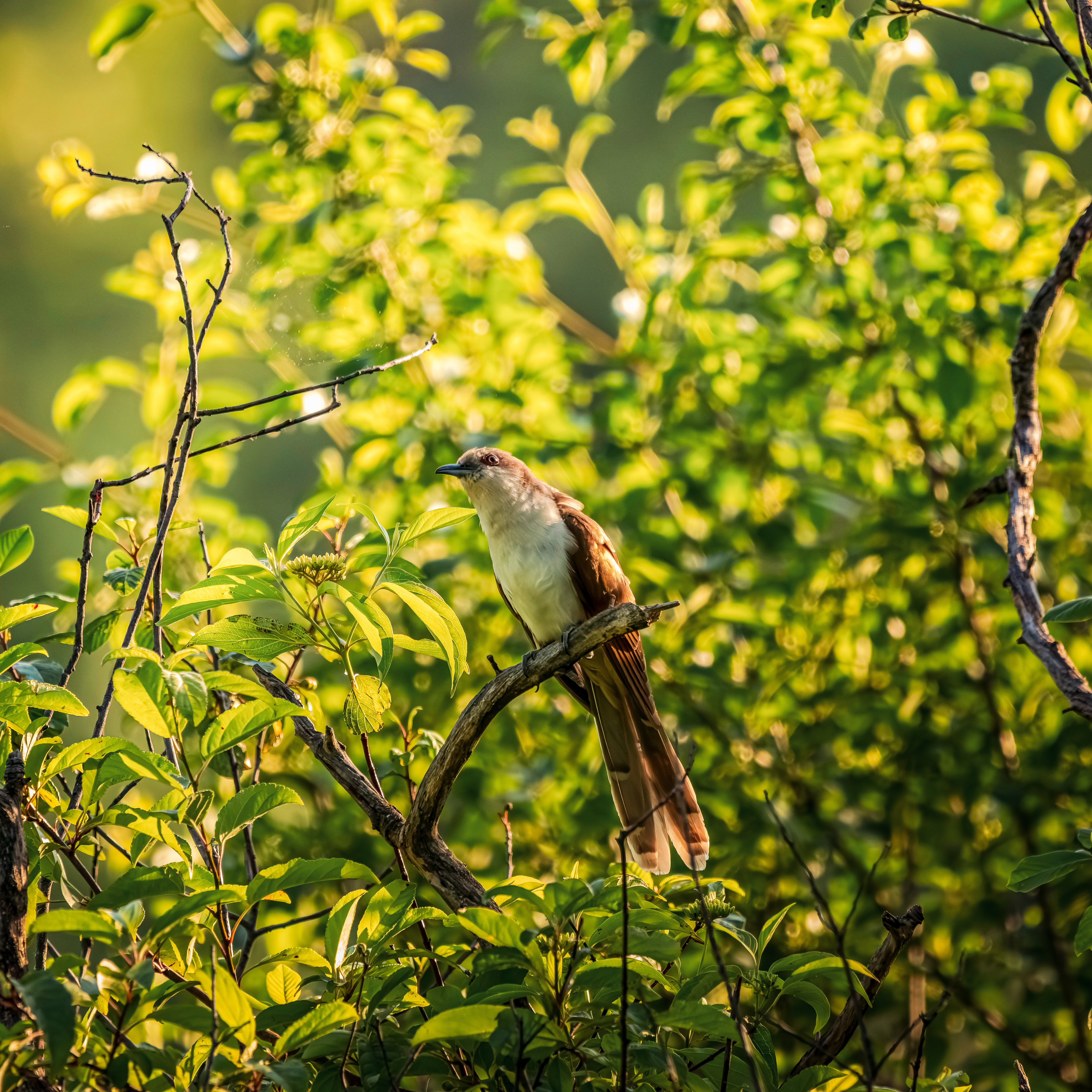


The Black-billed Cuckoo is one of the most secretive and fascinating birds in North America. Known for its slender body, long tail, quiet movements, and mysterious staccato call, this elusive cuckoo is much more often heard than seen. Birders usually encounter it in dense woodland edges, shrubby thickets, young forests, wetlands, and brushy habitats where it hides among leaves and branches.
Scientifically known as Coccyzus erythropthalmus, the Black-billed Cuckoo belongs to the cuckoo family, Cuculidae. Unlike the famous Common Cuckoo of Europe, which is widely known for laying eggs in other birds’ nests, the Black-billed Cuckoo usually builds its own nest and raises its own young. It may occasionally lay eggs in the nests of other birds, but this behavior is far less common than in many Old World cuckoos.
This species is especially interesting because its numbers often seem tied to outbreaks of caterpillars. During years when tent caterpillars, fall webworms, or other large insects are abundant, Black-billed Cuckoos may become easier to detect in suitable habitat. Their quiet, patient hunting style and preference for dense cover make them a rewarding bird to find for anyone who enjoys careful listening and slow birding.
Quick Facts About the Black-billed Cuckoo
Common Name: Black-billed Cuckoo. Scientific Name: Coccyzus erythropthalmus. Family: Cuculidae Size: About 11 to 12.6 inches long. Wingspan: About 15.7 to 17.7 inches. Weight: About 1.6 to 2.3 ounces. Main Colors: Brown above, white below, black bill, red eye-ring. Habitat: Dense woodlands, thickets, forest edges, shrubby wetlands, young forests. Diet: Caterpillars, large insects, beetles, grasshoppers, cicadas, katydids, occasional fruit. Migration: Long-distance migrant Best Time to Find: Late spring through summer on breeding grounds. Conservation Status: Least Concern globally, but still affected by habitat changes, pesticide use, and migration hazards
How to Identify a Black-billed Cuckoo
The Black-billed Cuckoo is a slim, long-tailed bird with a soft brown back, clean white underparts, and a noticeably long black bill. It often sits very still in the middle layer of dense vegetation, which makes it easy to overlook even when it is nearby.
The most important identification features include: All-black bill: The bill is fully black, unlike the Yellow-billed Cuckoo, which usually shows yellow on the lower mandible. Red eye-ring: Adult Black-billed Cuckoos have a narrow red eye-ring that can stand out in good light.
Small white tail spots: The underside of the tail has small, narrow white tips. These are much less bold than the large white tail spots of the Yellow-billed Cuckoo.
Brown upperparts: The back, wings, and head are warm brown without the rusty wing panels seen on Yellow-billed Cuckoo. White underparts: The belly and chest are mostly clean white, giving the bird a simple but elegant look. Long tail and slender shape: Like other cuckoos, the Black-billed Cuckoo has a long, tapered look with a rounded tail and a slightly hunched posture when perched.
Because this bird moves slowly and hides in thick vegetation, the best way to identify one is often by combining shape, voice, habitat, and behavior. A silent cuckoo in deep shade can be difficult to separate from similar species, so look carefully at the bill color, wing color, tail pattern, and eye-ring.
Black-billed Cuckoo Call and Song
The Black-billed Cuckoo call is one of the best ways to detect the species. Its song is often described as a repeated series of soft, even, staccato notes. It can sound like a rhythmic “cu-cu-cu-cu” pattern, usually delivered on a fairly level pitch.
Black-billed Cuckoos may call during the day, but they are also known for vocalizing at night, especially during the breeding season. This makes them one of the more mysterious sounds of summer woodlands. If you hear a repeated cuckoo-like call coming from a dense thicket, woodland edge, or shrubby wetland, it is worth stopping and listening carefully.
Compared with the Yellow-billed Cuckoo, the Black-billed Cuckoo’s song often sounds clearer, softer, and less knocking. Learning the difference between these two cuckoo calls is one of the best ways to improve your cuckoo identification skills.
Black-billed Cuckoo Habitat
The best Black-billed Cuckoo habitat includes dense, leafy, and shrubby areas where the bird can remain hidden while hunting insects. This species is strongly associated with cover, especially places with thick vegetation and abundant caterpillars.
Look for Black-billed Cuckoos in: Dense deciduous woodlands, Forest edges, Young second-growth forests, Shrubby wetlands, Overgrown fields, Thickets near water, Brushy woodland borders, Mixed deciduous and coniferous edges, Orchards and gardens during migration, Scrublands with tall shrubs and small trees.
During the breeding season, Black-billed Cuckoos often choose dense vegetation near water or woodland edges. During migration, they may appear in a wider variety of habitats, especially any place with thick cover and insect activity.
Black-billed Cuckoo Range and Migration
The Black-billed Cuckoo is a long-distance migrant. It breeds mainly across parts of the northern and eastern United States and southern Canada, then migrates south for the winter. During migration, it can pass through a wide range of habitats, including woodland patches, thickets, parks, orchards, and coastal stopover areas.
Because this species migrates mostly at night, birders may hear Black-billed Cuckoos calling overhead during spring or fall migration. Like many nocturnal migrants, it can be vulnerable to window collisions, bright city lights, storms, and habitat loss along its migration route.
On the breeding grounds, Black-billed Cuckoos are often more common in northern regions than Yellow-billed Cuckoos. In areas where both species overlap, Black-billed Cuckoos usually prefer dense thickets and shrubby habitats, while Yellow-billed Cuckoos are often associated with larger deciduous woodland edges and riparian corridors.
What Do Black-billed Cuckoos Eat?
The Black-billed Cuckoo is a powerful predator of caterpillars and other large insects. Its diet includes: Tent caterpillars, Fall webworms, Gypsy moth caterpillars, Katydids, Cicadas, Grasshoppers, Beetles, Crickets, Other large insects, Occasional berries, seeds, and fruit during migration or winter.
One of the most important things to know about the Black-billed Cuckoo is that it can eat hairy caterpillars that many other birds avoid. It may shake or beat caterpillars against branches before swallowing them. This makes the species valuable in forest ecosystems, especially during insect outbreaks.
Because of its diet, the Black-billed Cuckoo is often easier to find in years when caterpillars are abundant. If you notice heavy tent caterpillar activity in a woodland or thicket, that area may be worth checking for cuckoos.
Black-billed Cuckoo Nesting and Breeding
Black-billed Cuckoos usually nest in dense shrubs, small trees, brambles, or tangled vegetation. The nest is often placed fairly low, sometimes less than 10 feet above the ground, although it can occasionally be higher.
The nest is typically a loose, shallow platform or cup made from twigs, grasses, leaves, pine needles, plant fibers, rootlets, and other soft materials. Both adults may help build the nest, and both parents help care for the young.
Typical nesting facts include: Clutch size: Usually 2 to 5 eggs, Egg color: Greenish-blue or blue-green, Incubation: About 10 to 11 days, Nestling period: About 6 to 7 days, Broods: Usually 1 to 2 per season.
Black-billed Cuckoo chicks develop quickly and may leave the nest very young, often before they can fly well. This fast nesting cycle may help the species take advantage of sudden food abundance, especially caterpillar outbreaks.
Although Black-billed Cuckoos usually raise their own young, they may occasionally lay eggs in the nests of other birds, including Yellow-billed Cuckoos, American Robins, Gray Catbirds, Chipping Sparrows, Wood Thrushes, and even other Black-billed Cuckoos.
Black-billed Cuckoo vs Yellow-billed Cuckoo
The Black-billed Cuckoo and Yellow-billed Cuckoo are two similar, long-tailed cuckoos found in North America. They can overlap in range, but careful observation makes them easier to separate.
Black-billed Cuckoo Identification
Bill is entirely black, Adult has a red eye-ring,Tail underside has small, narrow white spots, Wings are plain brown without obvious rusty color, Often associated with dense thickets and northern breeding areas, Call is a clearer, more even series of repeated notes.
Yellow-billed Cuckoo Identification
Lower bill is yellow, Tail underside has large, bold white spots, Wings often show rusty or rufous tones, Usually larger-looking and more boldly patterned, Often found in deciduous woodlands, riparian areas, and woodland edges, Call has a more knocking, clattering quality.
The easiest field mark is usually the bill. If the entire bill looks dark or black, think Black-billed Cuckoo. If the lower bill looks yellow, think Yellow-billed Cuckoo. If you get a view of the tail from below, the pattern can also be very helpful.
Best Time to See a Black-billed Cuckoo
The best time to find a Black-billed Cuckoo is during late spring and summer, especially when birds are on their breeding territories and actively calling. In many areas, May through July is the best window.
Early morning can be productive, but this species may also call at night. If you hear one after dark, mark the location and return during daylight. Move slowly, scan the middle level of the vegetation, and watch for a long-tailed bird sitting quietly or moving through leaves.
Birders are most likely to find Black-billed Cuckoos by listening first, then patiently searching the area where the sound is coming from. They are not usually birds that appear quickly in the open.
How to Find a Black-billed Cuckoo
To improve your chances of seeing a Black-billed Cuckoo, try these birding tips: Listen before looking. Their call is often the first clue. Search dense habitat. Focus on thickets, young woods, shrubby wetlands, and forest edges. Look during caterpillar outbreaks. Areas with tent caterpillars or webworms can attract cuckoos. Go slowly. Black-billed Cuckoos often sit motionless for long periods. Check the middle story. They often perch within leafy cover, not high in the canopy. Return after hearing one at night. A nighttime caller may still be nearby the next morning. Avoid rushing the sighting. Patient scanning is key with this species.
Black-billed Cuckoo Photography Tips
Photographing a Black-billed Cuckoo can be challenging because the bird is secretive, often shaded, and usually surrounded by leaves. The best images usually come from patience and careful fieldcraft rather than chasing the bird.
For better Black-billed Cuckoo photos:
Use a long telephoto lens if possible, Watch for openings in dense foliage, Keep your shutter speed fast enough for quick movements, Use a higher ISO in dark woods if needed, Focus on the eye when the bird is partly hidden, Avoid pushing too close and stressing the bird, Wait for natural movement instead of forcing the shot.
A good Black-billed Cuckoo photo does not need a wide-open perch to be beautiful. Environmental photos showing the bird tucked into leaves can tell a stronger story and better represent how the species is usually seen.
Is the Black-billed Cuckoo Rare?
The Black-billed Cuckoo is not globally rare, but it is often difficult to find because of its secretive behavior and preference for dense cover. In many places, it is considered uncommon or irregular. Some years it may seem nearly absent, while in other years it may appear more often, especially when caterpillars are abundant.
This is why birders sometimes describe the Black-billed Cuckoo as unpredictable. It can be present in suitable habitat without being seen, and its detectability may change from year to year depending on food supply, weather, migration timing, and local breeding conditions.
Black-billed Cuckoo Conservation
The Black-billed Cuckoo is currently considered a species of Least Concern globally, but that does not mean it faces no threats. Like many migratory birds, it can be affected by habitat loss, pesticide use, window collisions, artificial light during migration, and changes in insect populations.
Because this bird depends heavily on caterpillars and large insects, pesticide use can reduce important food sources. Dense shrublands, young forests, wetland edges, and brushy habitats are also important, but these areas are often cleared, developed, or altered.
You can help birds like the Black-billed Cuckoo by: Planting native trees and shrubs, Reducing pesticide use, Keeping cats indoors, Making windows safer for birds, Turning off unnecessary lights during migration, Protecting thickets, woodland edges, and wetland buffers, Supporting local habitat conservation.
Healthy insect populations are essential for cuckoos, warblers, flycatchers, vireos, and many other birds. Creating a more natural, insect-friendly landscape can make a real difference.
Interesting Facts About the Black-billed Cuckoo
Black-billed Cuckoos are often heard more than seen. They can be active vocalizers at night during the breeding season.Their diet is heavily focused on caterpillars and other large insects. They may become easier to find during caterpillar outbreaks. Young cuckoos leave the nest very quickly compared with many songbirds. Adults have a red eye-ring that can be visible in good light. The species usually builds its own nest, unlike many famous brood-parasitic cuckoos. Black-billed Cuckoos migrate long distances between North America and South America. They are one of the most secretive cuckoos in North America.
Leave a Reply