
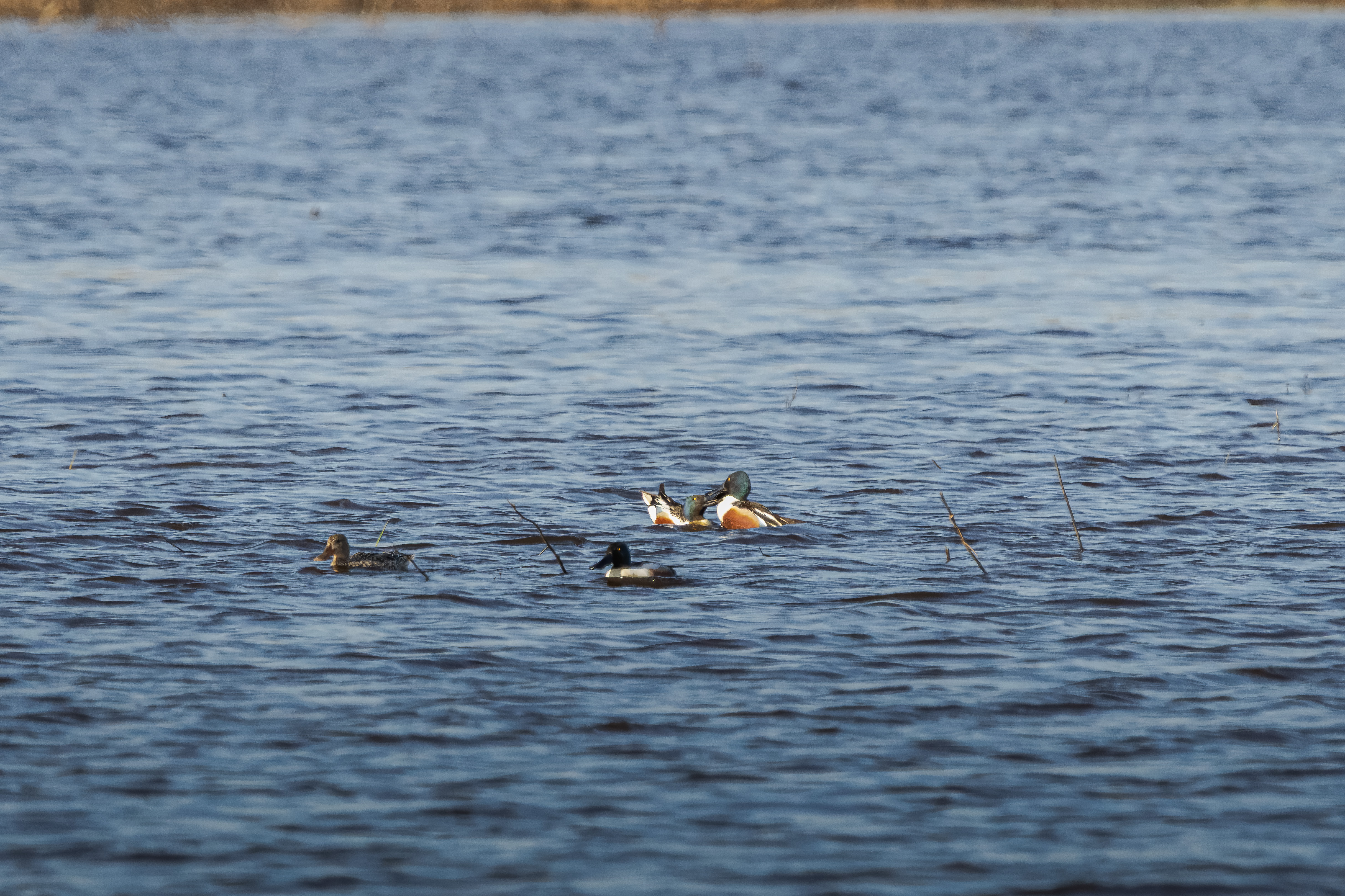


The Northern Shoveler is one of the most recognizable ducks in North America. With its oversized spoon-shaped bill, bold breeding plumage, and unique feeding style, this dabbling duck stands out even in a crowded wetland full of Mallards, teal, Gadwall, and American Wigeon.
Scientifically known as Spatula clypeata, the Northern Shoveler belongs to the duck, goose, and swan family, Anatidae. It is often called a “spoonbill” or “spoony” because of its wide shovel-like bill. That bill is not just for looks. It is a highly specialized feeding tool that helps the bird filter tiny aquatic animals, seeds, and plant material from shallow water.
For birders, the Northern Shoveler is a great species to learn because it teaches you to look beyond color alone. Shape, bill size, feeding behavior, posture, habitat, and wing pattern all help with identification. Once you know what to look for, the Northern Shoveler becomes one of the easiest dabbling ducks to pick out in the field.
You can find Northern Shovelers in shallow marshes, ponds, flooded fields, wastewater lagoons, coastal wetlands, and wildlife refuges. They are especially noticeable during migration and winter, when flocks gather in open water and feed with their heads down. Watching a group of shovelers sweep their bills side to side across the water is one of the most distinctive scenes in duck watching.
Quick Facts About the Northern Shoveler
Common Name: Northern Shoveler. Scientific Name: Spatula clypeata. Family: Anatidae. Size: About 17 to 20 inches long. Wingspan: About 27 to 33 inches. Weight: About 14 to 29 ounces. Main Colors: Breeding males show a green head, white chest, rusty sides, black back, yellow eye, blue wing patch, and large dark bill. Females are mottled brown with an oversized orange or brownish bill. Habitat: Shallow wetlands, marshes, ponds, flooded fields, rice fields, sewage lagoons, estuaries, coastal marshes, and wetland edges. Diet: Tiny crustaceans, aquatic insects, zooplankton, mollusks, seeds, aquatic plants, and other small invertebrates. Migration: Migratory across much of North America, Europe, and Asia. Best Time to Find: Fall migration through spring, especially from late summer through April in many areas. Conservation Status: Low concern globally, but still dependent on healthy wetlands.
How to Identify a Northern Shoveler
The easiest way to identify a Northern Shoveler is by the bill. No other common North American dabbling duck has such a large, flat, spoon-shaped bill. Even from a distance, the bill can make the bird look front-heavy, almost as if its head is being pulled toward the water.
Breeding male Northern Shovelers are bold and colorful. They have a dark green head, bright white chest, rusty reddish-brown sides, black back, yellow eye, and large dark bill. In good light, the green head can shine beautifully. In low light, it may look almost black. The white chest and rusty sides make the male stand out among other ducks, especially when mixed into a flock with Mallards or Gadwall.
Female Northern Shovelers are more subtle but still distinctive. They are mottled brown overall, similar at first glance to a female Mallard, but their bill is much larger and more exaggerated. The bill is usually orange or brownish-orange, and it is often the best field mark. Females also have a powdery blue shoulder patch that may be visible in flight or sometimes while resting.
In flight, Northern Shovelers show a colorful wing pattern. Males flash pale blue on the upperwing and green on the speculum. Females also show blue in the wing, though their colors are more subdued. This can make them look similar to Blue-winged Teal or Cinnamon Teal in flight, but Northern Shovelers are larger and have a much longer, wider bill.
Shape is also important. Northern Shovelers are medium-sized dabbling ducks. They are smaller than a Mallard but larger than most teal. On the water, they can look slightly low in the front because of the weight and size of the bill. When feeding, they often hold their head low and push the bill across the surface.
Northern Shoveler Call and Sounds
The Northern Shoveler is not usually the loudest duck on the wetland, but it does have recognizable calls. Male Northern Shovelers give a soft, wheezy “took-took” sound, especially during courtship, flight, or alarm. Females give a nasal quack that is usually weaker and less bold than the classic Mallard quack.
Because Northern Shovelers often gather in groups, their sounds may blend into the background of other waterfowl. You may hear quiet quacks, soft croaking notes, or short calls coming from a feeding flock. During courtship, males may call while swimming near females, dipping their heads, turning, and showing off their plumage.
One of the most interesting sounds of this species is not a voice at all. Male Northern Shovelers can produce a rattling sound with their wings during takeoff. If a small group suddenly flushes from a marsh edge, listen for that quick wing noise as they lift from the water.
Northern Shoveler Habitat
The best Northern Shoveler habitat is shallow, open, and rich in food. This species prefers wetlands where it can feed near the surface instead of diving into deep water. Look for them in marshes, ponds, flooded fields, shallow lakes, mud-edged wetlands, rice fields, sewage lagoons, freshwater marshes, saltmarshes, estuaries, and coastal bays.
During the breeding season, Northern Shovelers use shallow wetlands with nearby grassy areas. They often nest near wetland margins or in short vegetation close to water. In North America, they are strongly associated with prairie wetland landscapes, especially the Prairie Pothole Region of the north-central United States and central Canada.
During migration and winter, they become much more flexible. They may use coastal lagoons, flooded agricultural fields, managed wetlands, wastewater ponds, and protected wildlife refuges. They are often found in places that other ducks may use less heavily, including murky, stagnant, or nutrient-rich water where tiny invertebrates are abundant.
If you are searching for Northern Shovelers, focus on shallow water first. Deep lakes can hold shovelers, but they usually prefer edges, coves, flooded vegetation, and open marsh pools where food is easy to filter from the surface.
Northern Shoveler Range and Migration
The Northern Shoveler has a wide range across the Northern Hemisphere. In North America, it breeds across parts of Alaska, western and central Canada, and the northern United States, with especially important breeding habitat in prairie wetlands. During migration and winter, Northern Shovelers move south into the southern United States, Mexico, Central America, and parts of northern South America.
This species is also found across Europe and Asia, making it one of the more widespread dabbling ducks in the world. In winter, populations outside North America may move into southern Europe, Africa, India, and other warmer regions with suitable wetlands.
In much of the United States, Northern Shovelers are most noticeable during migration and winter. Fall migration can begin fairly early, with some birds leaving breeding areas in late summer or early fall. Spring migration often occurs later than many other dabbling ducks, with birds moving north as wetlands open and breeding habitat becomes available.
For birders in the eastern United States and Great Lakes region, Northern Shovelers are often seen from late fall through spring in marshes, reservoirs, wildlife refuges, and flooded fields. During the coldest part of winter, they may be more common where open water remains available.
What Do Northern Shovelers Eat?
Northern Shovelers are omnivores, but their diet is closely tied to shallow water. They eat tiny crustaceans, aquatic insects, zooplankton, mollusks, seeds, and pieces of aquatic vegetation. Their diet changes depending on the season and habitat.
The bill is the key to how they feed. Along the edges of the bill are fine comb-like structures called lamellae. These work like a filter. As the bird moves water through its bill, the lamellae help strain out tiny food items. This makes the Northern Shoveler one of the most specialized filter-feeding ducks.
Their feeding behavior is easy to recognize. Northern Shovelers often swim slowly with the bill partly submerged, swinging the head from side to side. Instead of tipping straight up like some dabbling ducks, they skim and sweep the water. Sometimes a group of shovelers will swim in circles together. This circular movement can stir up food and bring tiny prey closer to the surface.
In summer, they often eat more animal food, including aquatic insects, larvae, crustaceans, and other invertebrates. During migration and winter, they may eat more seeds, plant material, and whatever small aquatic food is available.
Northern Shoveler Nesting and Breeding
Northern Shovelers usually form pairs during winter or spring migration. Males court females with displays on the water, including head pumping, turns, dips, short flights, and wing movements. Several males may gather around one female, but once a pair forms, the male may stay with the female longer than many other dabbling ducks.
The nest is built on the ground, usually in short grass or herbaceous cover near water. The female makes a shallow depression in the ground and lines it with grasses, plant material, and downy feathers. The nest is often hidden by surrounding vegetation, which helps protect it from predators.
A typical Northern Shoveler clutch contains about 8 to 12 eggs. The eggs are usually pale greenish gray or olive buff. Incubation lasts around 22 to 25 days, and the female does the incubating. After hatching, the young are covered in down and able to walk and swim very quickly.
Like many ducks, Northern Shoveler ducklings leave the nest soon after hatching. The female leads them to water, where they feed and grow near marsh vegetation. The young remain vulnerable to predators, weather, and habitat conditions, but they develop quickly in productive wetland areas.
Northern Shoveler vs Mallard
Female Northern Shovelers are sometimes confused with female Mallards because both are mottled brown ducks found in similar wetland habitats. The bill is the easiest way to separate them. A female Mallard has a broad but normal duck bill, often orange and dark marked. A female Northern Shoveler has a much larger, longer, spoon-shaped bill that looks oversized for the head.
Male Northern Shovelers and male Mallards are easier to separate. Both can show green on the head, but the rest of the plumage is very different. A male Mallard has a gray body, brown chest, white neck ring, and curled black tail feathers. A male Northern Shoveler has a white chest, rusty sides, black back, and a huge dark bill.
Behavior also helps. Mallards often dabble, tip up, or feed along edges. Northern Shovelers spend more time sweeping the bill side to side across the water. If a duck is swimming with its head down and its bill moving like a filter, it is worth checking for Northern Shoveler.
Northern Shoveler vs Blue-winged Teal and Cinnamon Teal
Northern Shovelers can be confused with Blue-winged Teal and Cinnamon Teal, especially in flight. All three species can show pale blue on the upperwing. In a fast flyby, that flash of blue can make identification tricky.
Size is one clue. Northern Shovelers are larger than Blue-winged Teal and Cinnamon Teal. Bill shape is even better. A shoveler has a long, wide, spatula-like bill. Teal have smaller, more normal-looking bills. Even female shovelers, which are plain brown overall, usually show that oversized bill clearly.
Breeding male Blue-winged Teal have a dark head with a bold white facial crescent. Breeding male Cinnamon Teal are rich reddish cinnamon overall. Breeding male Northern Shovelers have a green head, white chest, rusty sides, and large black bill. When birds are resting or feeding, these differences are usually clear with a decent view.
Best Time to See a Northern Shoveler
The best time to see a Northern Shoveler depends on where you live. In many parts of the United States, they are easiest to find during fall migration, winter, and spring migration. Wildlife refuges, marshes, wastewater ponds, flooded fields, and shallow lakes can be excellent places to search from late summer through April.
In breeding areas, look for them in spring and early summer near prairie wetlands, shallow marshes, and grassy wetland edges. In wintering areas, search open water with muddy margins, shallow pools, and areas where mixed duck flocks gather.
Early morning can be productive because ducks are often actively feeding and moving. Calm days are helpful for spotting shovelers because their feeding motion is easier to see on smooth water. A spotting scope can help, but Northern Shovelers are sometimes less wary than other ducks and may allow closer views from a respectful distance.
How to Find a Northern Shoveler
To find a Northern Shoveler, start by looking for shallow water. Search the edges of marshes, ponds, refuge pools, and flooded fields. Scan mixed flocks of dabbling ducks carefully. The huge bill, white chest of the male, and side-to-side feeding motion are often the first clues.
Watch for groups of ducks with their heads down. Northern Shovelers often feed actively and repeatedly sweep the bill through the water. If you see several ducks swimming in a loose circle, take a closer look. That group feeding behavior is a strong sign that shovelers may be present.
In winter, check places with open water and abundant food. Wastewater lagoons, managed wetlands, coastal marshes, and flooded agricultural areas can all attract shovelers. In migration, even small ponds or temporary flooded fields may hold a few birds for a short time.
When scanning from a distance, look for contrast. A breeding male Northern Shoveler often shows a bright white chest and rusty sides. A female may look plain at first, but the large orange bill gives her away.
Northern Shoveler Photography Tips
Photographing a Northern Shoveler can be very rewarding because the bird has strong color, interesting behavior, and a unique shape. The best photos often come when the bird is feeding in calm water. Reflections can make the green head, white chest, rusty sides, and blue wing patch stand out beautifully.
For sharper photos, try to photograph shovelers when they are swimming sideways or slightly angled toward you. The large bill can look unusual from straight ahead, but a side view shows its full shape. If you are photographing a male, watch for moments when the light catches the green head. If you are photographing a female, focus on the eye and bill shape.
Feeding behavior can create strong action images. A shoveler sweeping its bill through the water, lifting droplets, or swimming in a circle with other birds can make a more interesting photo than a simple resting shot. Take several frames when the bird is actively feeding because the head moves constantly.
Respect distance. Wetland birds need space, especially during migration and winter when they are conserving energy. Use a long lens, stay low, move slowly, and avoid flushing the flock. A calm duck will give you better natural behavior and better photos.
Is the Northern Shoveler Rare?
The Northern Shoveler is not considered rare across its full range. It is a widespread and fairly common duck in the right habitat. However, it can feel uncommon if you are looking in the wrong place or at the wrong time of year.
In many areas, Northern Shovelers are seasonal. You may see them regularly in migration or winter, then not see them at all during summer. Their abundance can also change from wetland to wetland. One refuge pool may hold dozens of shovelers while a nearby deep lake may hold none.
The key is habitat. Shallow wetlands with good food are much better than deep, open water. If you want to find Northern Shovelers consistently, visit marshes, flooded fields, managed wetlands, and refuge impoundments during migration and winter.
Northern Shoveler Conservation
The Northern Shoveler is currently considered a species of low conservation concern, but that does not mean it is unaffected by environmental change. Like many waterfowl, it depends on healthy wetlands for feeding, nesting, migration, and winter survival.
Wetland loss is one of the most important threats to ducks like the Northern Shoveler. Draining marshes, converting grasslands, altering water levels, removing wetland vegetation, and reducing water quality can all make habitat less useful. Because shovelers feed heavily on tiny aquatic organisms, changes in wetland health can directly affect their food supply.
Climate patterns can also influence breeding success. Drought can reduce available nesting and feeding habitat, especially in prairie wetland regions. On the other hand, wet years can create more temporary wetlands and better feeding opportunities.
Protecting wetlands helps Northern Shovelers, but it also helps many other birds. American Wigeon, Blue-winged Teal, Green-winged Teal, Gadwall, Northern Pintail, shorebirds, herons, rails, and many marsh songbirds all benefit from healthy wetland systems.
Birders can help by supporting wetland conservation, keeping a respectful distance from nesting birds, reducing pollution, using bird-friendly practices, and reporting sightings to community science platforms like eBird.
Interesting Facts About the Northern Shoveler
The Northern Shoveler’s bill is one of the most specialized bills of any dabbling duck. It is wide, flat, and lined with fine filtering structures that help strain tiny food from the water.
Northern Shovelers are sometimes called spoonbills or spoonies because of the shape of their bill.
Groups of Northern Shovelers sometimes swim in circles to stir up food from the water. This behavior can make a feeding flock easy to notice from a distance.
The male’s bright breeding plumage includes a green head, white chest, rusty sides, yellow eye, and pale blue wing patch.
The female may look like a plain brown duck at first, but her oversized orange bill makes her stand out.
Northern Shovelers are found across North America, Europe, and Asia, making them one of the most widespread dabbling ducks in the world.
They often use shallow, murky, or nutrient-rich wetlands where tiny aquatic prey are abundant.
Northern Shoveler ducklings are able to walk and swim soon after hatching.
Although they are not rare overall, they are easiest to find when you search the right habitat at the right season.

Leave a Reply